
CAPABILITIES
Portable AI Instructions: Build the Rules Once and Keep Them as Models Change
Your team has spent real hours getting AI to follow the house rules. Portable AI instructions keep that investment in a layer you govern, instead of tuning it into one model and losing it at the next change.

What portable AI instructions are
Portable AI instructions are the rules that govern your AI’s behavior, workspace standards, project constraints, brand voice, compliance language, model-use policy, and tool-use policy, held as structured assets in a layer your organization controls rather than embedded in one model’s configuration.
Held that way, rules are written once, applied everywhere they belong, updated centrally, and carried forward as models and providers change.
Rules are an asset. Most teams treat them like scratch paper.
Every organization using AI seriously accumulates rules. How we address customers. What we never promise.
Which disclaimers accompany what. How code comments are written. When a human must review.
That rule set is genuine intellectual property. It encodes judgment, brand, and compliance posture, refined through months of real output and real corrections.
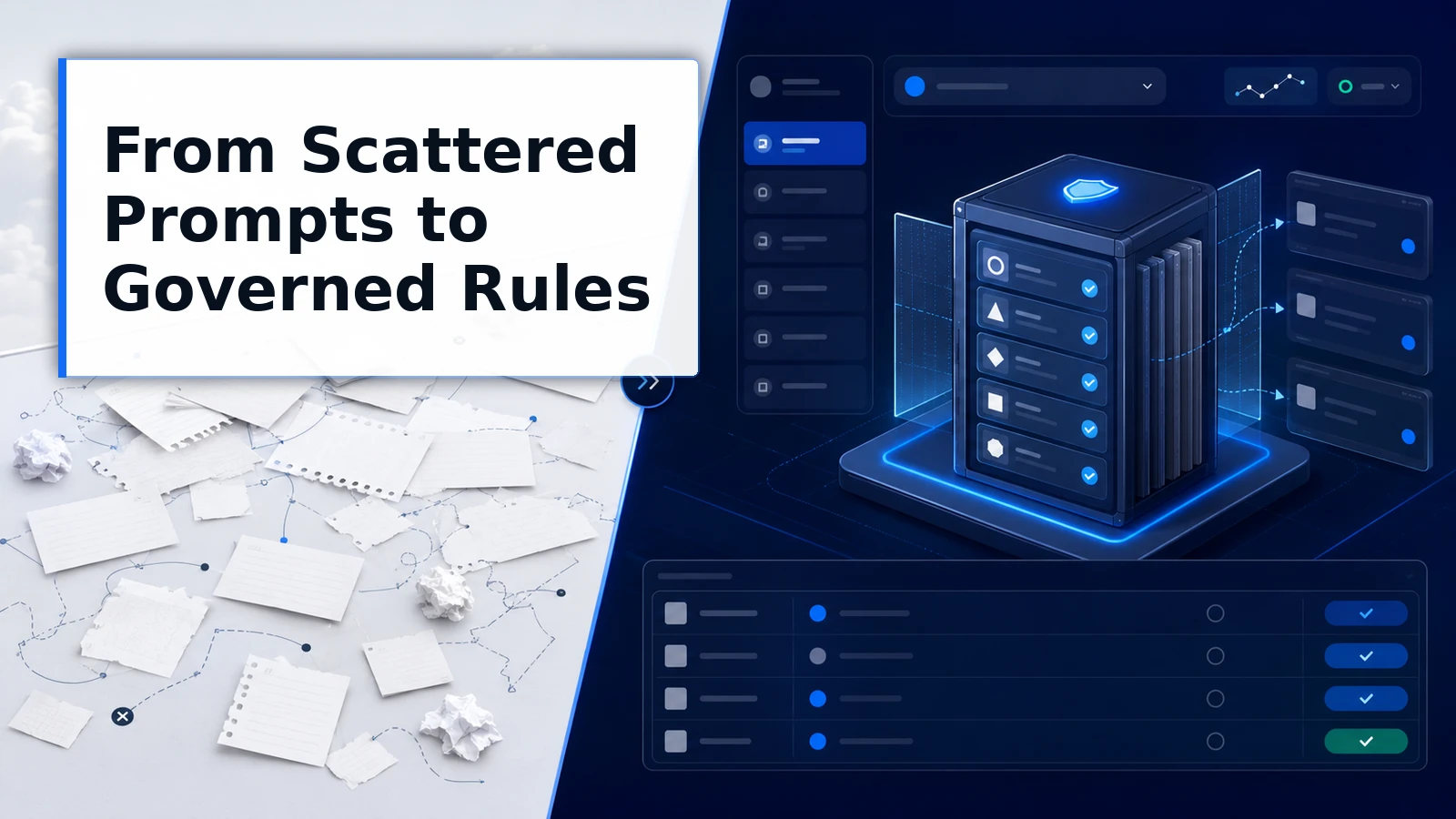
And in most operations it lives as scratch paper: pasted into individual prompts, tuned into one provider’s custom settings, scattered across personal accounts in slightly different versions. The asset exists, but nobody holds it, so every model change taxes it and every departure erodes it.
The six rule types worth governing
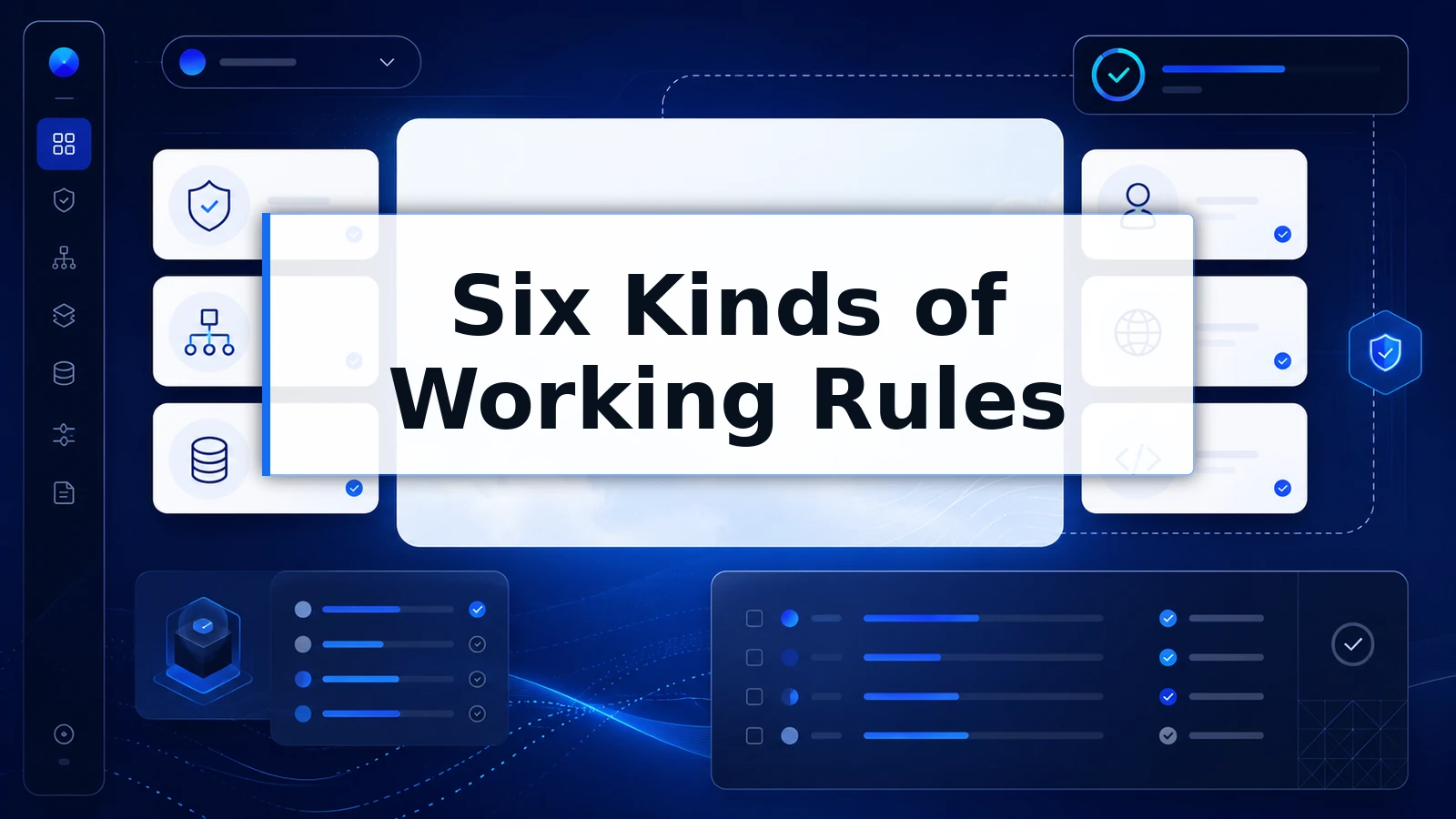
A working taxonomy makes the asset visible. Most organizations’ AI rules fall into six types:
- Workspace rules. Baseline behavior for everyone: tone defaults, formatting standards, escalation norms.
- Project rules. Constraints scoped to a body of work: this client’s terminology, this product’s naming, this matter’s confidentiality posture.
- Brand rules. Voice, vocabulary, prohibited phrases, and the claims discipline your brand depends on.
- Compliance rules. Required disclosures, regulated-language constraints, and review triggers that carry legal weight.
- Model-use rules. Which tiers and environments suit which work, encoded as instruction rather than tribal knowledge.
- Tool-use rules. How AI should and should not use connected tools and data sources.
Each type has different owners, change frequency, and stakes. Governing them as one undifferentiated prompt blob is how they decay.
How ThinkFreely holds rules above the model
ThinkFreely treats instructions as governed, organization-owned assets in its operating layer.
In ChatFreely, rules are defined at the levels where they belong: workspace rules for everyone, project rules scoped to their work, with brand, compliance, model-use, and tool-use rules layered where they apply. Defined once, they are applied consistently across the sessions and models your teams actually use, rather than being re-pasted and re-tuned per account.
Because the rules live above the model layer, a routing change or provider decision does not orphan them. The same governed rule set accompanies work across the backends RouteFreely dispatches to.
One qualification, stated plainly: portability of rules is about form and delivery, not identical interpretation. Different models can read the same rule with different weight, and moving a workflow may still call for tuning. What you keep is the canonical asset and its consistent delivery, which is the part that is otherwise lost entirely.
For rule sets where consistency itself carries legal or brand weight, DriftHold locks canonical instruction blocks across models and sessions, adding enforcement on top of governance.
The mechanisms of governed rules
-
Layered rule scopes
Workspace, project, brand, compliance, model-use, and tool-use rules are defined at the scope where they belong, so the right constraints apply without duplicating everything everywhere.
-
Central definition
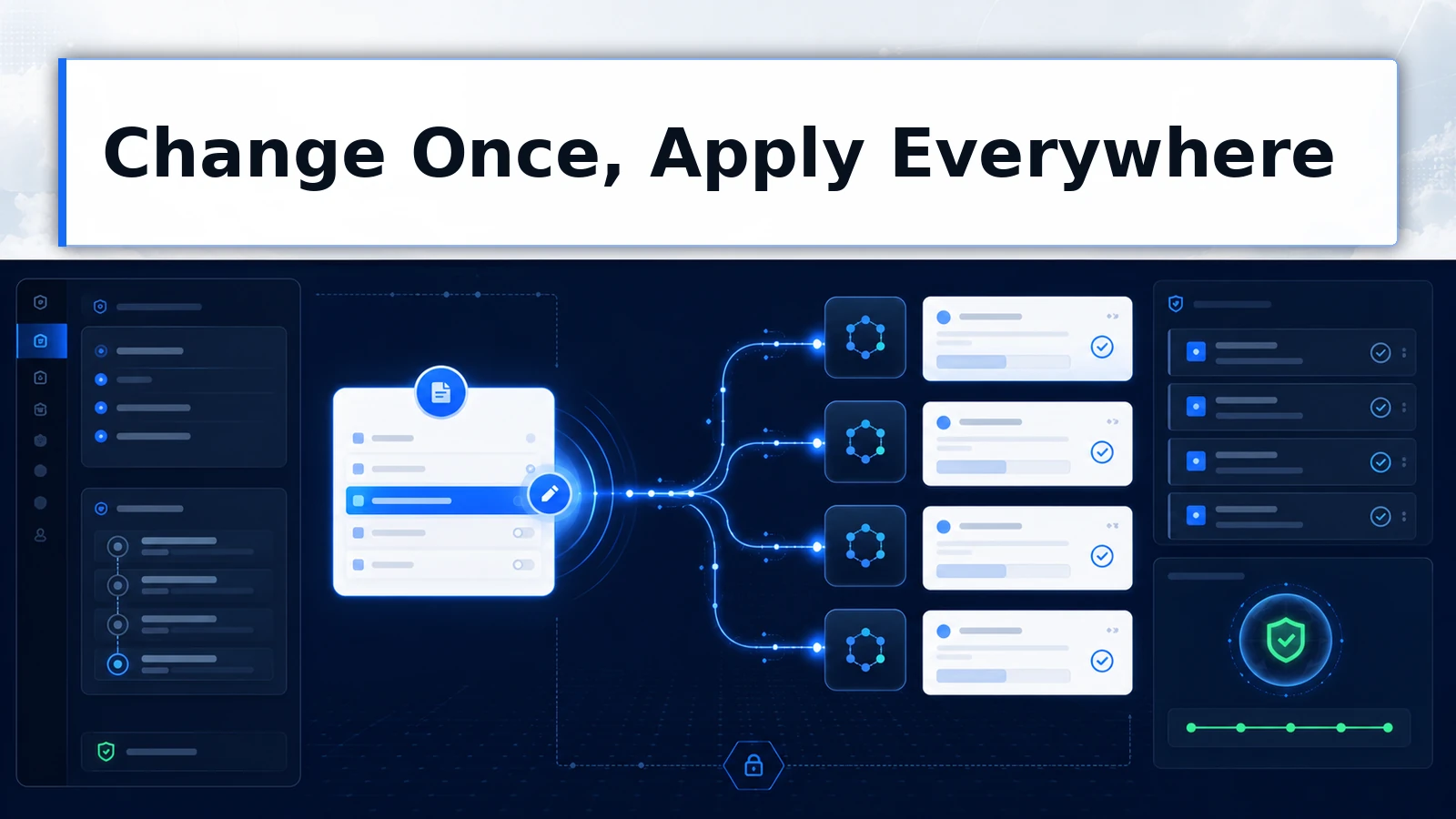
Rules are written and maintained in one governed place, replacing the paste-and-tweak sprawl that forks house rules into competing versions.
-
Consistent application
Defined rules apply across the sessions and models your teams use, so behavior standards stop depending on who remembered to include what.
-
Above-model persistence
Because rules live in your operating layer, changing models or routing policy does not strand them inside a previous provider’s settings.
-
Locking where it counts
High-stakes rule sets can be locked as canonical instruction blocks with DriftHold, so compliance and brand language hold their shape across models and sessions.
What governed rules change for the business
-
One version of the truth
The current rules are the published rules. Teams stop debating which prompt is right, and corrections propagate from one place instead of by rumor.
-
Model changes without rule loss
Evaluating or adopting a new model becomes a routing and tuning exercise, not a dig through old configurations to rediscover what they knew.
-
Compliance that scales
Regulated language and review triggers are applied by structure rather than memory, which is what lets AI usage grow without multiplying compliance exposure.
Deciding how to structure your rules
The path from scattered prompts to a governed rule set runs through these questions:
- Which rules apply to everyone, and which only to specific projects or teams?
- Which rule sets carry legal or brand weight if they degrade, and should be locked rather than merely governed?
- Who owns each rule type, and who may change it?
- Which existing prompts contain rules worth extracting before they fork further?
- How will you retire rules that no longer apply?
Here is what that looks like in practice, twice over.
A marketing organization defines brand voice and prohibited-claims rules at the workspace level, with campaign-specific terminology as project rules. When legal updates a claims constraint, the change lands once and applies to every campaign the same day.
An HR team encodes candidate-communication standards and privacy constraints as workspace rules, with role-specific interview guidance scoped per project. New coordinators inherit the full standard on day one instead of learning it through corrections.
In the product today
-
Scoped rule architecture
Workspace and project rule levels are native to ChatFreely, so scoping is structural rather than a naming convention inside prompt text.
-
Applied across models
Governed rules accompany work across backends dispatched by RouteFreely, exercising portability in daily operation rather than reserving it for migrations.
-
DriftHold enforcement available
Canonical instruction locking is shipped in DriftHold for the rule sets where consistent delivery is non-negotiable.
Where portable rules have limits
Rules govern behavior. They do not equalize models. Identical instructions can land differently across backends, and moving high-stakes workflows still deserves validation, not blind trust in portability.
Governance also changes habits. Centralized rules mean individual tinkering becomes a proposal instead of a paste, which is the point, but it is a real adjustment for teams used to editing freely.
And a rule set is only as good as its maintenance. Owners, review cadence, and a way to retire stale constraints matter as much as the initial structure. Rules nobody prunes eventually contradict each other.
Frequently asked questions
What is the difference between portable rules and a prompt library?
A prompt library is storage. Portable rules are governed, scoped assets that are actually applied: defined centrally, attached to the workspace and projects where they belong, and delivered consistently into sessions. A library still depends on people copying the right version at the right time. Governed rules remove that dependency.
Do the same rules work on every model?
The same rules can be delivered to every model, which is the portability that matters and the part most setups lose. Interpretation still varies by model, so expect some tuning when a workflow’s backend changes. The asset you preserve is the canonical rule set and its consistent delivery, not a promise of identical behavior everywhere.
When should a rule be locked rather than just governed?
Lock rules whose degradation is expensive or public: compliance disclosures, regulated language, brand voice on customer-facing output. Governance keeps rules current and applied. Locking, through DriftHold, adds canonical enforcement across models and sessions for the subset where drift is unacceptable.
How do we migrate scattered prompts into governed rules?
Inventory first: collect the prompts teams actually use and extract the rules hiding inside them. Deduplicate and assign each rule a type and scope from the six-type taxonomy, then an owner. Publish the governed versions and retire the pasted ones deliberately. Most organizations find the exercise itself reveals contradictions worth fixing.
Keep the judgment you paid for
Your rules encode months of judgment about how AI should work for your business. Build them once, at the layer you control, and keep them as everything else changes.