USE CASE
Send sensitive work where it belongs.
Sensitive AI work should not follow the same path as public drafting, low-risk summarization, or casual brainstorming. It needs routing rules that reflect data risk, business context, and approved environments.
Privacy is not a slogan. It is a routing and data-boundary decision.

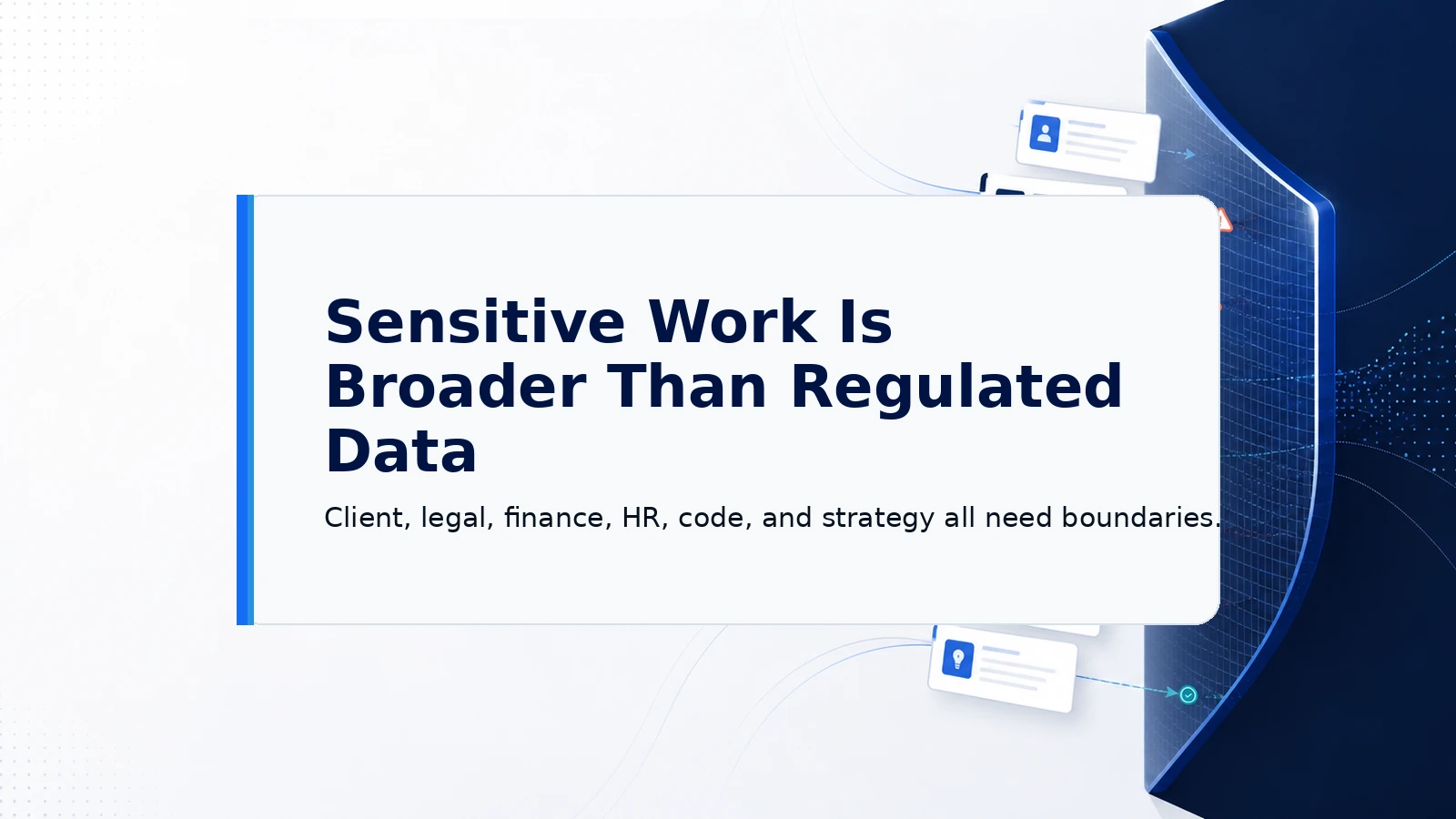
Sensitive work is broader than regulated data
It includes client records, legal memos, financial forecasts, HR material, source code, security details, proprietary process knowledge, and unreleased strategy. Any of these in the wrong environment is a problem, whether or not a regulation names it.
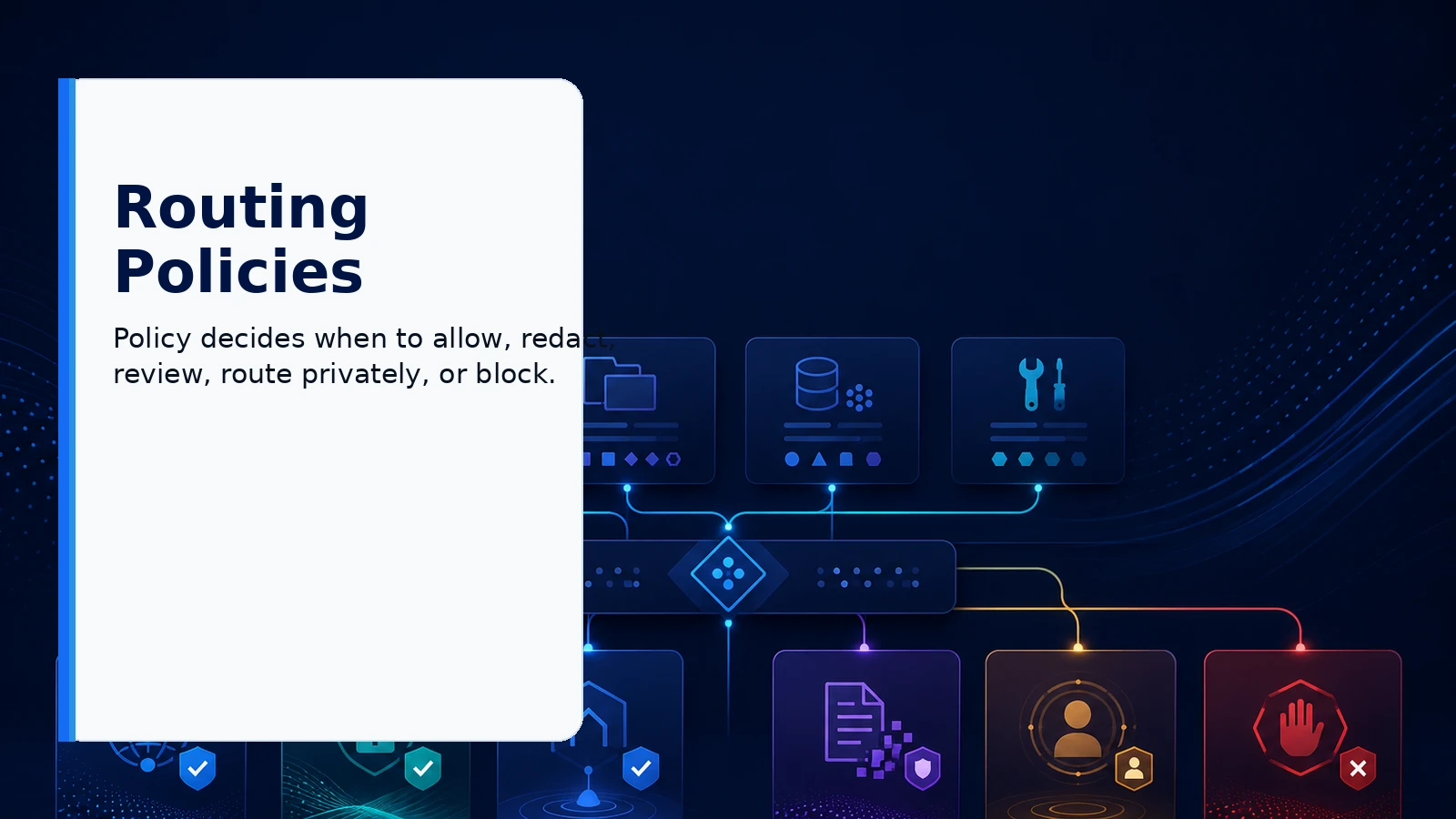
Routing policies
A routing policy defines what happens when a request matches a sensitivity category. The decision can depend on data type, user role, project, tool, and model availability.
- allow an external model
- allow only an approved private model
- require a local route
- redact before dispatch
- send for human review
- block and explain why
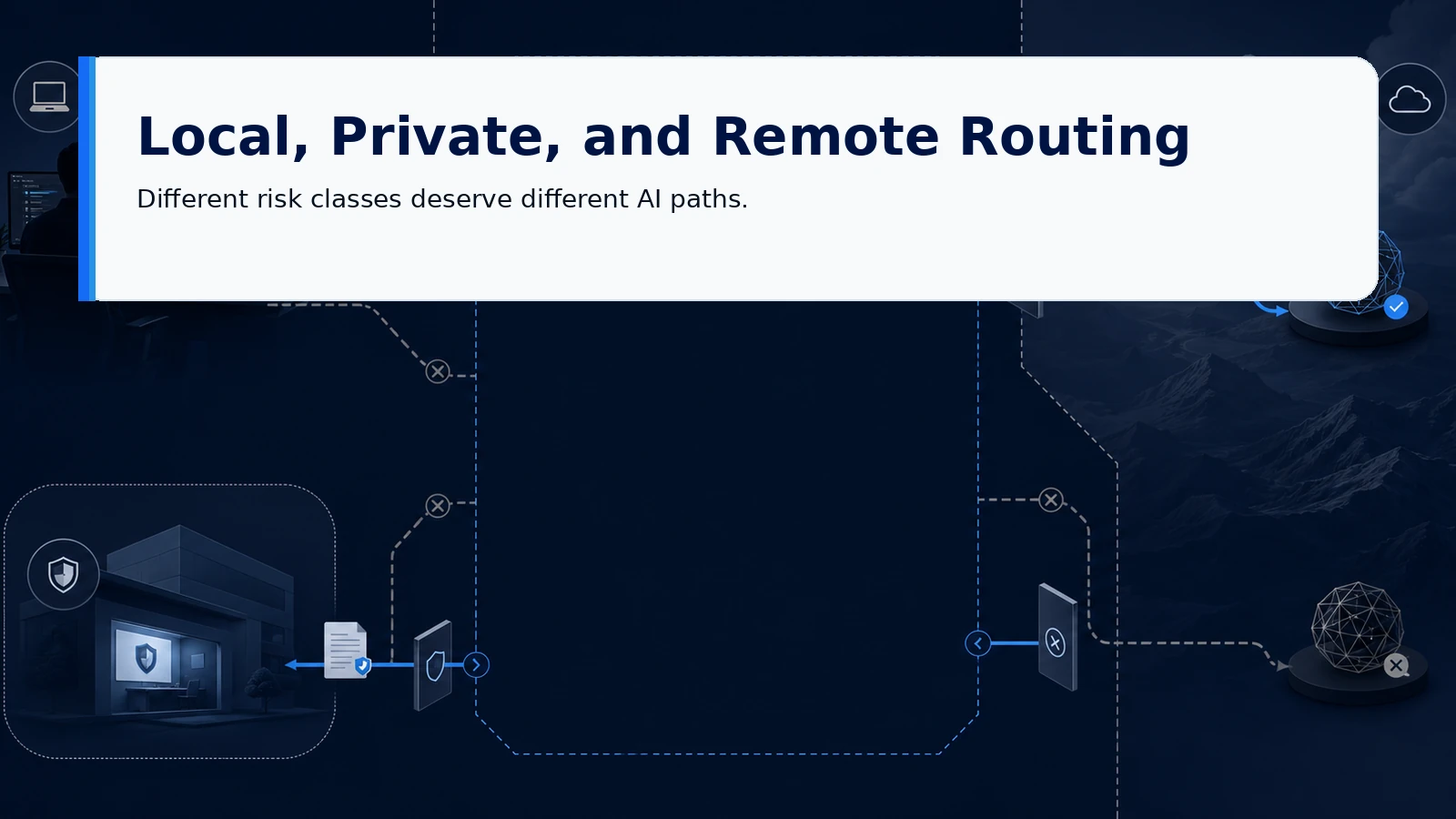
Local, private, and remote routing
RouteFreely is designed so that not every request is treated as equally risky. Remote models can suit low-risk work. Private or local routes, including Ollama-compatible local models, can be required for confidential or regulated workflows. Privacy classes and per-virtual-model privacy behavior let different routes carry different rules.
Redaction and anonymization
Sensitive fields can sometimes be removed or masked before dispatch. The privacy pipeline is designed to detect, classify, redact, and anonymize sensitive information, with parts planned or partially implemented. Treat these as control options in progress, not a universal solution, and not a guarantee of total privacy.
Governance and audit
Routing sensitive work should create records administrators can review. RouteFreely is designed to log routing decisions, so the organization has visibility into what was routed, blocked, warned, or escalated. Governed routing is not a black box.
Client proposal
A generic proposal outline can use a standard route. Client pricing, contract history, and private strategy can require restricted handling.
Engineering review
Public code examples may be low risk. Proprietary source code can follow a stricter model and tool policy.
Sensitive-work rollout notes
- Start with a few obvious categories: client data, HR, legal, finance, and source code.
- Use examples users recognize from daily work.
- Make the safe route available before restricting risky routes.
- Train managers on exceptions and escalation.
What we do not claim
We do not claim total privacy or zero exposure. We help route sensitive work by clear policy and reduce unmanaged exposure.
Operating checks for sensitive work
Key operating checks:
- which data categories may appear in the workflow
- which environments are approved for sensitive work
- when redaction, local handling, or review is required
- how exceptions are logged and escalated
- whether users understand the boundary before they use AI
Sensitive work should follow clear policy before it reaches an AI model.