AI INDEPENDENCE

AI lock-in happens one workflow, one integration, and one default at a time.

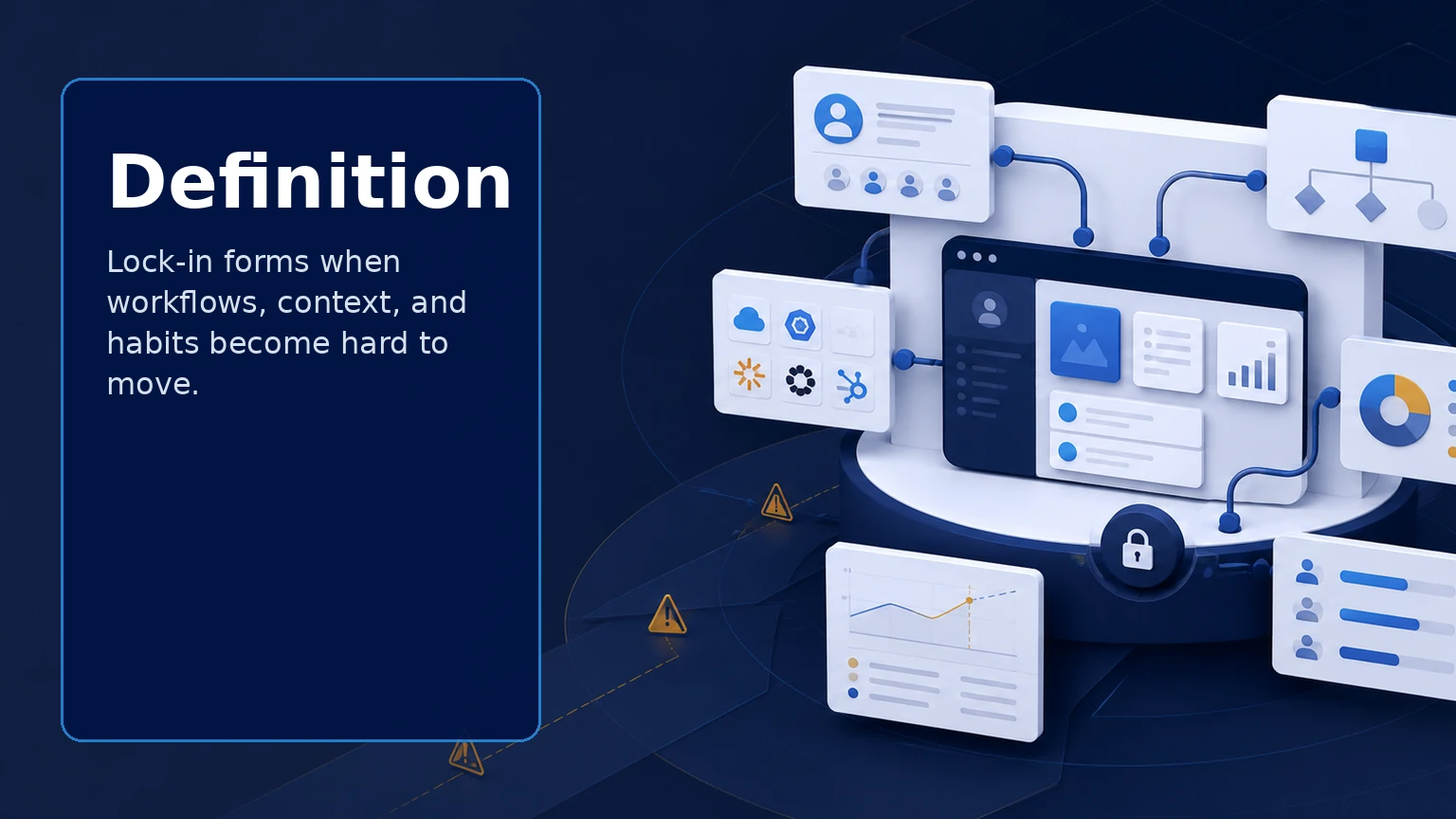
AI vendor lock-in occurs when a company’s workflows, context, applications, memory, pricing assumptions, and user habits become difficult to move away from one provider.

what is ai vendor lock in hero

Definition

Lock-in is not only a contract problem. It can form through convenience. A team builds prompts in one workspace, developers integrate one API, users rely on one memory layer, and budgets assume one pricing model. Eventually, leaving means losing more than access.

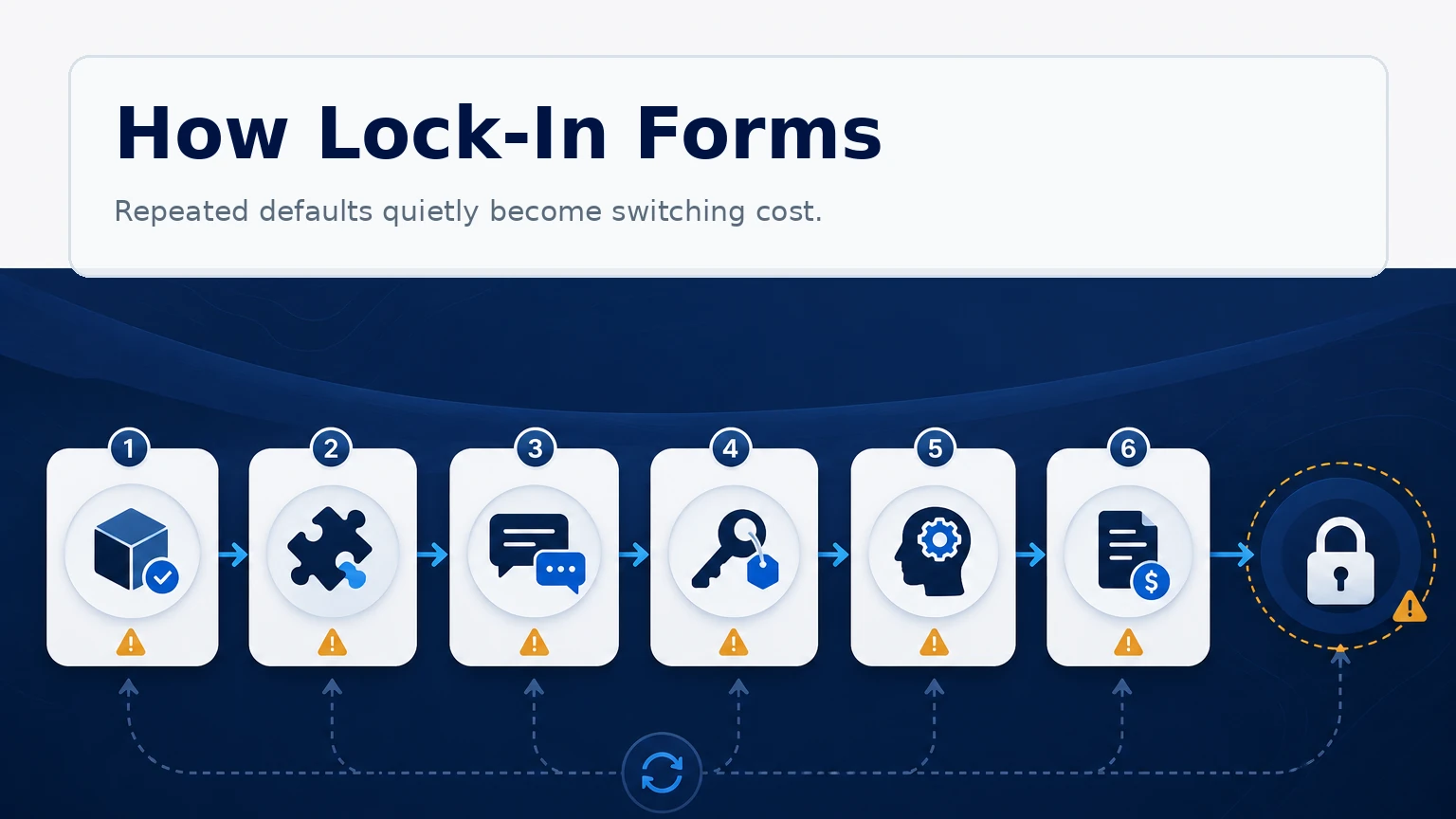
How lock-in forms

AI lock-in usually forms gradually through repeated defaults.

  • one model becomes the default for every task
  • workflows depend on vendor-specific features
  • conversation history stays in one platform
  • provider keys spread through internal tools
  • teams build skills in non-portable formats
  • cost structures assume one pricing page

Context lock-in

Context lock-in is especially important because the useful operating knowledge around AI work may not be cleanly exportable.

what is ai vendor lock in inline 1 definition

Workflow lock-in

Workflow lock-in happens when business processes are hardwired to one model, interface, memory layer, or tool ecosystem.

Cost lock-in

Cost lock-in happens when the organization cannot easily route work to alternatives even when a provider becomes too expensive for certain tasks.

How to reduce risk

Reduce lock-in by centralizing routing, managing reusable context, tracking cost, using virtual models, governing tools, and separating business workflow logic from provider-specific defaults.

what is ai vendor lock in inline 2 how lock in forms

Routing examples

API lock-in

An internal application calls one provider directly. A gateway strategy can create a more flexible internal endpoint.

Memory lock-in

A team depends on vendor memory for project behavior. Portable project rules and skills reduce the switching cost where supported.

Early warning signs

  • Changing providers would require rewriting internal tools.
  • Users would lose important project history or memory.
  • Costs are accepted because routing alternatives do not exist.
  • Vendor-specific features are embedded in operating procedures.
  • No one owns the exit path.

Compatibility reduces the cost of leaving

Lock-in hurts because leaving means rework. When an application is wired directly to one provider’s API, switching means rewriting it. RouteFreely is designed to expose OpenAI-compatible, Anthropic-compatible, and Ollama-compatible surfaces, so existing tools can point at a common control layer and the backend can be substituted later.

Virtual models extend that by presenting a stable name while the provider changes underneath, and provider failover keeps work moving when one backend is unavailable. None of this removes lock-in entirely, but it lowers the cost of changing direction.


Recommended routing next step

Map your AI lock-in exposure with us and see where a control layer would reduce your switching cost.

what is ai vendor lock in inline 3 context lock in

Operating checks for model flexibility

Key operating checks:

  • which models and environments are approved
  • how virtual models hide backend changes from users
  • when failover is acceptable
  • how capability, cost, and sensitivity affect dispatch
  • which direct integrations should move behind a control layer

Think Freely.

Scroll to Top