
PRODUCT
Skills: Your Best AI Work, Made Reusable and Governed
Somewhere on your team, one person gets exceptional AI results. Skills capture how, package it as a governed workflow, and make it something the whole organization runs, not something that leaves when they do.

The product in one paragraph
Skills is the ThinkFreely product for reusable AI workflows. A skill packages instructions, working method, and approved tool access into a named, governed unit that anyone with access can run. Built by your teams, shared deliberately, owned by the organization, and improved in one place so every user inherits the improvement.
The expertise problem Skills solves
Every AI deployment develops the same asymmetry. A few people learn to get remarkable results. Everyone else gets average ones. The difference is method: prompt craft, sequence, context, judgment about what to include, all of it living in individual heads and personal snippet files.
That expertise is a business asset being stored in the least durable place available. It does not transfer to new hires, does not survive departures, does not improve centrally, and does not answer to governance.
Skills moves the asset into the operating layer. The method becomes a versioned, permissioned workflow. The tenth-best user of your AI runs the workflow your best user built, and gets the built-in quality.
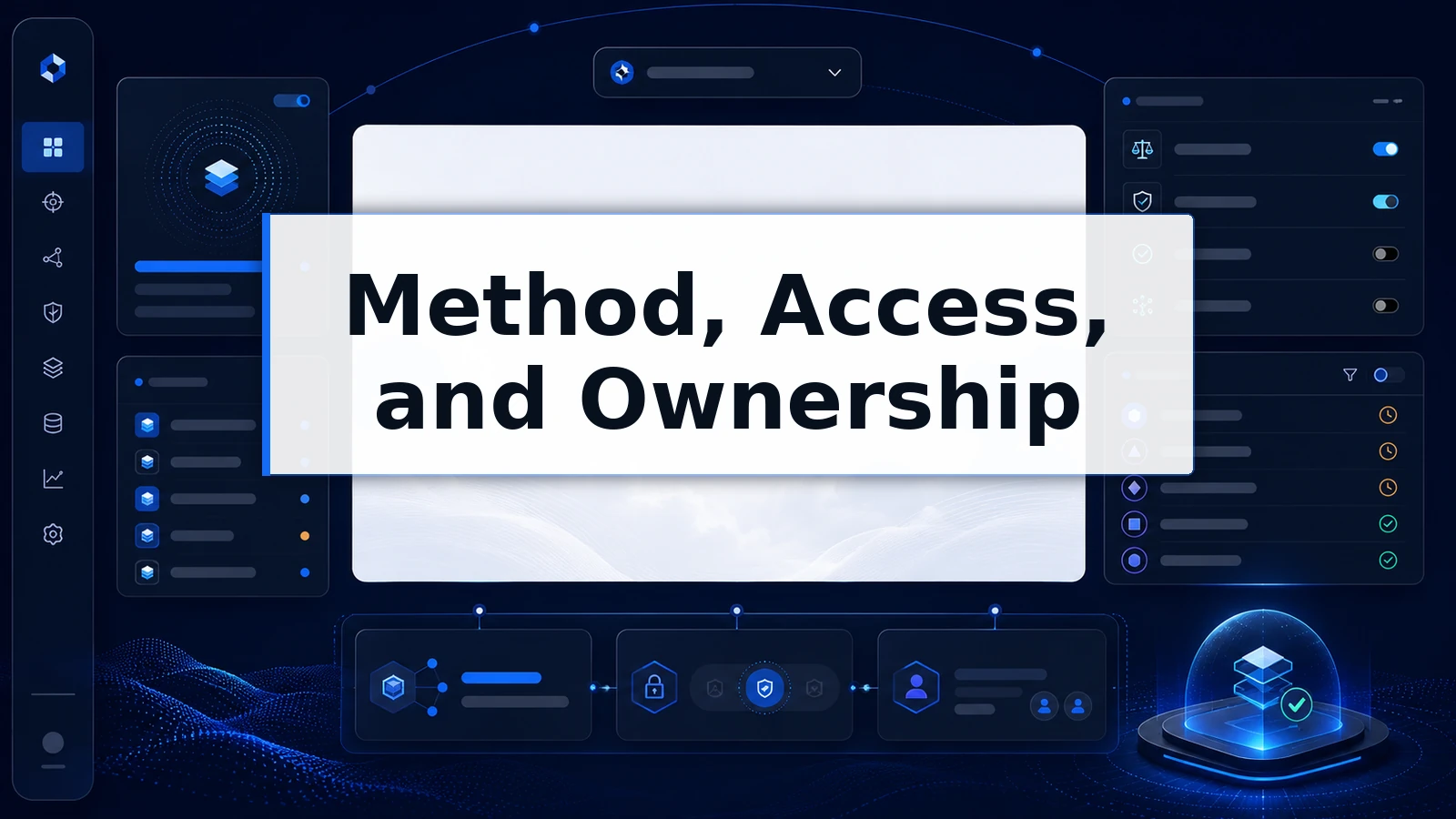
What a skill contains
A skill is more than a saved prompt.
The method. Instructions and structure encoding how the work should be done: the sequence, the standards, the output shape, the judgment calls made once by the person who knew best.
The tool access. Skills carry governed tool permissions, so a workflow that needs a connected system gets it through the skill’s approved access, not through improvised credentials.
The governance. Ownership, access rules, and organizational visibility. Who can run it, who maintains it, and where it appears in the operation’s records.
Run inside ChatFreely, a skill turns “let me show you how I do this” into “run this.”
What Skills provides
-
Build from real work
Skills are authored by the people who developed the method, capturing working practice rather than an outsider’s guess at it.
-
Governed sharing
Access is deliberate: skills are shared to the users and groups that should run them, under organizational rules rather than ad hoc forwarding.
-
Governed tool access
Skills carry approved connections to the tools a workflow needs, so capability travels with the skill and stays inside policy.
-
Central improvement
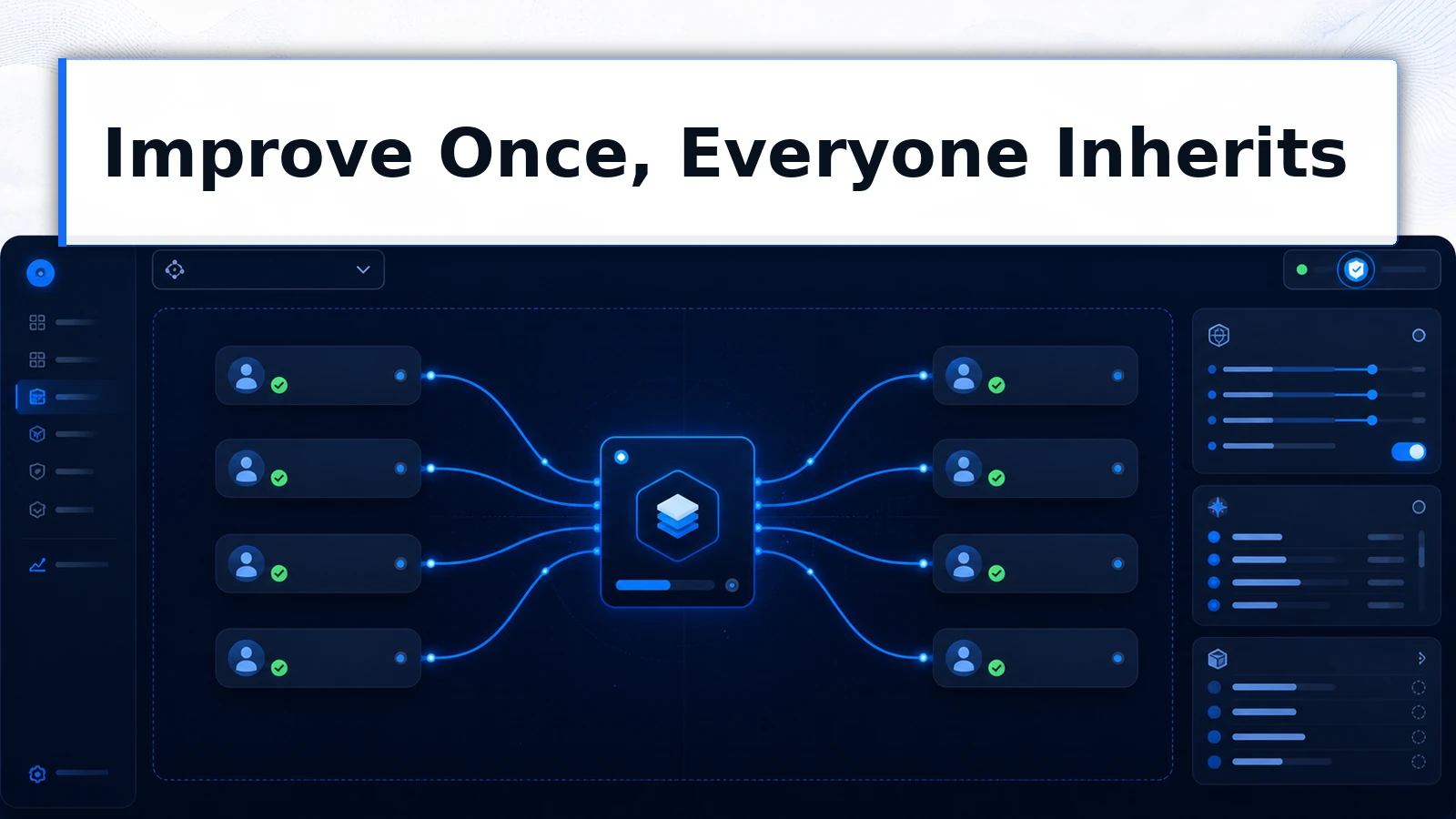
Fix or upgrade a skill once and every user runs the better version, so quality compounds instead of forking across copies.
-
Organizational ownership
Skills belong to the operation, with named owners and visibility in the admin console, so critical workflows have an accountable home.
-
Model flexibility preserved
Skills live at the operating layer above the models, so the workflows you build are not welded to any single provider’s ecosystem.
What Skills changes for the business
-
Best-practice by default
The organization’s strongest method becomes the standard path, raising the floor on quality without training campaigns.
-
Expertise that stays
When the expert changes roles or companies, the workflow remains: owned, documented, and running.
-
Faster onboarding
New team members run proven workflows on day one instead of spending a quarter rediscovering what works.
Where teams start
Skills earn their keep fastest on work that is repeated, method-sensitive, and currently dependent on a few strong practitioners:
- The report or analysis one person always does best
- The client-facing draft with hard-won standards baked into how it is written
- The extraction or review task where sequence and criteria matter
- The workflow that needs a connected tool and should reach it under governance
Two teams show the shape of it.
A support operation turns its escalation-summary method into a skill: structure, tone rules, and the fields the CRM connection needs. Every agent now produces summaries at the level the team lead used to produce alone, and a wording improvement made in March reached everyone the day it shipped.
A finance team packages its monthly variance-commentary workflow. The analyst who built the method owns the skill; three others run it. When the reporting format changed, one edit updated the whole team’s output.
Skills, the product, and skills, the practice
This page describes the Skills product. If you want the deeper concept, how reusable skills work as an operating-layer discipline, what makes a workflow worth packaging, and how governance applies, the capability page covers the practice in depth. The short version: the practice is the discipline, and Skills is the product that makes the discipline runnable.
Honest limits
Skills package method, not judgment. Work that is genuinely novel each time gains little from packaging, and a skill’s quality ceiling is the quality of the method captured in it.
A catalog also needs stewardship. Skills without owners go stale, and stale skills teach people to route around the catalog. Treat named ownership as part of the build, not an afterthought.
Frequently asked questions
Who builds skills?
Your teams, typically the practitioners who developed the method. Building a skill is closer to writing down how you work than to software development, and the strongest catalogs are authored by the people whose results everyone already wants.
How is a skill different from a saved prompt?
Scope and governance. A saved prompt is personal text.
A skill is an organizational unit: method plus governed tool access plus ownership plus permissions, visible in the admin console and improved centrally. One is a convenience. The other is an asset.
Do skills work across models?
Skills live at the ThinkFreely operating layer, above the model layer, which helps keep your workflows portable across the models your routing policy approves. Model behavior still varies, so method-sensitive skills deserve validation when the backend behind them changes.
How does access control work?
Skills are shared deliberately to users and groups under organizational rules, and the catalog is visible and manageable from the admin dashboard. Who can run what is a decision your operation makes, not a side effect of who forwarded a link.
What does building a first skill actually involve?
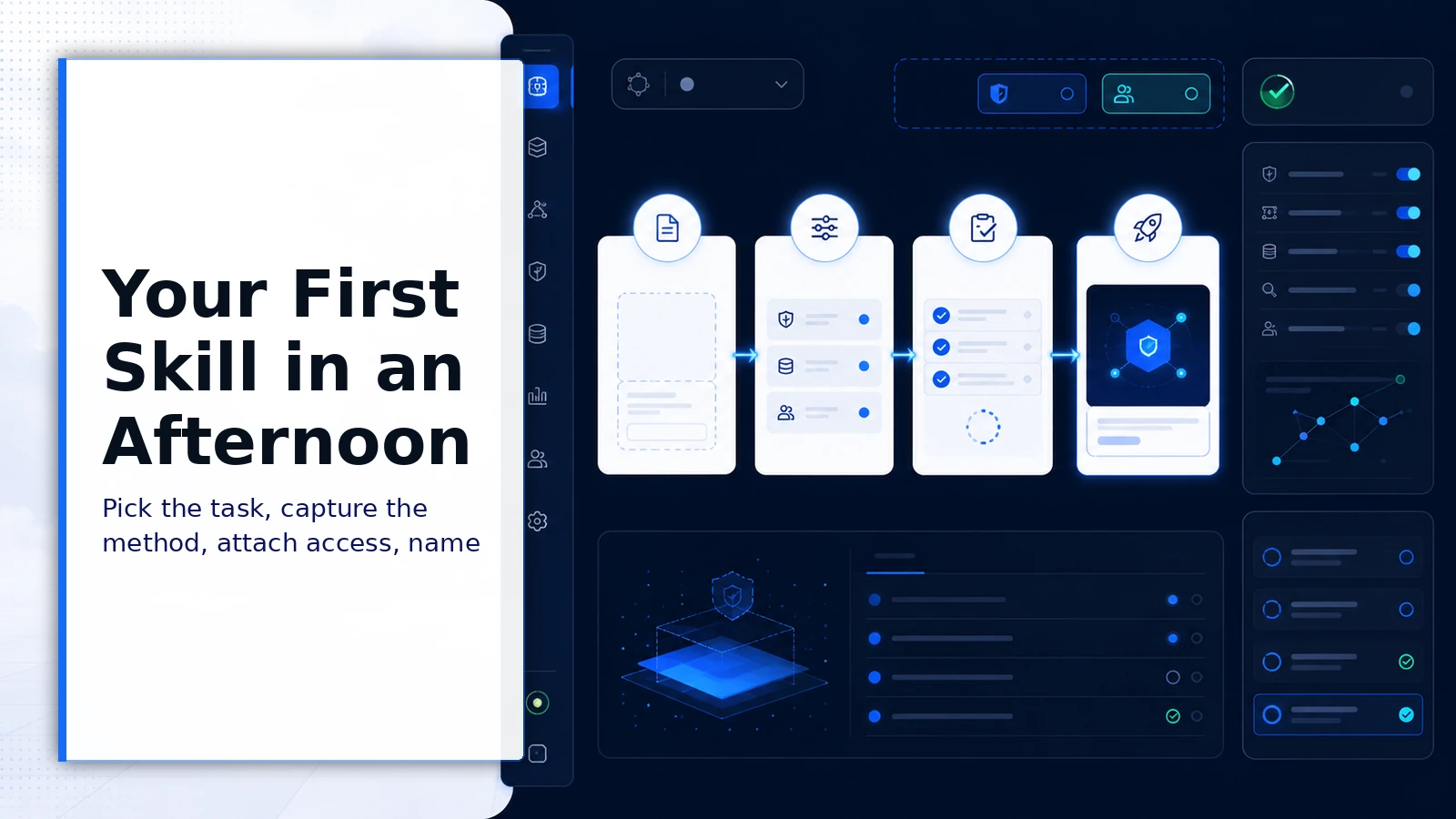
Pick one repeated, method-sensitive task your best practitioner already does well. Capture the method as instructions: sequence, standards, output shape, and the judgment calls they make without thinking. Attach the tool access the workflow needs, set who can run it, and name an owner. The first skill usually ships in an afternoon, and the second one ships faster because the pattern is now visible.
Make your best work the default
The gap between your best AI user and your average one is the largest unclaimed value in your deployment. Skills closes it, and keeps what closes it yours.