THINKFREELY PLATFORM
Use the right AI for the right work.
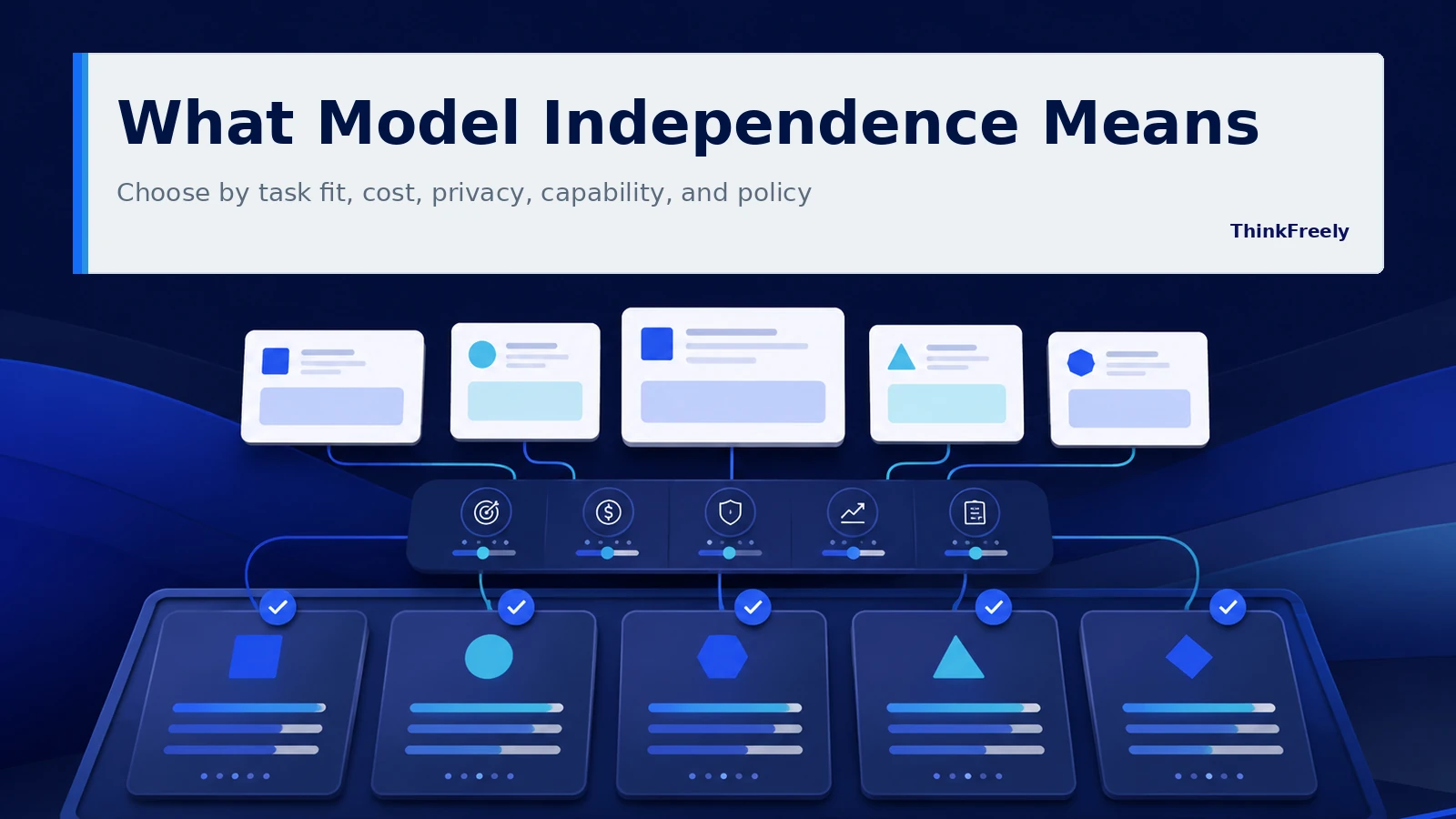
Model independence means your organization can choose AI models based on task fit, cost, privacy, capability, and policy instead of forcing every workflow through one provider by default.

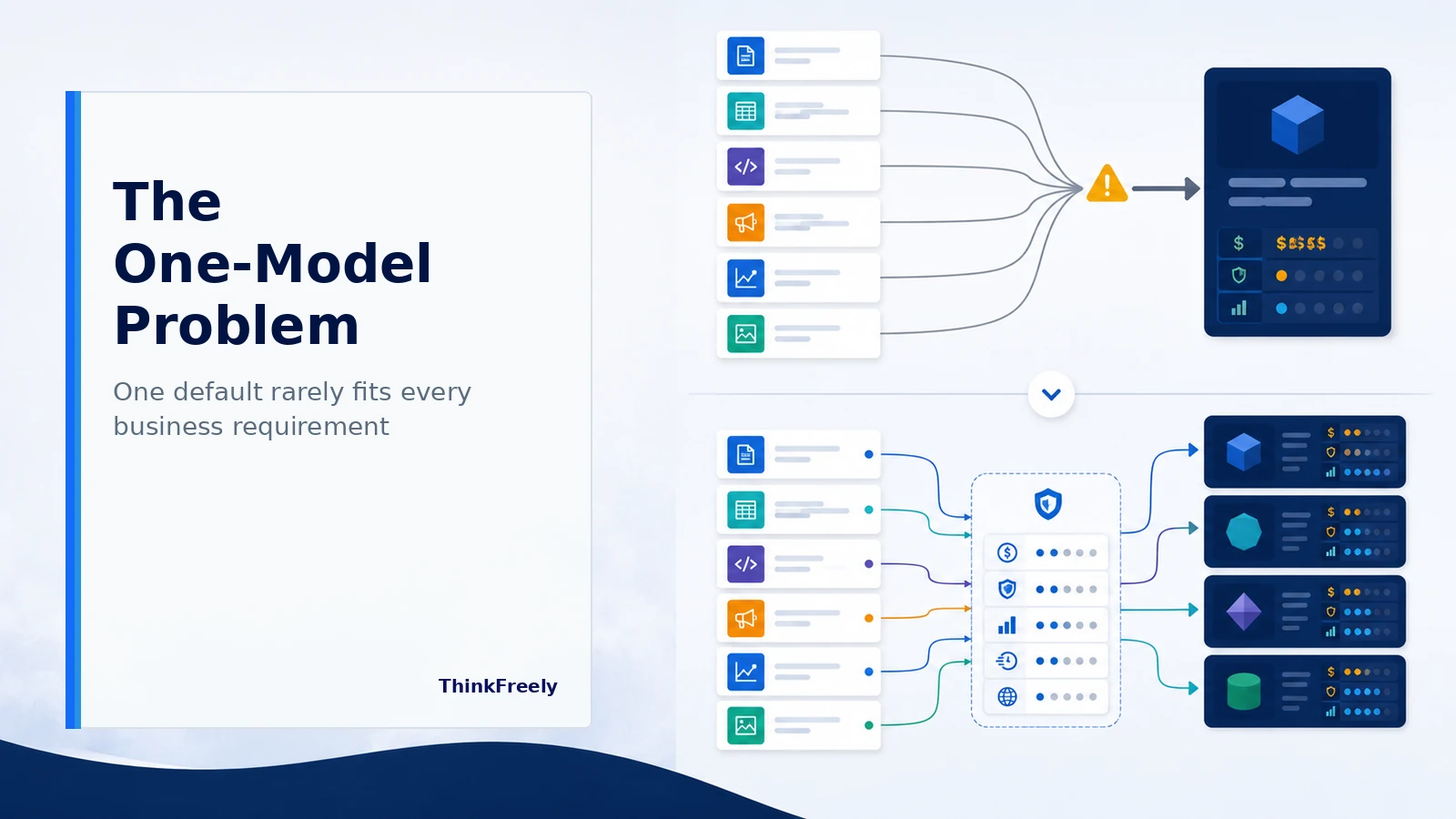
The problem with one-model-for-everything AI
A single default model is convenient until the organization needs lower cost, stronger privacy, better reliability, specialized capability, or provider leverage. The issue is not that one model is bad. The issue is that one model rarely matches every business requirement equally well.
What model independence means
Model independence is the operating ability to work across approved models and environments without rebuilding every workflow around each provider change.
- route routine work to lower-cost models when quality is sufficient
- use stronger models for complex reasoning or high-value decisions
- route sensitive work to local or private environments when required
- test alternatives without forcing every user to reconfigure their workflow
- preserve provider leverage as pricing and capabilities change
How RouteFreely enables model independence
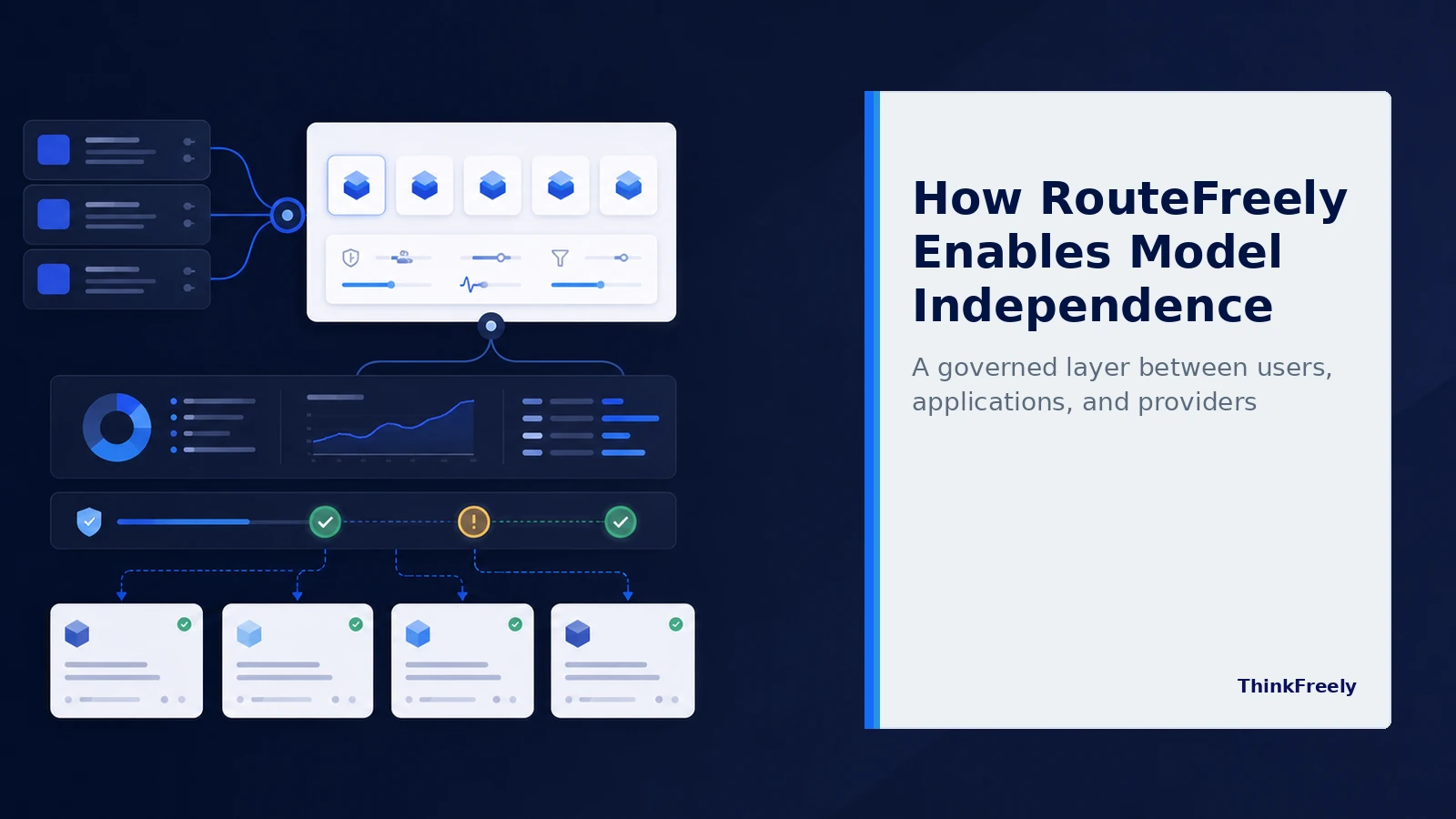
RouteFreely creates a governed layer between users, applications, and model providers. Administrators can expose stable model choices, define access rules, track usage, and adjust backend routing as business needs change.
- virtual models can hide backend complexity
- provider compatibility reduces direct integration dependence
- usage data helps compare actual model behavior and cost
- health and failover patterns improve resilience
Model mapping makes independence operational
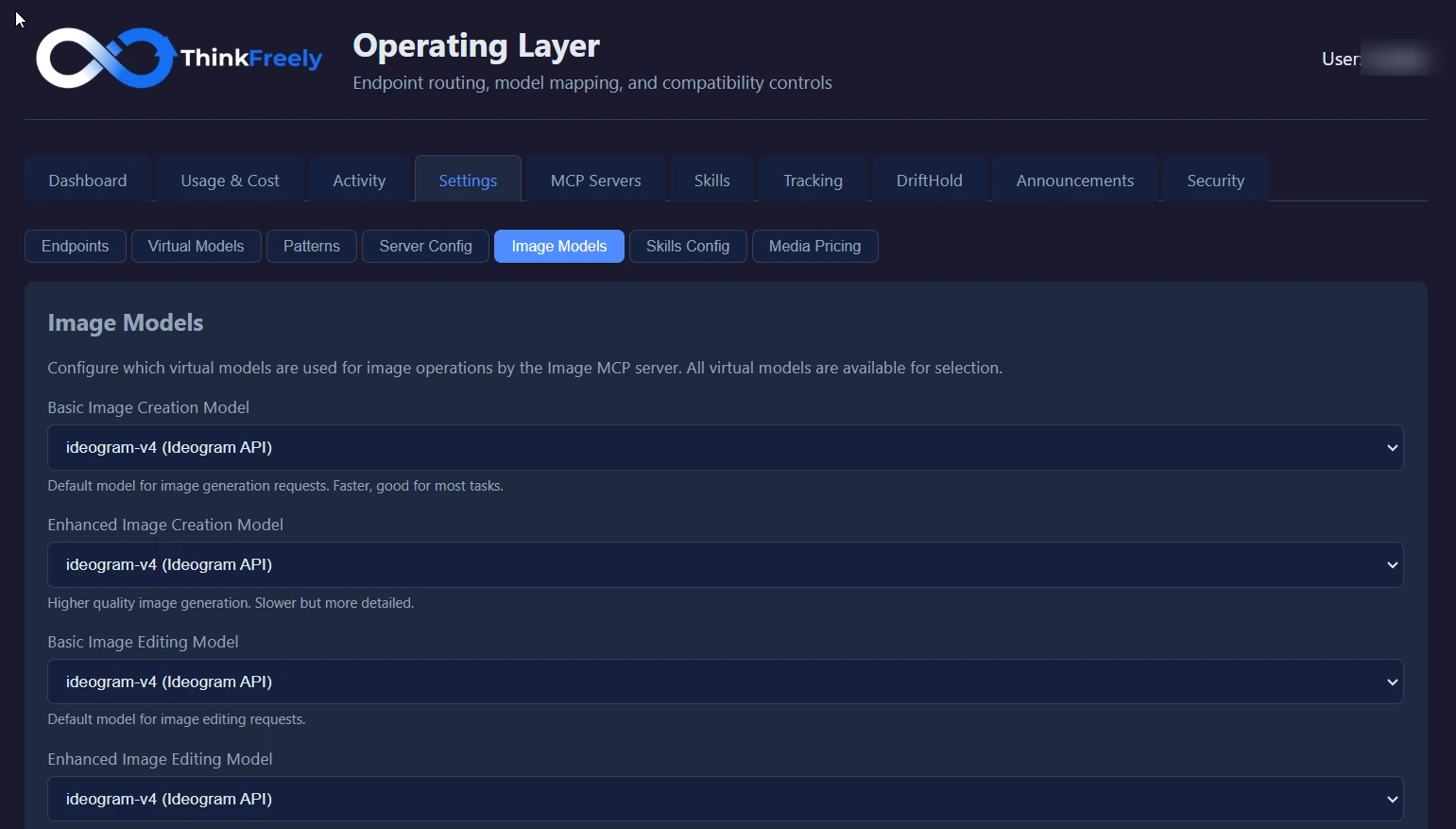
Model settings map the names your applications call to the models you approve. Swapping the model behind a name helps improve portability without rewrites.
Not anti-vendor
The best model for a task may come from a major vendor. Model independence simply means the company does not let that vendor become the only path for every task, workflow, memory layer, and cost structure.
Routing examples
Marketing drafts
Routine social drafts may not need a premium reasoning model. A lower-cost approved model may be enough, while final strategic messaging can route to a stronger model.
Legal review
A sensitive legal workflow may require a private or restricted model path even if an external model performs well on general drafting.
Model policy questions
- Which model choices should users see?
- Which model choices should be hidden behind virtual models?
- Which workflows need the highest quality, not merely the newest model?
- Which departments should be restricted from experimental models?
Compatibility is what makes independence real
Model independence is only practical if your existing tools do not have to be rewritten for each provider. RouteFreely is designed to expose OpenAI-compatible, Anthropic-compatible, and Ollama-compatible surfaces, so applications that already speak one of those APIs can route through a common control layer.
Capability-aware routing sends each request to a model that can actually perform the task, so image work does not land on a text-only model and routine work does not consume premium reasoning. Combined with virtual models and provider failover, that is what lets you change providers without rebuilding every workflow.
Recommended routing next step
Request a model-independence walkthrough and see how routing could match each task to the right AI.
Operating checks for model flexibility
Key operating checks:
- which models and environments are approved
- how virtual models hide backend changes from users
- when failover is acceptable
- how capability, cost, and sensitivity affect dispatch
- which direct integrations should move behind a control layer