SOLUTIONS
Reduce unmanaged AI exposure with policy at the traffic layer.
Security and compliance teams care about data exposure, access control, auditability, and policy enforcement. AI complicates all four, because a single request can blend prompts, files, model outputs, tool calls, and external providers.
ThinkFreely helps reduce uncontrolled AI exposure by putting policy, access, routing, and visibility in front of AI usage. It is framed as a way to reduce risk, not a guarantee of zero risk.

Put access under control
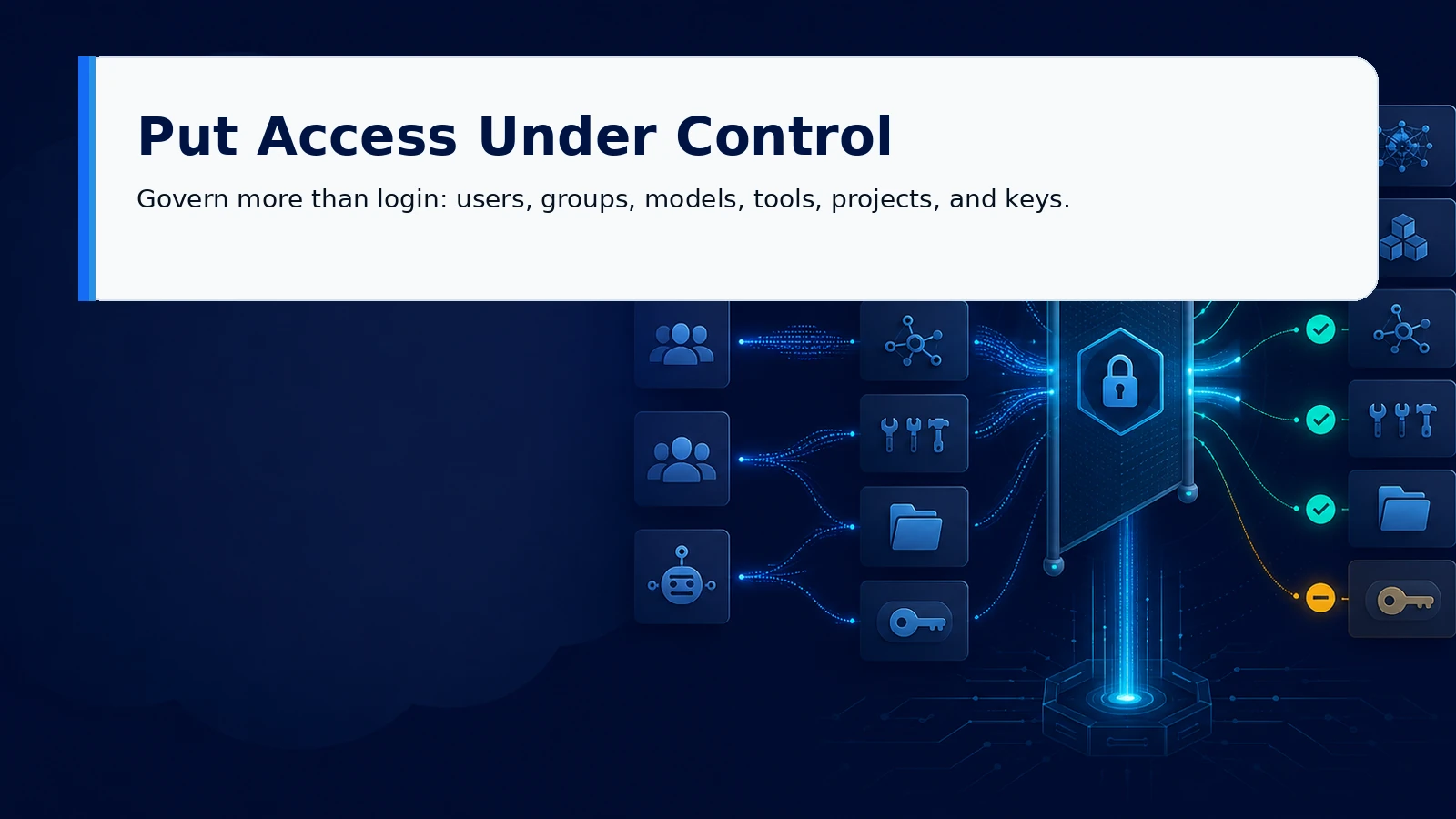
Access policy should apply to more than login. RouteFreely and ChatFreely are designed to govern access across users, groups, models, tools, projects, and keys.
- role and group-based model access
- per-user overrides for real-world exceptions
- backend-enforced policy, so restrictions are not just hidden in the UI
- domain-restricted registration and OIDC-compatible identity, including Entra
Manage keys and identity like security assets
Managed API keys reduce provider-key sprawl. Keys are designed to be labeled, scoped, revocable, and tracked, with one-time display and hashed storage direction. Identity-linked access means that when someone leaves, access can be removed without hunting through shared provider keys.
Route sensitive work by policy
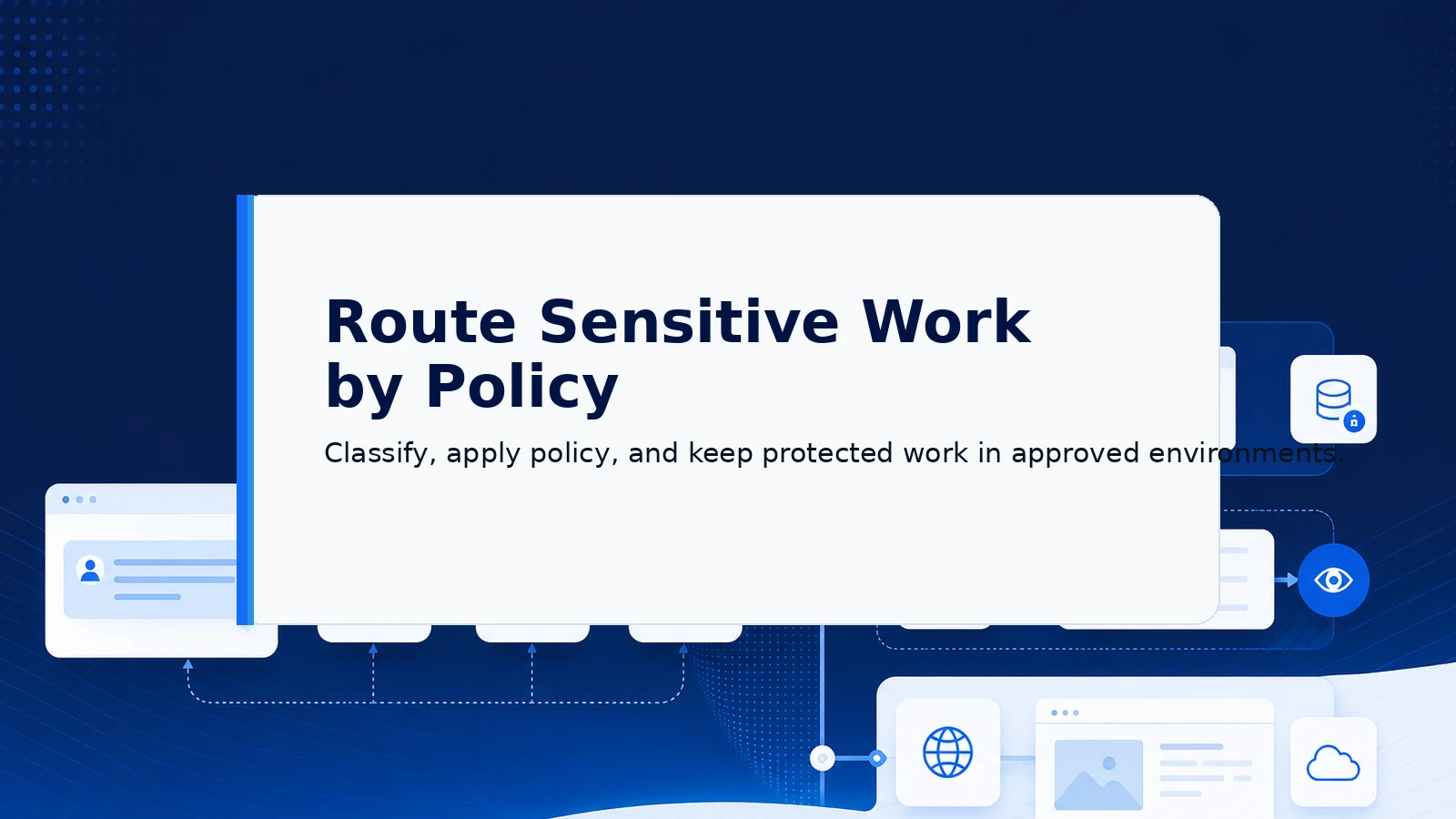
Privacy-aware routing is designed to classify requests and direct sensitive work to approved local or private environments while lower-risk work uses external models when appropriate. Detection, redaction, anonymization, and local-only routing are control mechanisms, not guarantees of total privacy, and parts of the privacy pipeline are planned or partially implemented. We describe them as designed for and in progress.
Govern the tools AI can reach
MCP tools need server registration, discovery, permissions, activation rules, and access control, so tool-connected AI does not become unmanaged system access. A finance tool can be available only to finance users, and only inside approved workflows.
Make activity reviewable
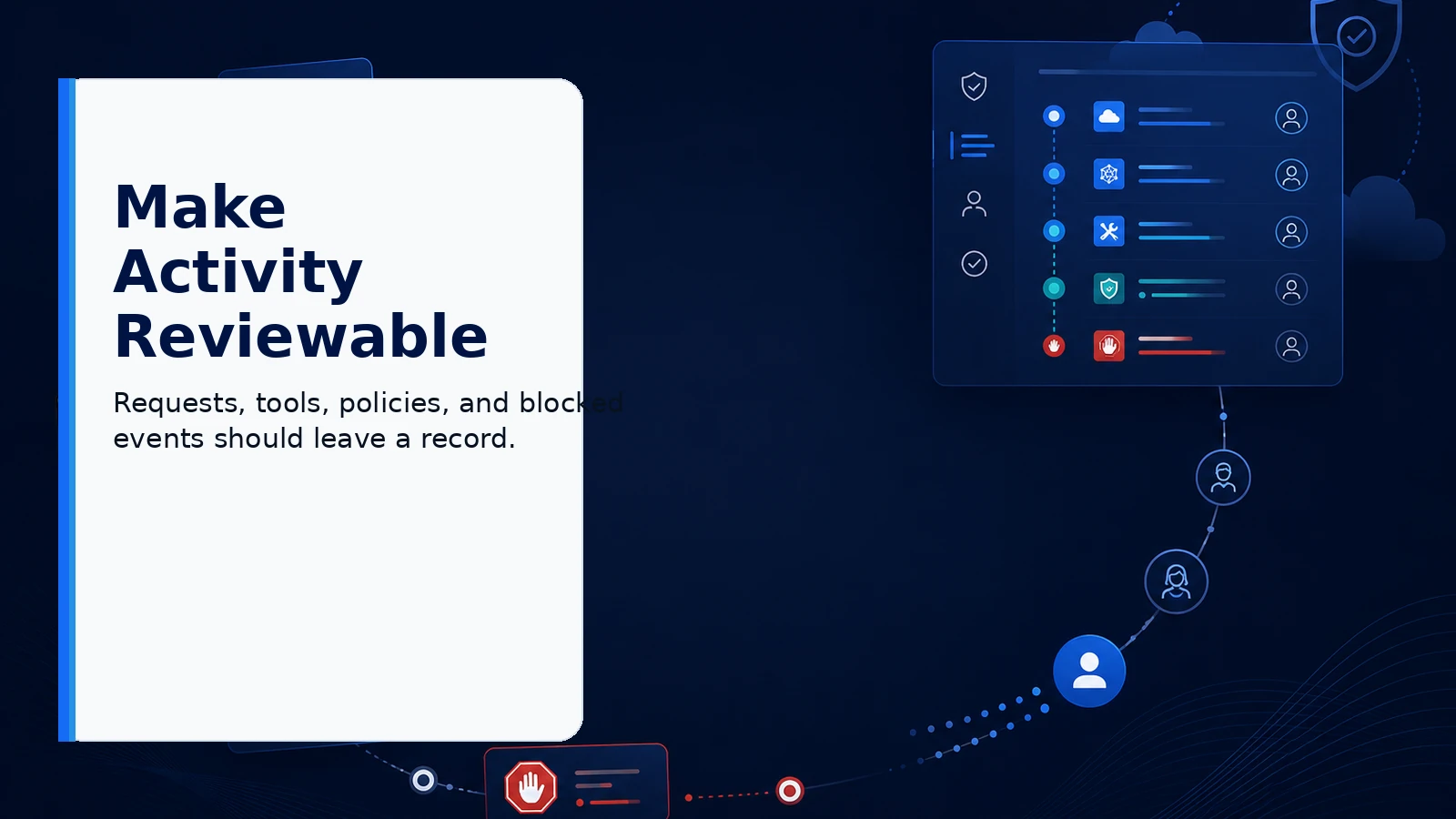
Security teams need records. RouteFreely is designed to track requests, model use, tool calls, policy events, blocked requests, and errors. Routing decisions can be logged and inspected, so governed AI is not a black box. DriftHold manages authoritative instructions as structured, versioned, permissioned blocks, which supports auditability of how AI was instructed to behave.
Offboarding
Identity-linked access can be removed at departure without touching shared credentials.
Sensitive system
A high-risk MCP tool can be exposed to a single group, with every invocation attributable to an accountable user.
What we do not claim
We do not claim total privacy, complete compliance, or zero risk. We help reduce unmanaged exposure and support governance across models, tools, and workflows. Governance and regulatory decisions should be reviewed with appropriate professionals.
Operating checks for security and compliance
Key operating checks:
- which data categories may appear in the workflow
- which environments are approved for sensitive work
- when redaction, local handling, or review is required
- how exceptions are logged and escalated
- who owns model, tool, and access approval
Sensitive work should follow clear policy before it reaches an AI model.