
AI INDEPENDENCE
AI independence is the ability to use AI without becoming captive to one path.
AI independence means preserving choice as AI becomes part of work. It is the ability to choose, route, govern, replace, and optimize models, tools, workflows, memory, and data boundaries without letting one vendor default become the entire operating model.
It is not an anti-vendor position. It is an anti-dependence position.

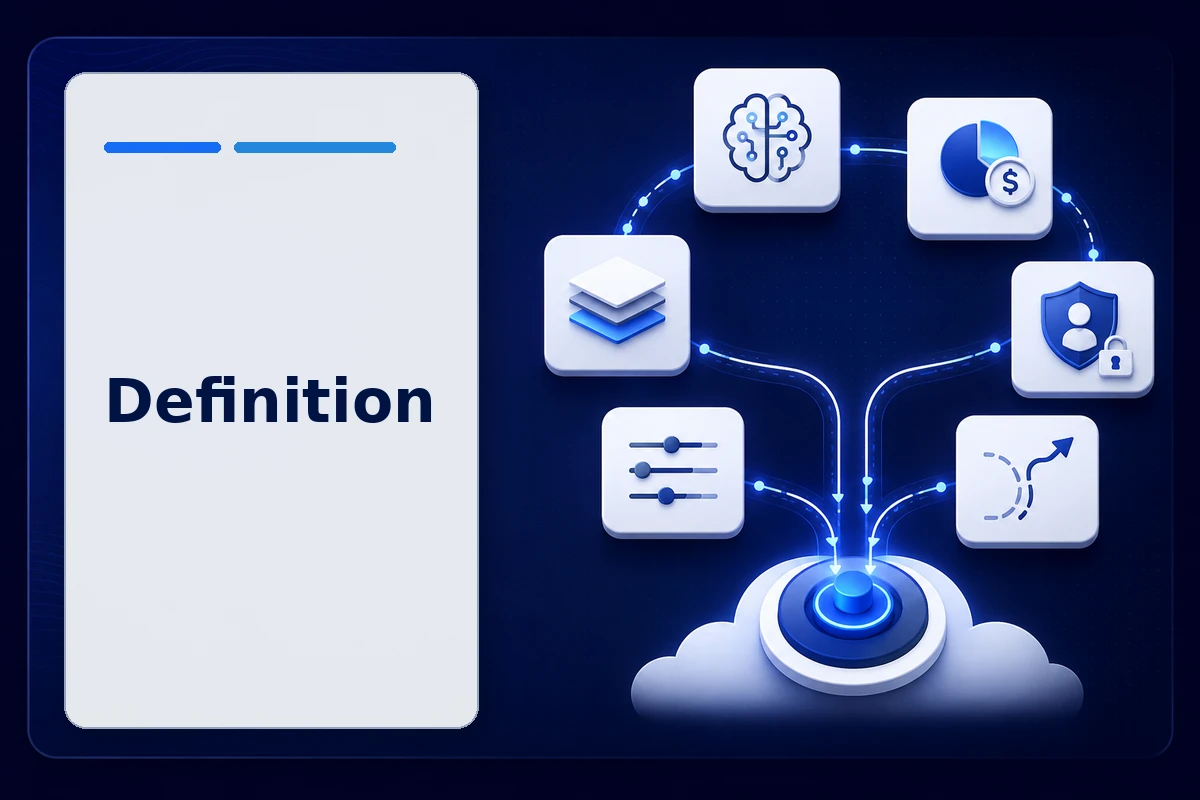
Definition
AI independence is the practical ability to use AI across models, providers, interfaces, workflows, and environments while keeping meaningful control over cost, context, data exposure, and future change.
A company has more AI independence when it can answer these questions clearly:
- Which work should use which model?
- Which data can go to which AI environment?
- Which users can access which capabilities?
- What happens if a provider changes pricing or policy?
- Can important instructions, skills, and workflow context survive a model change?
- Can we see cost and usage before they become budget problems?
- Can we connect AI to tools without uncontrolled access?
AI independence is not a single feature. It is an operating posture.
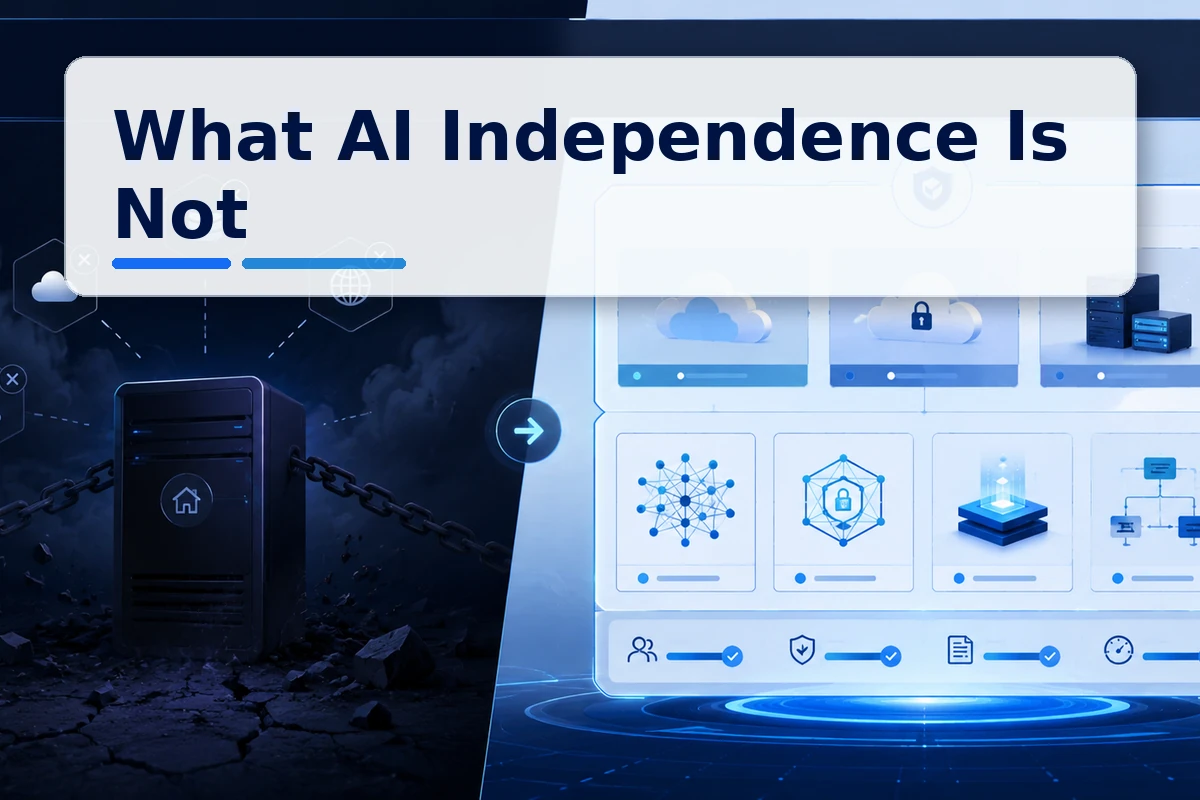
What AI independence is not
AI independence does not mean avoiding OpenAI, Anthropic, Google, Microsoft, Meta, Mistral, xAI, local models, hosted inference providers, or commercial AI platforms.
It also does not mean every workload should run locally. Local AI may be right for some sensitive or repeatable tasks. Frontier models may be right for complex reasoning. Specialized models may be right for narrow workflows. Lower-cost models may be right for routine work.
The independent position is not “never use vendors.”
The independent position is “do not let any one vendor become your only path.”
Five dimensions of AI independence
Model independence
Model independence means the organization is not forced to route every task to the same model. Different work can be matched to different capabilities, costs, and privacy profiles.
Cost independence
Cost independence means the business can manage AI spend by workload value instead of accepting one default pricing path for everything.
Data independence
Data independence means sensitive work follows company policy before it reaches a model, tool, or vendor environment.
Workflow independence
Workflow independence means the company’s AI-assisted processes are not hardwired to one proprietary interface or model-specific behavior where avoidable.
Context independence
Context independence means the organization treats memory, instructions, skills, project rules, and workflow history as operating assets that should be preserved and reused where supported.
Why it matters now
AI is moving from experiments into operations. That changes the stakes.
When AI is occasional, convenience dominates. When AI becomes part of sales, support, legal, marketing, finance, operations, engineering, customer communication, and decision support, control matters more.
A company that builds everything around one provider may face several forms of dependence:
- pricing dependence
- model performance dependence
- feature roadmap dependence
- API compatibility dependence
- memory and context dependence
- workflow dependence
- data-boundary dependence
- tool ecosystem dependence
These dependencies can be invisible at first. They become visible when the company tries to change direction.
Real examples
Example 1: Premium-model defaulting
A team uses the most expensive model for every summary, classification, rewrite, and research task. The work gets done, but cost rises because no one has matched model spend to task value. AI independence would let the organization route low-risk routine work to lower-cost approved models while reserving premium models for work that needs stronger reasoning.
Example 2: Context trapped in a workspace
A department spends months refining prompts, project instructions, file references, and working habits inside a single vendor workspace. The company later wants to change providers, but the useful context is not cleanly portable. AI independence would push the organization to manage reusable context, skills, and instructions outside one vendor default where supported.
Example 3: Sensitive work routed by habit
An employee pastes confidential customer information into whichever AI tool is easiest. There is no malicious intent. There is also no control. AI independence would define data categories, approved environments, and routing rules before sensitive work reaches a model.
Example 4: Developer lock-in
An internal application is built directly against one provider API. It works until the company wants model choice, failover, local options, or cost-aware routing. A routing layer can reduce direct dependency by giving applications a more stable internal path.
How ThinkFreely supports AI independence
ThinkFreely supports AI independence through the combination of ChatFreely, RouteFreely, context control, cost-aware routing, data-boundary controls, tool governance, and implementation support.
ChatFreely gives teams an approved workspace. RouteFreely helps route AI work across models and environments. Skills and project context help make repeatable work less dependent on one-off prompts. Governance and usage visibility help leadership see what is happening before dependence becomes architecture.
The goal is not perfect freedom from every vendor. The goal is more control, more choice, and less unnecessary dependence.
How to test your current level of independence
- Name one workflow that would be painful to move away from its current AI provider.
- Identify which context would be lost if that provider changed terms.
- Check whether lower-risk work can route differently from sensitive work.
- Review whether developers are building directly against one provider without an abstraction layer.
How to recognize real AI independence
Real AI independence is visible in decisions, not slogans. A company does not become independent because it has access to five models or a list of approved tools. It becomes more independent when the operating structure can explain why a request went to one environment instead of another, what context was used, what cost profile was acceptable, and what would change if the preferred provider became unsuitable.
A practical test is to choose one important workflow and trace it end to end. Identify the user, the data involved, the model or tool used, the instructions that shape the output, the systems the workflow touches, the cost pattern, and the human review requirement. If all of those decisions live inside one vendor workspace or one developer integration, the organization may have AI access, but it does not yet have meaningful AI independence.
The stronger posture is different. Reusable instructions are documented. Sensitive data has routing rules. Model selection is tied to task value. Tool access is permissioned. Costs can be reviewed by team or workflow. Context that matters to the business is treated as an asset instead of an accident of chat history.
What to put under organizational control first
The first control point is usually identity. The organization needs to know who is using AI, what they can access, and which work belongs inside approved environments.
The second control point is model access. Teams should not need to guess whether a task belongs with a premium reasoning model, a lower-cost model, a local model, or a private environment. The decision should be guided by policy, sensitivity, capability, and cost.
The third control point is context. Project instructions, reusable skills, brand rules, workflow standards, and retrieval behavior should not be recreated endlessly inside disconnected personal conversations. Some context will always be tied to a specific tool, but the most valuable operating context should be managed in a way the organization can review, improve, and reuse where supported.
The fourth control point is tool access. Once AI can call tools, retrieve files, use MCP servers, or touch operational systems, independence also becomes a security and governance issue. Tool capability should be activated deliberately, not exposed by default.
A simple maturity ladder
Stage 1: Access
Employees and developers use AI tools because they are useful. There may be little central visibility. This stage can create value, but it also creates the first layer of dependency.
Stage 2: Standards
The organization defines approved tools, basic data rules, and guidance for when AI can be used. This is better than unmanaged access, but it still may not create routing, cost, or context control.
Stage 3: Operating control
AI usage becomes visible. Model access, data boundaries, cost limits, user permissions, and tool access can be managed through a defined operating layer.
Stage 4: Adaptive independence
The organization can change providers, add models, route sensitive work differently, preserve reusable context where supported, and adjust policy as costs, models, and business needs change.
The goal is not to jump to the final stage in one move. The goal is to stop letting convenience make the architecture decisions by default.
The executive question
The executive question is not “Which model should we choose?”
The better question is: “How do we preserve the ability to choose as AI becomes part of our business?”
That question changes the strategy. It moves the company away from one-model thinking and toward operating design. It connects AI to governance, finance, privacy, IT, operations, and daily work. It also creates a clearer reason for products like ChatFreely and RouteFreely: the organization needs a practical way to give people AI access while keeping routing, cost, data, context, and tool decisions under control.
AI independence is not theoretical. It is the practical difference between using AI and becoming dependent on the first path that worked.
The decisions that protect your independence
Independence is the result of a few deliberate choices: where you allow a single default to take hold, which parts of your stack you keep swappable, and what you are willing to spend to keep options open. Make those choices on purpose, before the cost of leaving is set for you.
Operating checks for independence
Key operating checks:
- which models and providers you can actually switch between
- where you are locked to a single default today
- whether your context and workflows could move if a provider changed terms
- what a switch would cost right now
- what review keeps these answers current
Where this makes AI easier to manage
Leadership reviews AI usage by function before funding the next rollout wave.
Operators identify which workflow handoffs still require human judgment before automation expands.