DOCUMENTATION
Architecture for AI control above the model layer.
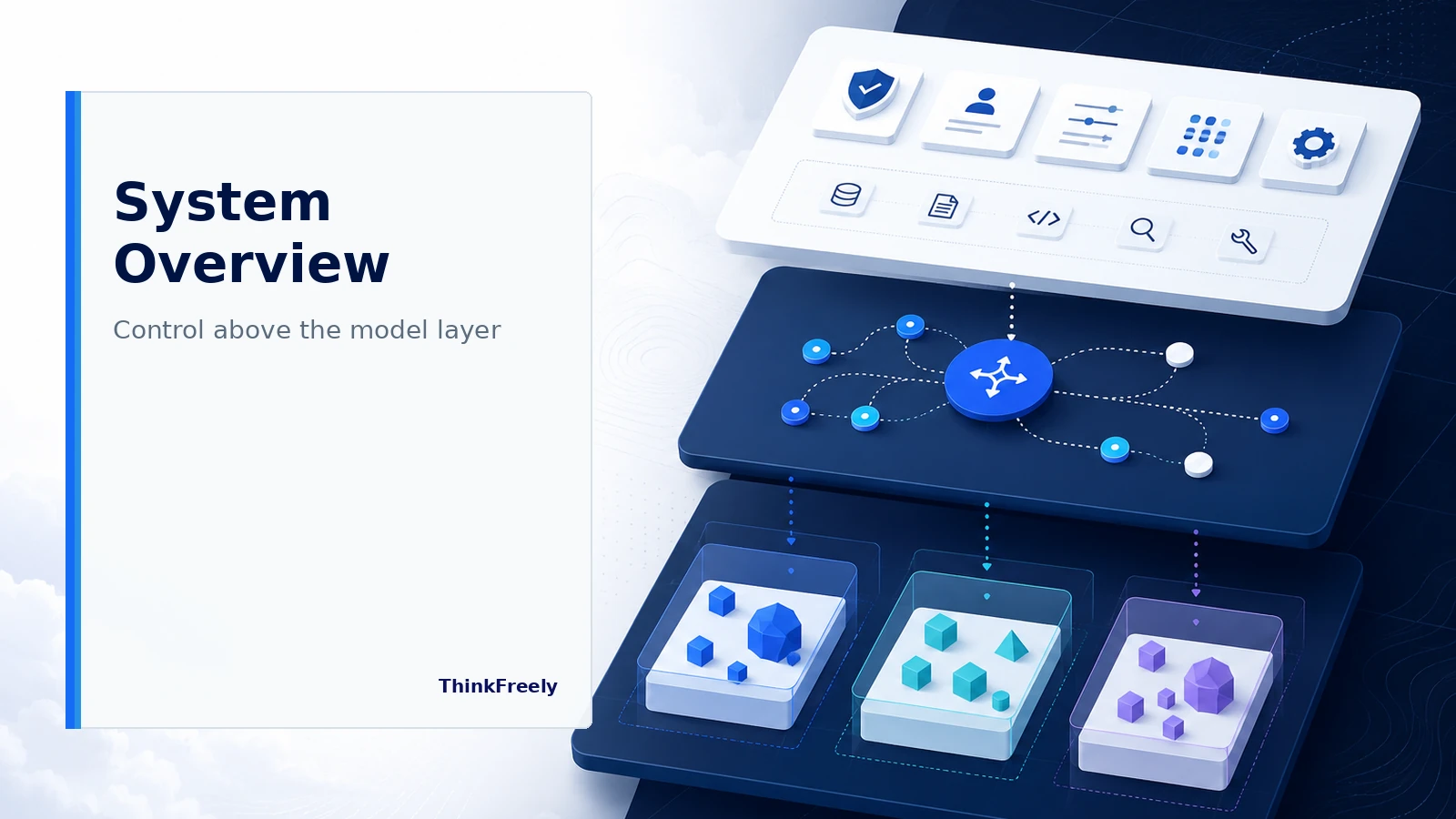
ThinkFreely is an operating layer above individual AI models. It separates the user experience from routing, policy, model selection, tool access, and context management, so AI can be governed as infrastructure rather than used as a scattered set of tools.
The organizing idea is simple: keep the business workflow above the model, and keep model choice configurable underneath it.
A control plane, not a proxy
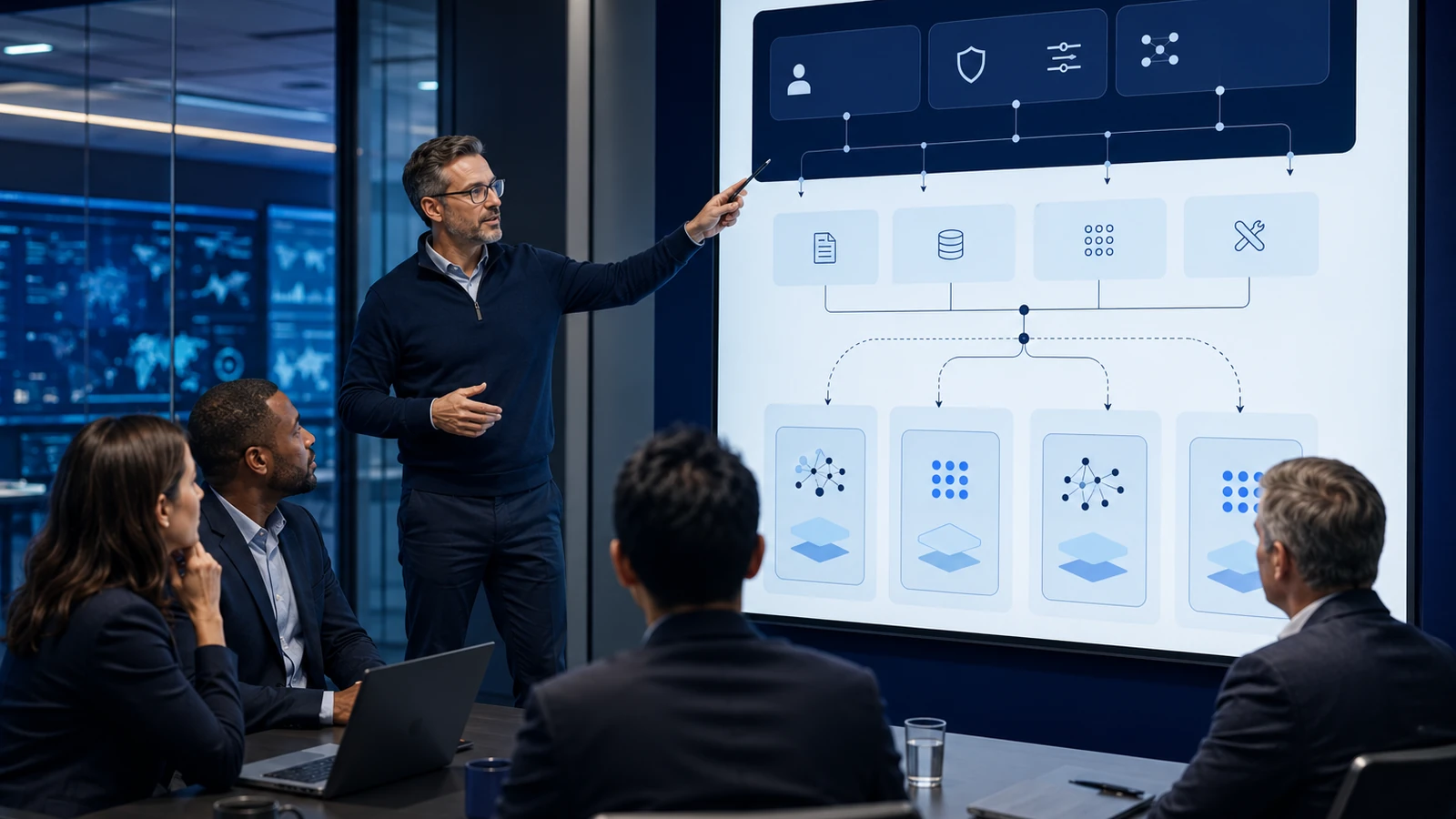
RouteFreely is designed as an AI control plane. A proxy forwards traffic. A control plane authorizes it, routes it, governs it, tracks it, and makes it inspectable. That distinction shapes the whole architecture.
Control-plane responsibilities include routing, access, identity, policy, usage, limits, privacy direction, failover, context, skills, tools, diagnostics, and compatibility.
The layers
ChatFreely workspace layer
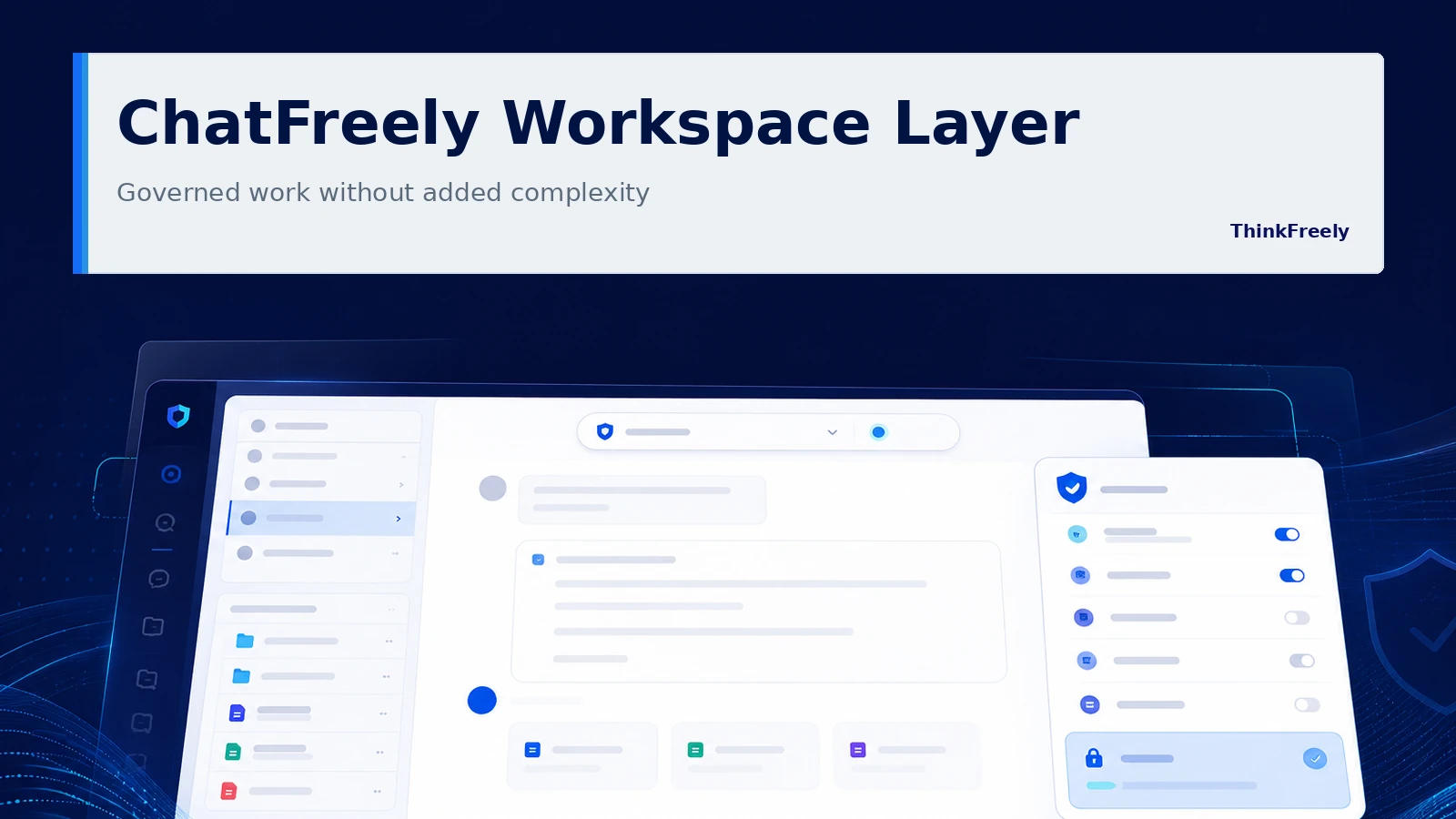
Gives users projects, conversations, file workflows, and approved capabilities, while hiding technical complexity and respecting policy. It is designed as a thin layer so it stays maintainable.
RouteFreely routing layer
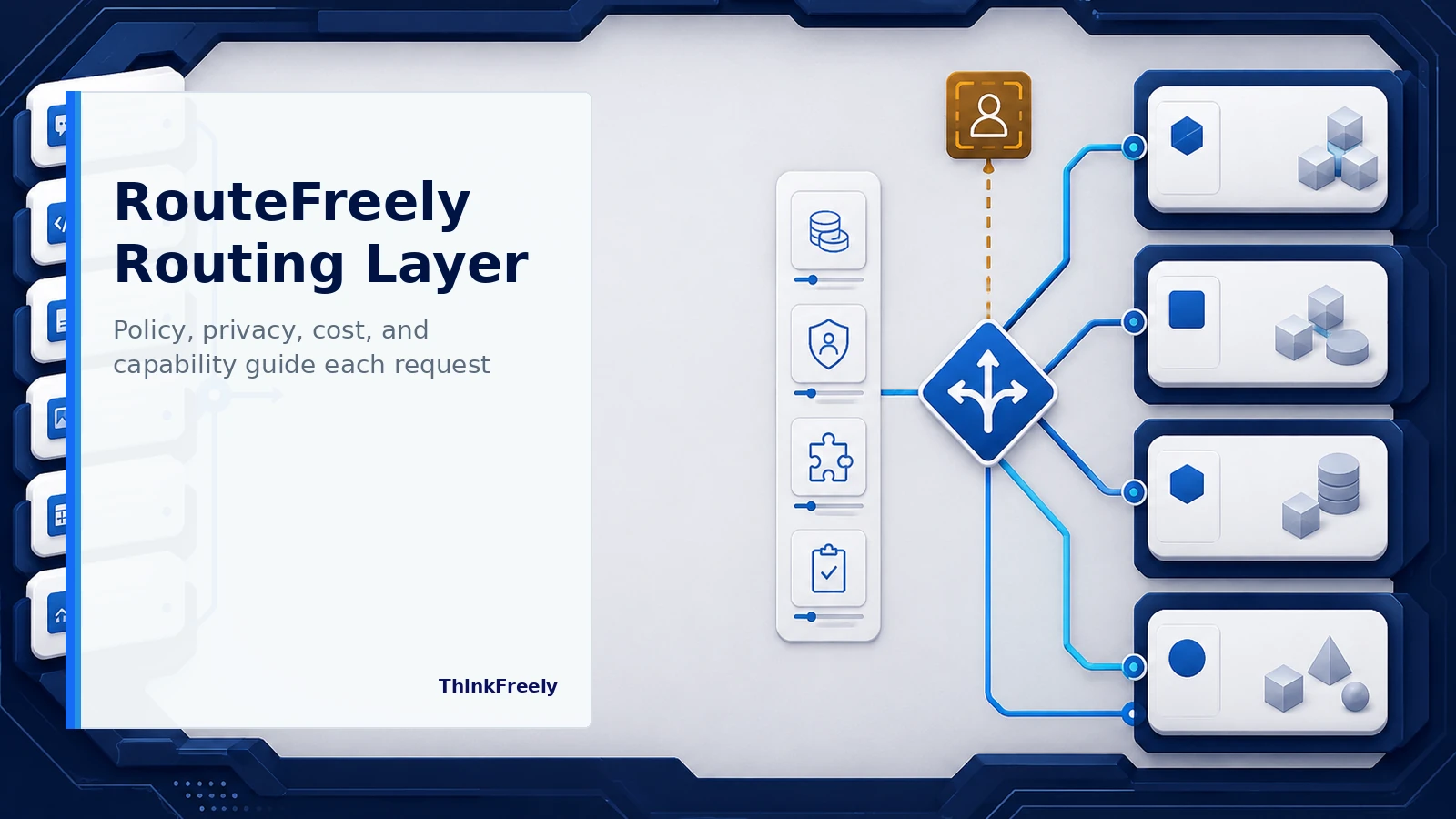
Receives AI work and decides how to handle it based on capability, cost, privacy, policy, provider health, and user access. It is where model independence becomes operational.
Provider adapters
Normalize interaction with approved providers and local or private environments. RouteFreely is designed to expose OpenAI-compatible, Anthropic-compatible, and Ollama-compatible surfaces, plus virtual models that present a stable name while the backend changes underneath.
MCP layer
Governs tool connections: server registration, discovery, permissions, activation modes, and identity propagation.
Skills layer
Encodes reusable instructions and workflow expertise, with import and export, so teams do not depend on repeated one-off prompting.
Context and DriftHold layer
Preserves project rules, memory structures, and instructions where supported. DriftHold manages authoritative instructions as structured, versioned, permissioned blocks, and separates instruction state from the final rendered prompt so the same intent can be rendered for different providers. This supports consistency across long conversations, retries, and failover, and delivers Drift Control outcomes.
Observability and admin layer
Provides dashboards, usage and cost records, key management, policy events, request tracing, and diagnostics, so administrators can operate AI as infrastructure.
Routing examples
Application call
An internal app calls a stable virtual model. RouteFreely selects the backend based on current policy, and the app never has to change when the backend does.
Workspace request
A user uploads a document in ChatFreely. The system evaluates project policy, file sensitivity, model access, and route selection, processes the file through the appropriate path, and returns one synthesized answer.
Architectural principles
- Keep the business workflow above the model.
- Keep model selection configurable where possible.
- Keep tool access permissioned.
- Keep context structured enough to reuse.
- Keep usage observable enough to govern.
Readiness, described honestly
Compatibility routes, virtual models, API key management, usage tracking, limits, model access control, the MCP registry, skills, and the admin dashboard are current strengths. The full privacy pipeline, complete internet-facing deployment hardening, and advanced DriftHold maturity are designed for and in progress. We mark direction as direction.
Operating checks for model flexibility
Key operating checks:
- which models and environments are approved
- how virtual models hide backend changes from users
- when failover is acceptable and how it is configured
- how capability, cost, and sensitivity affect dispatch
- which direct integrations should move behind a control layer
Keep control of the layer above the models.