
CAPABILITIES
Portable AI Context: Control the Layer Your Content Depends On
Your documents may belong to you. The memory, rules, skills, and routing policies built around them can still get trapped inside one platform. ThinkFreely helps keep that operating context under your control.
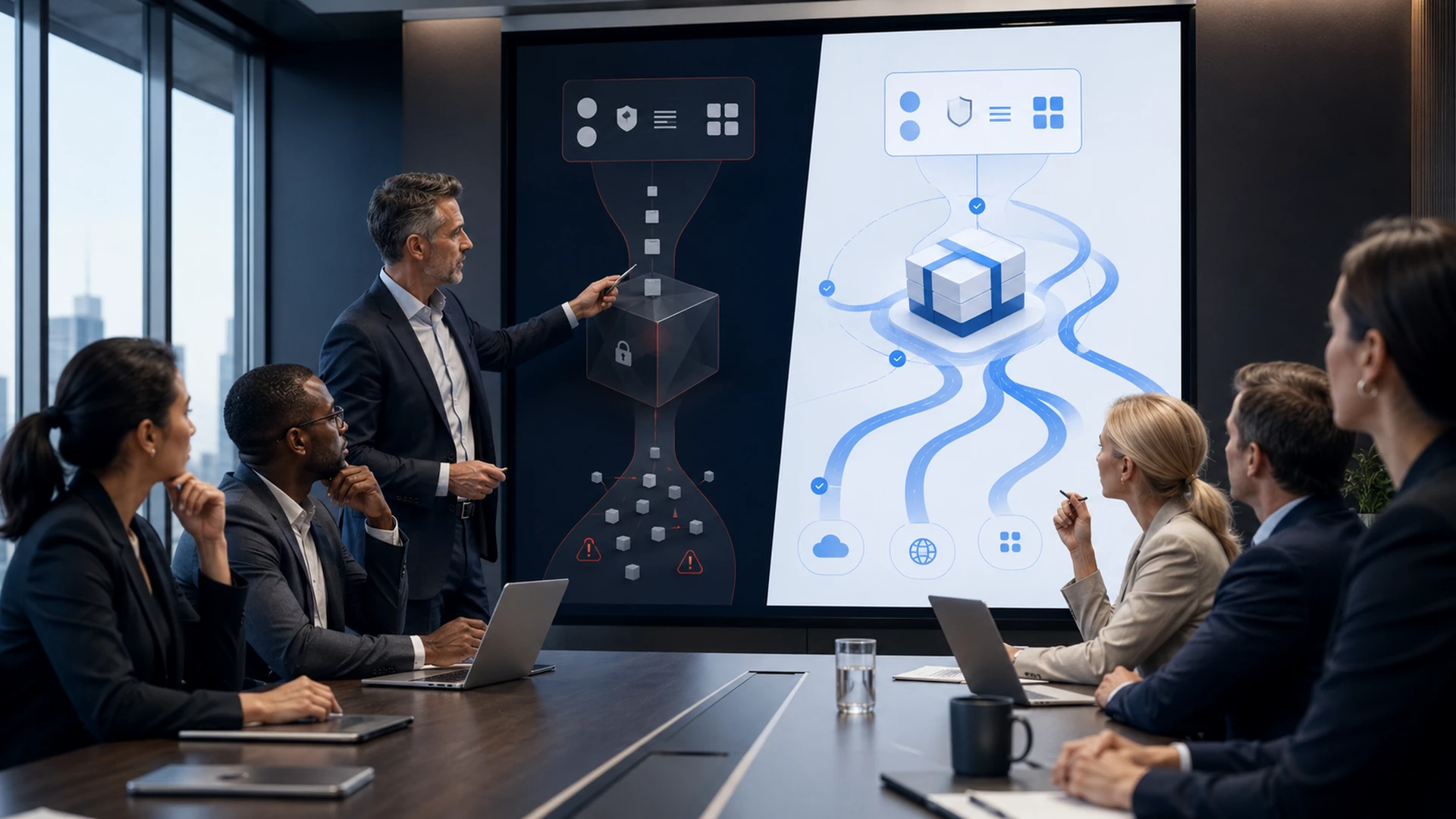
What portable AI context means
Portable AI context is the ability to preserve and move the working layer your AI depends on, including memory, instructions, skills, project structure, tool connections, and routing policies, across models and environments without rebuilding it from the beginning.
That definition matters because most organizations already protect their content. Far fewer have thought about the operating context that makes the content usable to AI.
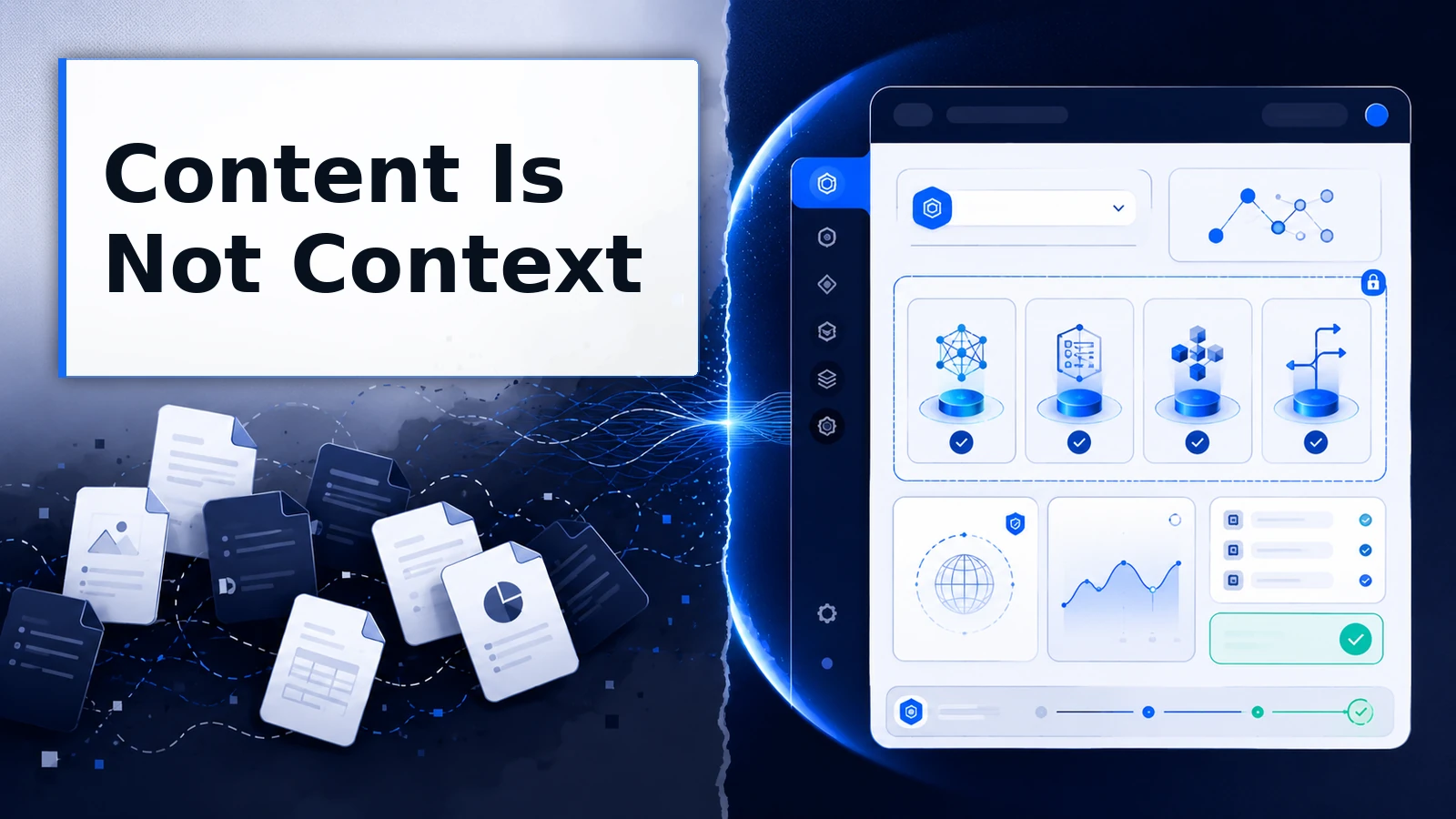
The distinction is simple. Content is what you own. Context is what makes AI useful with what you own.
Your content is not the problem. Your context is.
Every AI platform makes it easy to put content in. Documents, transcripts, spreadsheets, and records move into AI workflows every day.
What accumulates around that content is harder to see. Conversations become memory. Preferences become instructions.
Repeated work becomes skills and projects. Tool connections and routing decisions become the way your team actually operates.
None of that is content. All of it is AI operating context. And in most platforms, it forms inside the provider’s defaults, in the provider’s format, on the provider’s terms.
That is context lock-in. You can export the files. You cannot easily take the working layer that made the files productive.
What your AI operating context actually includes
AI operating context is broader than chat history. For a working organization it typically includes:
- Memory. What the system has learned about your business, your customers, and your standards.
- Rules and instructions. Workspace, project, brand, and compliance rules that shape every response.
- Skills. Reusable, governed workflows your team has refined.
- MCP servers and tool connections. How AI reaches your systems, and who is allowed to use each connection.
- Projects. The organized work context your teams operate inside.
- Routing policies. Which work goes to which model or environment, and why.
- Governance. Access controls, usage policies, and audit visibility.
Each item on that list takes time to build. Together they are an operating asset. The question is whether that asset stays yours as models and vendors change.
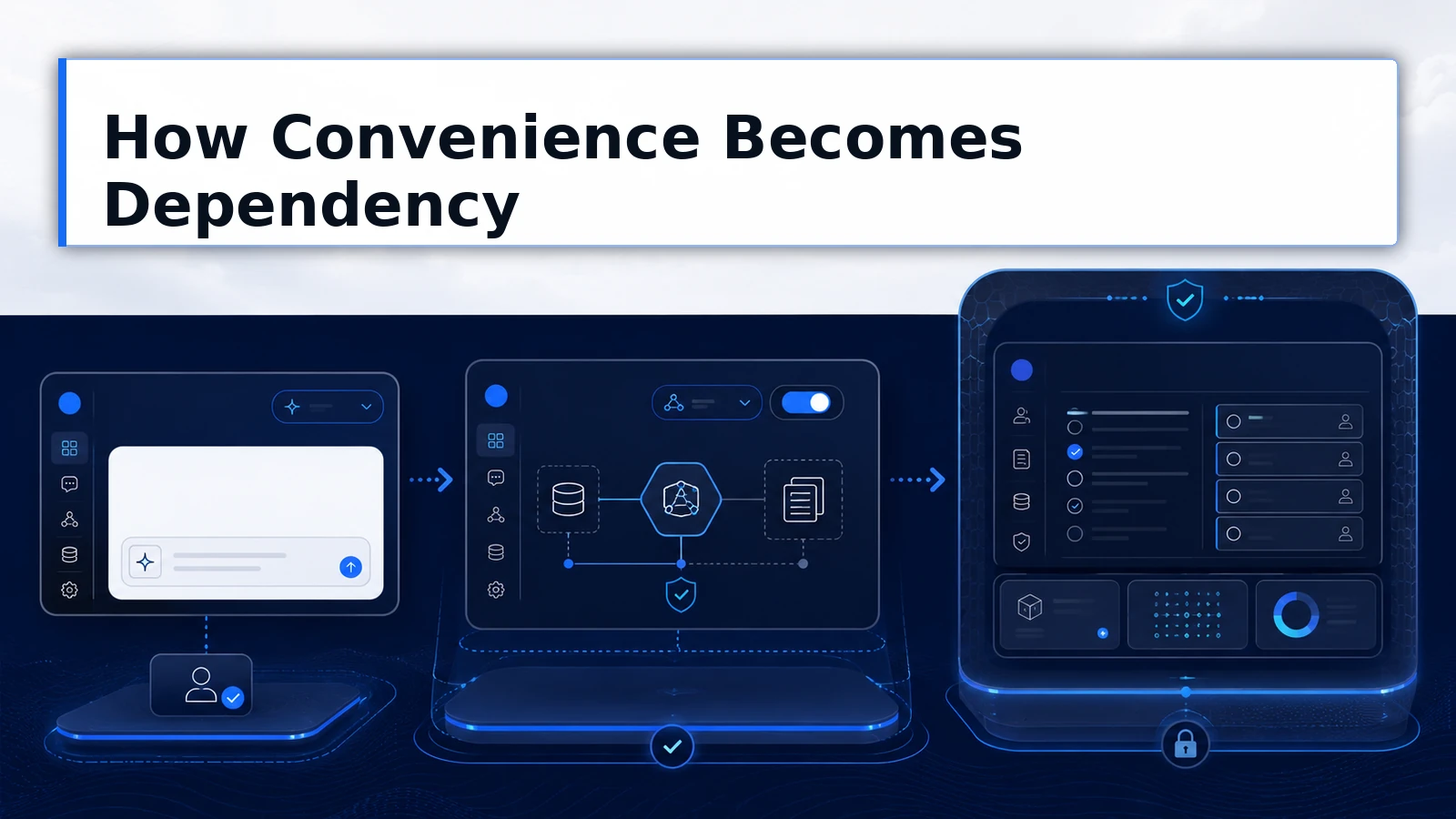
How context lock-in becomes switching cost
Context lock-in rarely arrives as a decision. It arrives as convenience.
A team adopts one platform because it works. Memory accumulates. Instructions get tuned to one model’s behavior. Workflows inherit provider-specific features because they were the path of least resistance.
Convenience becomes architecture. Architecture becomes dependency. Dependency becomes pricing power for somebody else.
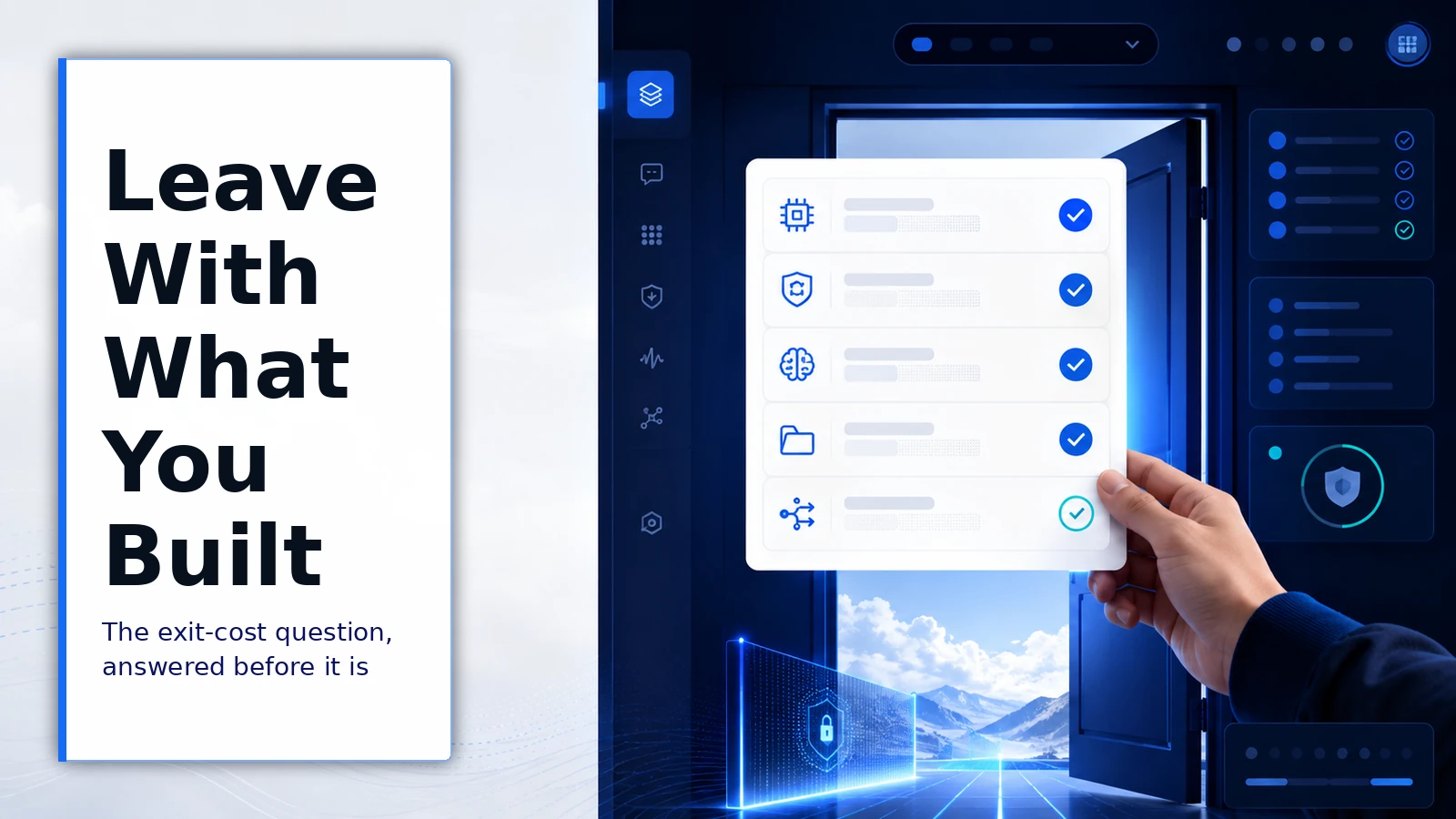
By the time leadership asks a simple question, can we leave without losing what we built here, the honest answer is often no. Not because the vendor is hostile, but because the operating context was never designed to move.
How ThinkFreely keeps operating context above the model layer
The required capability is separation. Your operating context should live in a layer you control, above any single model or provider, so the model becomes a choice rather than a foundation.
ThinkFreely is built around that separation. ChatFreely gives your teams a governed workspace where memory, rules, skills, and projects are defined at the organization level rather than inside one provider’s account structure. RouteFreely dispatches work to models based on cost, privacy, capability, and policy, so the context layer does not fuse to a single backend.
This helps improve context portability rather than promising to abolish switching costs. Some provider-specific features will still require adaptation when workflows move, and export fidelity depends on what each element is and how it was configured. The claim we stand behind is narrower and more useful: keeping your operating context in a layer you govern reduces unnecessary dependence and preserves more of what you built when circumstances change.
Export direction follows the same principle. Context elements are structured so they can move outward where supported, instead of existing only as artifacts of one platform’s internal state.
How ThinkFreely structures portable context
ThinkFreely treats operating context as a set of governed, organization-owned elements.
-
Memory you govern
Business memory is held and governed at the organization level, so what your AI has learned about your work is not locked to one provider’s account or one model’s internal state.
-
Rules above the model
Workspace, project, brand, and compliance rules are defined once in your controlled layer and applied across models, instead of being rebuilt inside each provider’s settings.
-
Skills as portable assets
Repeatable expertise is captured as governed skills your organization owns, reuses, and updates centrally, rather than as habits scattered across individual accounts.
-
Governed tool connections
MCP servers and tool access are registered and permissioned in your operating layer, so integrations follow your policy instead of a single platform’s account structure.
-
Routing kept separate
RouteFreely holds routing policy apart from any one backend, so the decision about where work goes stays yours as models, prices, and providers change.
What controlled context is worth to the business
-
Leverage in every negotiation
When your operating context can move, renewal conversations change. You evaluate providers on merit and price instead of on the cost of abandoning what you built.
-
Faster model adoption
New models can be evaluated and adopted through routing changes rather than migrations, because memory, rules, and skills already live above the model layer.
-
Continuity through change
Deprecations, pricing shifts, and provider changes become operating events to manage, not crises that strand the context your teams depend on.
Deciding what needs to be portable first
Not every element of context deserves the same investment. Useful questions to prioritize:
- Which workflows would hurt most if their context disappeared tomorrow?
- Where has memory or instruction tuning accumulated the longest?
- Which teams depend on provider-specific features that have no equivalent elsewhere?
- What would a competent team need to reproduce your current AI behavior in a new environment?
Two examples show how the answers differ by function.
A legal team has spent a year refining review instructions, clause libraries, and matter-specific project context. That context is high value and slow to rebuild, so it belongs in the governed layer first, with rules defined at the workspace level rather than tuned into one model.
A customer support team runs high volumes through a routine triage skill. The individual conversations matter less than the skill itself and the routing policy behind it. Making the skill and policy portable protects the operation. Archiving every conversation does not.
What backs this up
-
Organization-level context
Memory, rules, skills, and projects are defined and governed at the organization level in ChatFreely, not inside individual provider accounts.
-
Multi-model by design
RouteFreely dispatches the same governed context across supported models and environments, so context is exercised against more than one backend from day one.
-
Structured for export
Context elements are held as structured, organization-owned configuration, designed to move outward where supported rather than existing only as platform state.
Where portability has limits
Honest portability planning includes what does not move cleanly.
Provider-specific features, by definition, do not transfer. A workflow that leans on one platform’s unique capability will need adaptation, and sometimes redesign, in a new environment.
Model behavior also differs. Instructions that are portable in form may still need tuning when the model that executes them changes.
And portability has a cost. Keeping context in a governed layer takes more initial discipline than letting each tool accumulate its own defaults. The organizations that benefit are the ones that treat operating context as an asset worth that discipline.
Frequently asked questions
What is the difference between AI content and AI context?
Content is the material you own: documents, records, files, and data. Context is the operating layer that makes AI useful with that content: memory, instructions, skills, tool connections, projects, and routing policies. Most organizations control their content. Context is where control quietly slips away, because it accumulates inside platform defaults rather than in a layer you govern.
Can all AI context be made portable?
No, and you should be skeptical of anyone who says otherwise. Provider-specific features and model-specific behavior do not transfer perfectly. What you can do is keep the durable elements, memory, rules, skills, tool governance, and routing policy, in a layer you control, so substantially more of your operating context survives a change than it would by default.
How does context lock-in differ from vendor lock-in?
Vendor lock-in usually describes contracts, pricing, and proprietary features. Context lock-in is quieter: your team’s accumulated memory, instructions, and workflows become embedded in one platform’s internal state. You can be contractually free to leave and still practically unable to, because the cost of rebuilding context is too high. That is why context deserves its own strategy.
Where should an organization start?
Start with an inventory. List the memory, rules, skills, tool connections, and routing decisions your teams actually depend on, then ask which of them live in a layer you govern. The gap between those two lists is your context exposure. ThinkFreely’s platform approach is built to close that gap; see how the platform holds context above the model layer.
Keep the layer that matters
Models will keep changing. Prices will keep moving. The organizations that stay flexible will be the ones that control the layer above the models: their own operating context.
Own your content. Control your context. Build where you can move.
Related pages
-
Preserve AI Context
How teams preserve AI context through change.
-
Context Portability
A deeper guide to context portability.
-
Portable Memory
How governed memory differs from platform memory.
-
Portable Rules Instructions
Building rules once and keeping them as models change.
-
Platform
How the platform holds context above the model layer.