
THE THINKFREELY PLATFORM
The AI independence layer for governed, portable, model-flexible work.
ThinkFreely is a product ecosystem for organizations that want to use AI without letting one model, vendor, interface, pricing structure, memory layer, or workflow path become a trap.
The platform is built around AI independence. That does not mean avoiding vendors. It means preserving choice while AI becomes part of daily work.
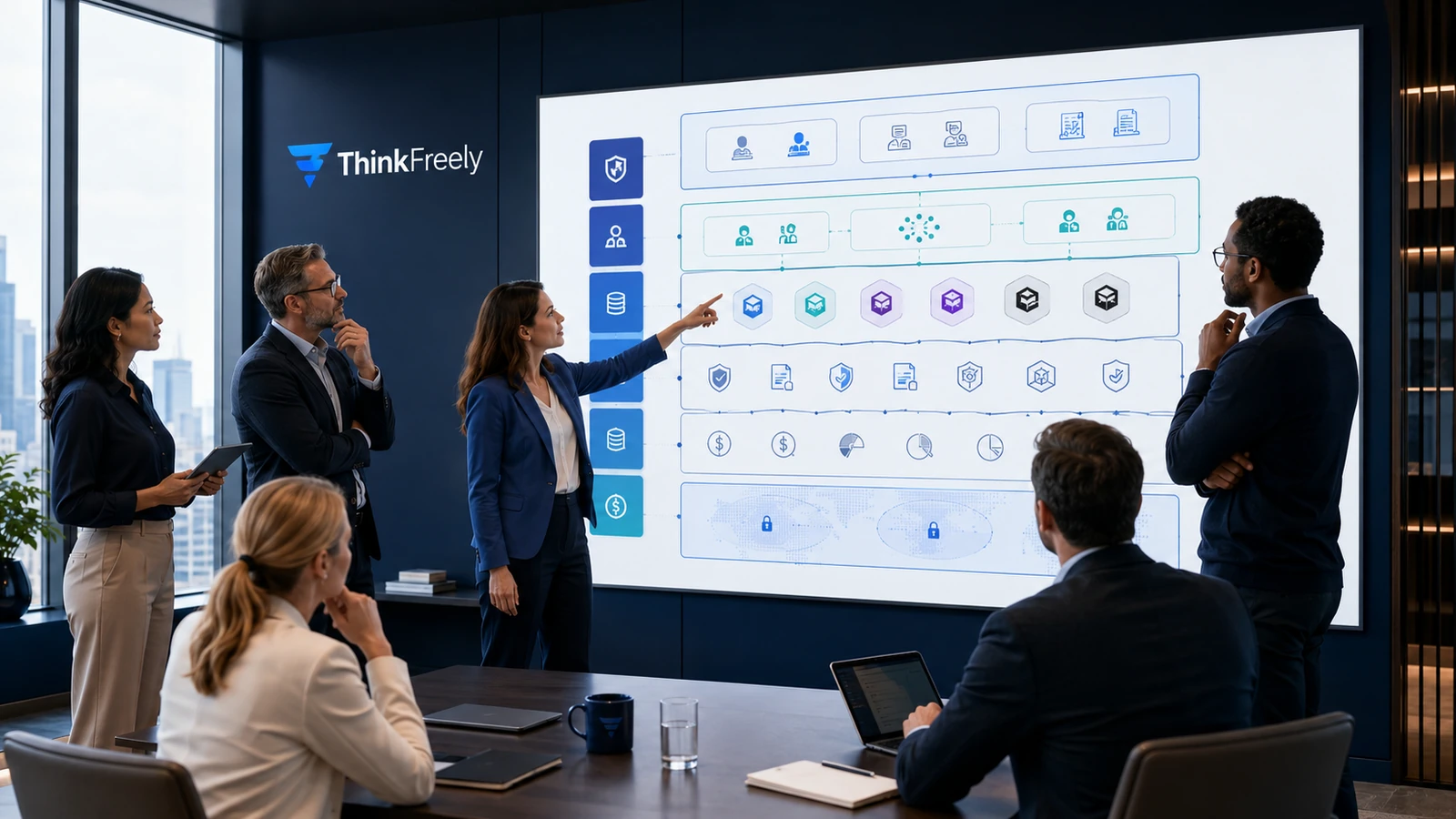
What ThinkFreely is
ThinkFreely provides a practical structure for AI work above the model layer. It brings together the user workspace, routing control, context portability, model choice, cost visibility, privacy-aware handling, tool governance, and implementation support.
This is important because the AI market will keep changing. Models will improve, regress, specialize, change pricing, add features, remove features, and shift policies. The organization should not have to rebuild its operating workflows every time the model market changes.
ThinkFreely helps create a layer where the business can decide how AI should be used.
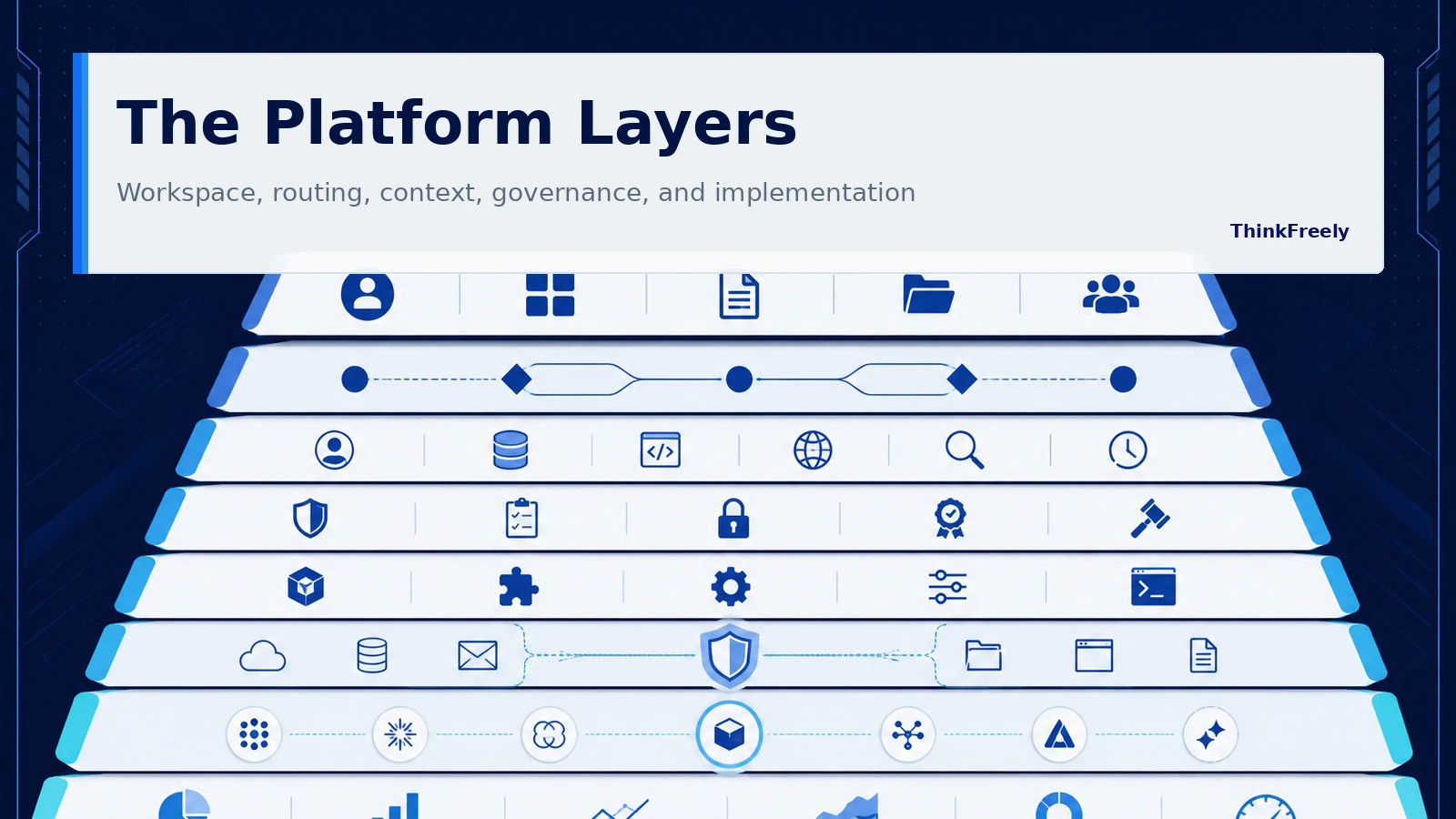
The platform layers
Workspace layer
ChatFreely gives users a governed place to work with AI. It supports familiar interaction patterns while allowing the organization to control model access, projects, tools, files, usage, and data-boundary behavior.
Routing layer
RouteFreely directs AI work across models and environments based on cost, capability, privacy, policy, provider availability, and workflow requirements.
Context layer
ThinkFreely treats instructions, memory, project rules, skills, tool configurations, retrieval behavior, and workflow history as important operating context. Where supported, these elements should be easier to manage, preserve, and reuse outside a single vendor default.
Governance layer
The platform supports the policy decisions that make AI usable at scale: who can use what, what data can go where, which tools may be activated, what limits apply, and what activity should be visible to administrators.
Implementation layer
Buildtelligence helps companies fit the platform into real workflows, stakeholder needs, privacy expectations, training requirements, and operating constraints.
Operating context above the models
Most AI platforms emphasize the model. ThinkFreely emphasizes the operating layer around the model.
The model matters, but the model is not the whole system. AI becomes useful because of the context around it:
- instructions that define how work should be done
- examples that show desired output quality
- files and knowledge sources that shape the answer
- memory and preferences that reduce repeated explanation
- workflow steps that make outputs actionable
- tool permissions that allow controlled interaction with systems
- policies that define what is allowed
If that context is trapped, switching models becomes difficult even when the raw data belongs to you.
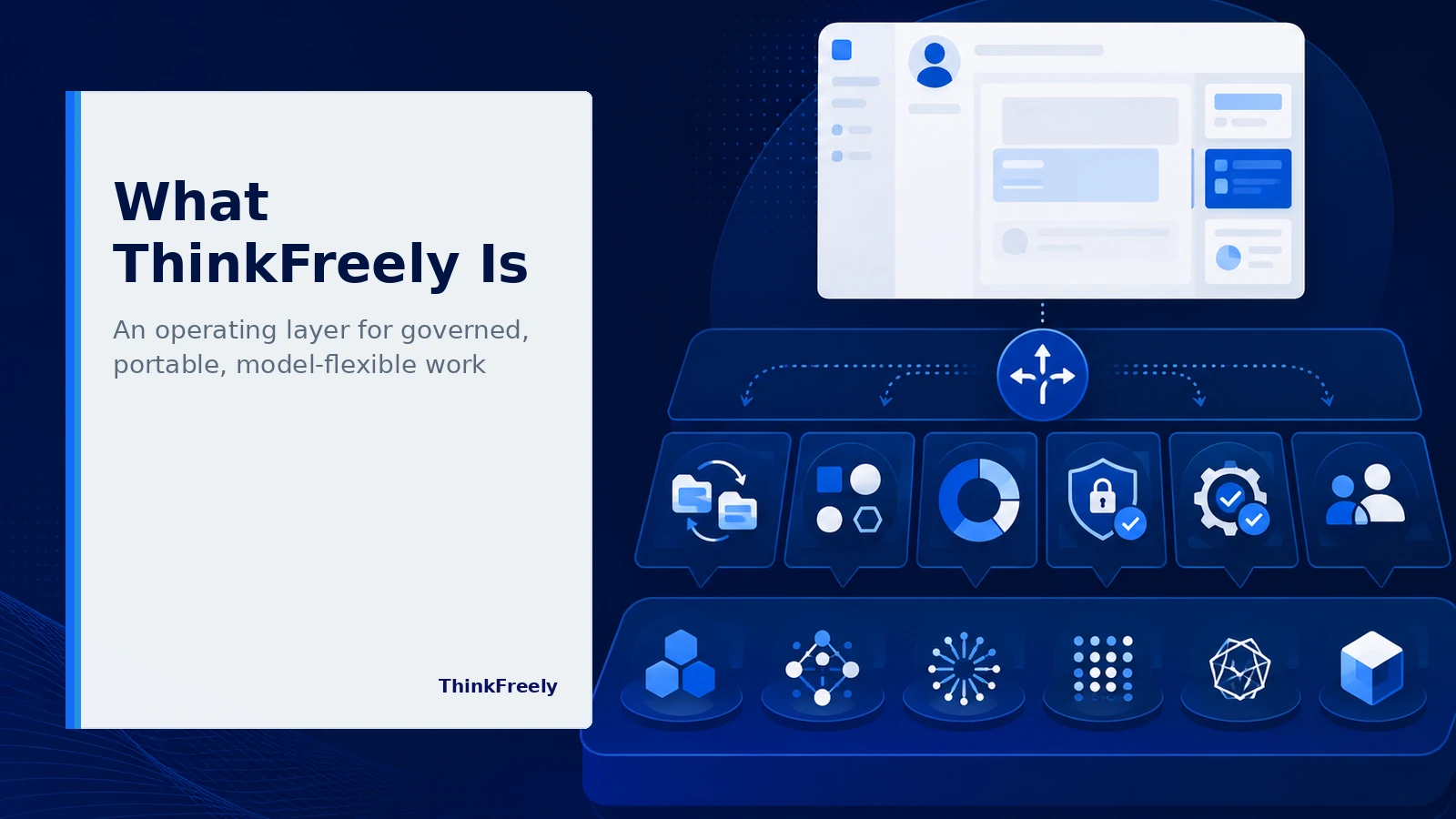
Why model-flexible architecture matters
A single-provider strategy may be convenient early. It becomes fragile when pricing changes, policies shift, a provider has an outage, a model underperforms on a specific task, or a workflow needs a different privacy profile.
ThinkFreely supports a more durable posture:
- use premium models where they matter
- use lower-cost models where they are sufficient
- use private or local environments for sensitive work when appropriate
- use specialized models for specialized tasks
- keep business logic and reusable context from being buried inside one vendor surface
The question is not “Which model should we choose forever?”
The better question is “How do we preserve the ability to choose?”
Deployment patterns
Different organizations need different levels of control, so ThinkFreely can be adopted in whatever deployment pattern matches your operating reality:
- workspace-first adoption for teams replacing public AI usage
- gateway-first adoption for developers and IT teams routing existing applications
- governance-first adoption for organizations with privacy, security, or compliance pressure
- cost-control adoption for companies trying to understand and limit AI spend
- implementation-led adoption for companies that need process design, training, and operating structure
ThinkFreely is not one rigid path. It is a control system you can implement in stages.
Context portability examples
A mid-market company may start with ChatFreely to reduce public tool usage. Then it adds RouteFreely to route sensitive work and track model costs. Later, it defines reusable skills for sales, support, and operations. As AI usage grows, it adds stricter data-boundary rules, MCP tool access, and department-level reporting.
A technical team may start with RouteFreely first because internal applications already call model APIs. They can centralize API keys, add usage visibility, expose virtual models, and reduce direct provider dependency before rolling out a broader workspace.
A privacy-sensitive company may begin by classifying AI work into local-only, private-approved, and remote-allowed categories. ThinkFreely becomes the operating layer for enforcing that distinction.
The promise
ThinkFreely helps organizations use AI with more control over context, workflows, data boundaries, cost, and model choice.
It does not promise perfect portability, zero risk, or a future where every workflow can move without adjustment. It helps preserve more choice and operating control as AI becomes more important.
Platform evaluation criteria
- Can the organization separate user experience from model choice?
- Can context be managed as a reusable asset where supported?
- Can cost, privacy, tools, and model access be governed from a coherent layer?
Platform proof points to evaluate
The ThinkFreely platform should be evaluated as an ecosystem, not a single feature. Look for how ChatFreely, RouteFreely, skills, MCP governance, privacy-aware routing, cost visibility, and implementation support work together.
The platform is strongest when the workspace, routing layer, context controls, and governance model reinforce one another. Employees get a usable AI environment. Administrators get policy and visibility. Leadership gets a path away from unmanaged dependence.
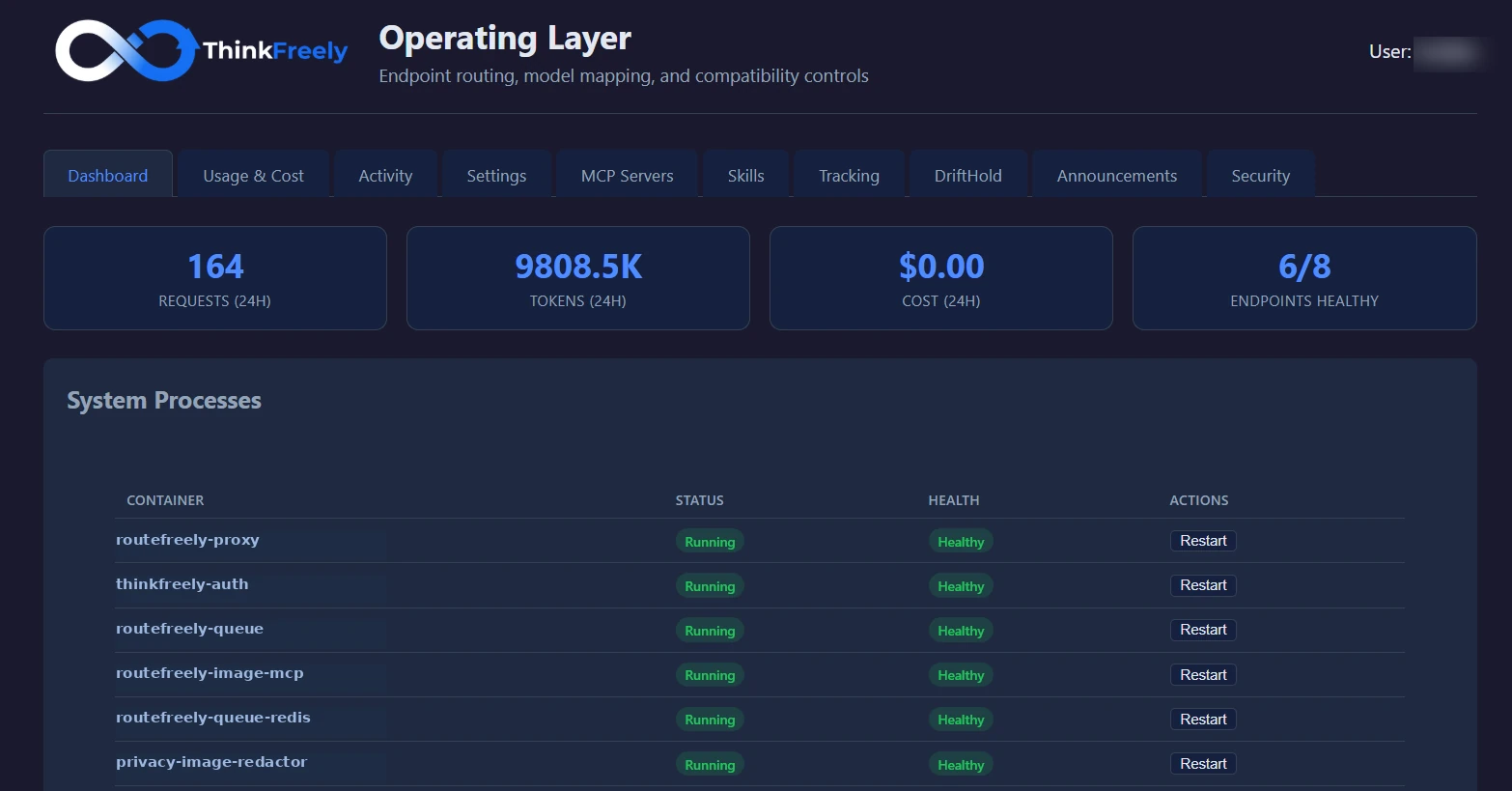
One console runs the operating layer
This is the live ThinkFreely dashboard: routing, usage, governance, and system processes in a single view. You evaluate proof points faster when you can see the layer itself.
The control plane and DriftHold
RouteFreely is the control plane at the center of the platform. It does more than pass requests through. It authorizes, routes, governs, tracks, and inspects AI work across models, providers, tools, and privacy boundaries.
DriftHold is the platform’s instruction-consistency layer. It holds authoritative instructions as structured, versioned, permissioned blocks and separates instruction state from the final prompt, so the same intent can be rendered across providers. DriftHold is the capability. Drift Control is the outcome: less drift and more consistent AI behavior across long or multi-step work.

Operating checks for portability
Key operating checks:
- which instructions, memories, files, and project rules matter
- which context should live outside a vendor-specific chat history
- how workflows survive model or provider changes
- what can be exported or reconstructed
- which parts of your setup can move as-is, and which need rework