Tokens processed
0 B+
Cups of Coffee Consumed
0 +

Use AI Without Trapping Your Context Inside Something You Don't Own

Maintain control over context, workflows, data boundaries, and costs while choosing the models that suit your needs with ThinkFreely’s innovative platform.u00a0

WHY THINKFREELY

Access Is Not the Same as Control

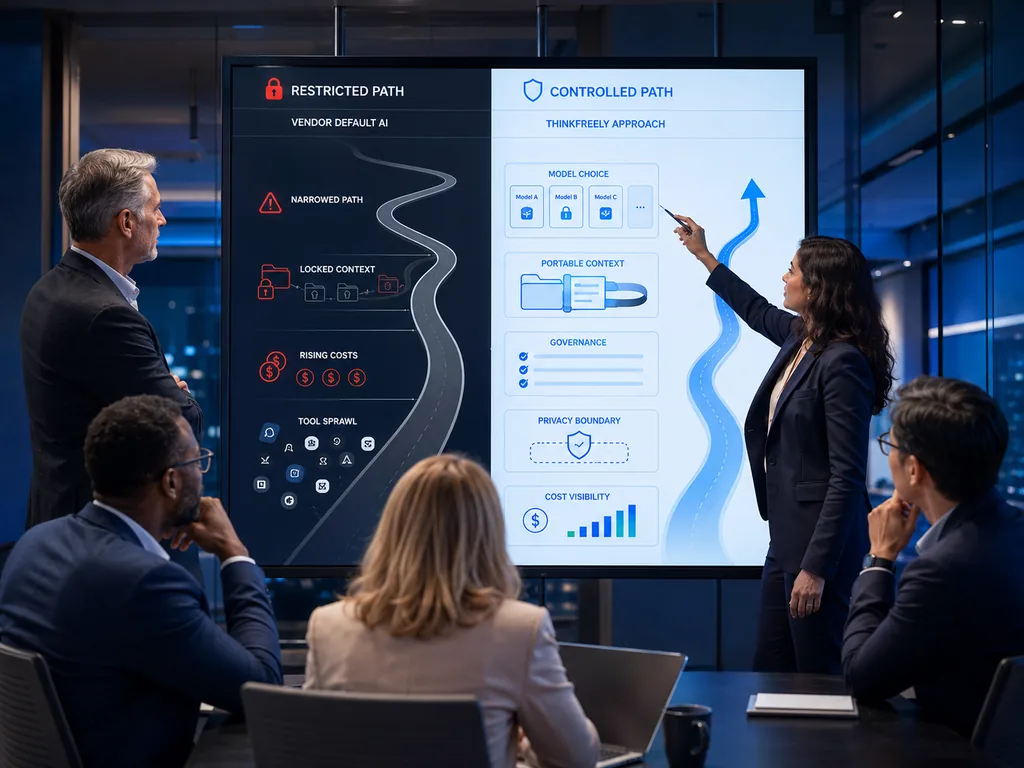
When every team picks its own AI tool, leadership may not know which models are used, what data is sent, which workflows are becoming dependent, or where costs accumulate. The risk is that vendor defaults quietly become your AI architecture.

Context Control

Instructions, memory, workflow history, and reusable skills are operating assets, not a hidden side effect of one platform.

Model Flexibility

Different work deserves different AI. Strategy, support drafting, code review, and low-risk summarization do not all need the same model or provider.

THE ECOSYSTEM

The ThinkFreely Ecosystem

Three parts work together: a governed workspace for everyday AI work, a routing and control layer for the organization, and the implementation to make them work inside real teams.

chat freely logo only

ChatFreely

The governed AI workspace. A familiar browser-based experience for everyday AI work, while the organization manages model access, files, projects, privacy rules, and usage visibility.

route freely logo only

RouteFreely

The routing and control layer. It directs AI work by cost, privacy, capability, policy, and model fit. It is not just a proxy. It is the layer that turns model independence into an operating pattern.

Buildtelligence

Implementation support. Buildtelligence helps assess, implement, govern, train, and operationalize the ecosystem inside real workflows, policies, and business constraints.

ABOUT

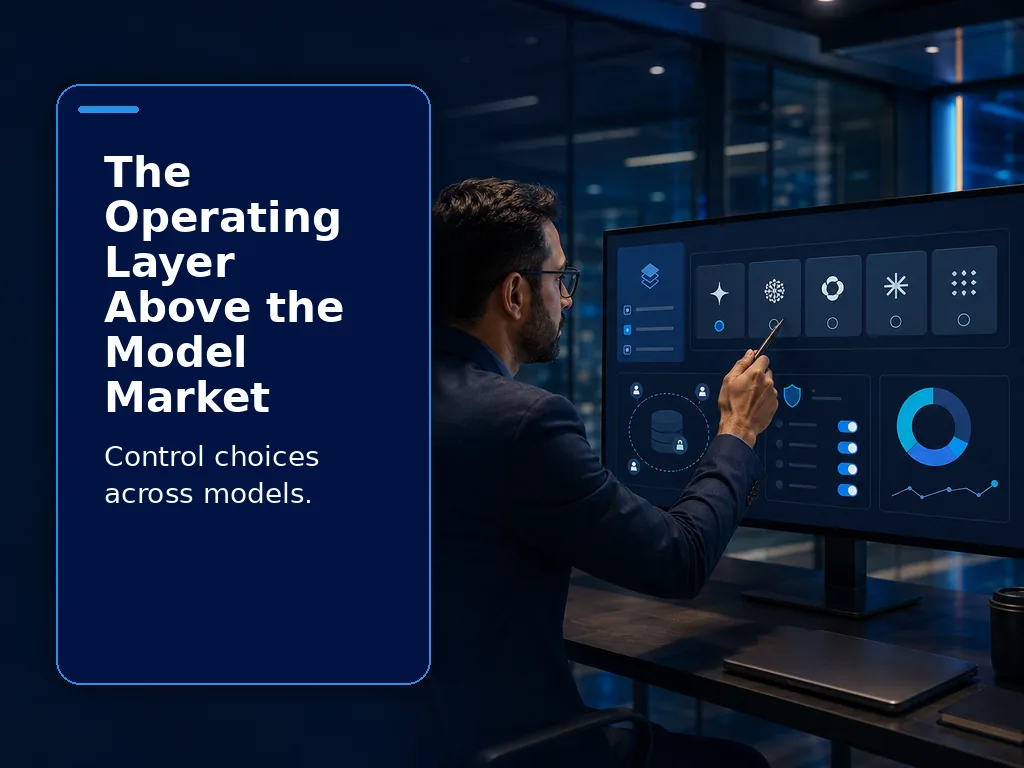
The Operating Layer Above the Model Market

ThinkFreely is the product ecosystem for AI independence. It helps organizations use AI across models, workflows, memory, data boundaries, and cost structures without letting one vendor path become the operating model by default.

homepage-inline-2-access-without-control
Our Process

How Routing and Control Work in Practice

01

Bring Context

Preserve instructions, memory, and reusable skills as operating assets, so context is not trapped inside one vendor’s chat history.

02

Classify Tasks

Match each task to the right model and data-boundary path. Not every request needs a premium frontier model.

03

Route Effectively

Direct work by cost, privacy, capability, and policy, so sensitive work stays where it belongs and spend matches task value.

Client Feedback

What Our Clients Say

ThinkFreely helped us see that AI control is not just about which model we use. It is about keeping our context, workflows, costs, and choices from getting trapped inside one vendor system.

Jill W

We wanted our team to use AI more, but not in a way that created blind spots or long-term dependence. ThinkFreely gave us a clearer path to route work.

Barbara K

The biggest shift was realizing that convenience can become lock-in if you do not plan for portability. ThinkFreely helped us build where we have portability

William R

Get Started

Request a ThinkFreely Demo

Start with the workflows where dependence is already forming. See how ChatFreely, RouteFreely, and Buildtelligence give you control before it becomes a switching cost.

WHAT YOU CONTROL

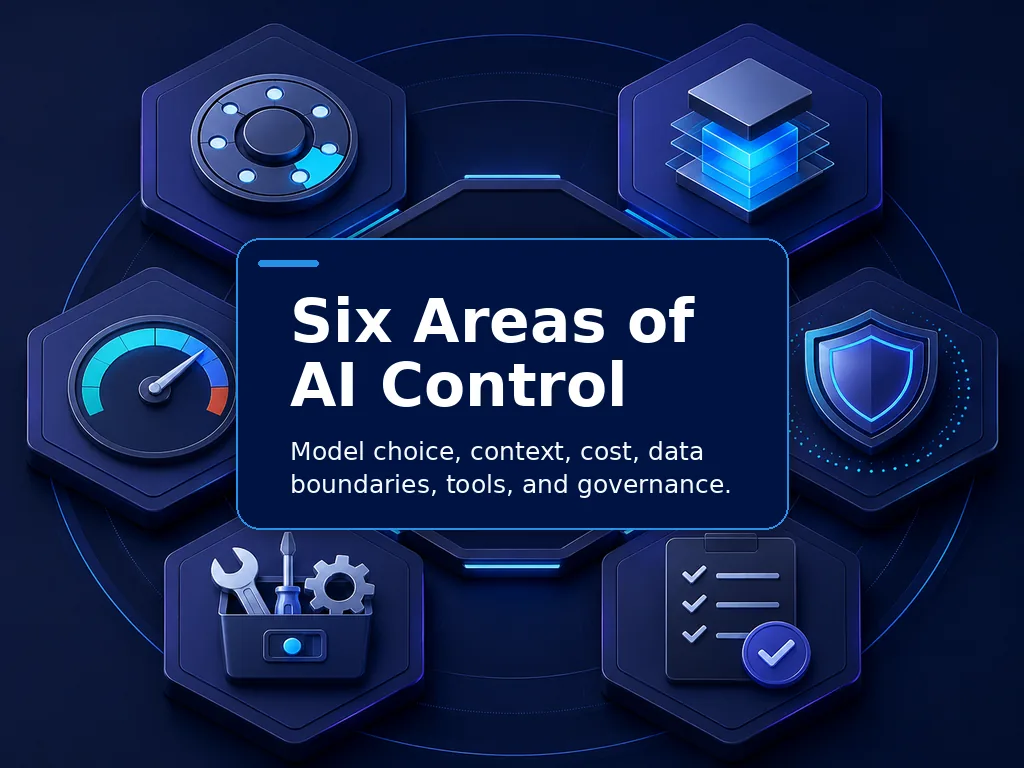
Six Areas of Control

ThinkFreely does not ask you to reject AI vendors. It helps you avoid unmanaged dependence on one of them. The platform is designed around six areas where the organization can make deliberate decisions.

Model Choice

Strategy, legal analysis, support drafting, knowledge retrieval, image workflows, code review, and low-risk summarization do not all need the same model or provider.

Ask Freely: how does task routing work?

Context

Instructions, memory, workflow history, preferences, project rules, retrieval behavior, and reusable skills. ThinkFreely treats that context as an operating asset, not a hidden side effect of platform usage.

Ask Freely: how does context stay yours?

Cost

Cost control is not about always choosing the cheapest model. It is about matching model spend to task value and giving leadership visibility before AI becomes an uncontrolled operating expense.

Ask Freely: how does cost control work?

Data Boundaries

Sensitive work should follow clear routing and handling rules before it reaches a model. ThinkFreely supports the operating discipline needed to keep private work where it belongs.

Ask Freely: how do data boundaries work?

Tools

Tool-connected AI needs permissions, identity, activation rules, and audit visibility. Governed MCP tool access lets AI interact with systems without exposing every tool to every user.

Ask Freely: how are AI tools governed?

Governance

Governance should not block adoption. It should make adoption safer, more repeatable, and more visible.

Ask Freely: how does governance help adoption?

Use the best AI for the job. Preserve choice where possible. Control cost. Protect sensitive work. Govern tools. Keep context from becoming a hidden switching cost.

Think Freely.

Scroll to Top