
USE CASE
AI for Government: Adopt AI Without Building the Lock-In Your Own Rules Prohibit
Government agencies are adopting AI faster than they are governing it. That gap has a cost your procurement rules already recognize and now direct you to avoid: AI vendor lock-in.

Your procurement rules already prohibit what most AI adoption creates
Public procurement is built on competition. Full and open competition, fair vendor access, and the ability to rebid are not preferences. They are legal and policy obligations at nearly every level of government.
This applies whether you run a federal or state agency, a county, a municipality, a special district, a constitutional office, or a public institution outside the United States. Competition and stewardship obligations differ in form across jurisdictions, but the principle behind them is the same.
AI adoption is quietly working against those obligations.
Your agency does not need an AI-specific policy for this to apply. General competition requirements, restrictive-licensing rules, and IT acquisition guidance already cover vendor dependence in any form. GAO has warned federal agencies about vendor lock-in since the early cloud era, urging them to preserve the ability to change vendors and avoid platforms that trap customers in a single product.
AI-specific guidance did not create the obligation. It confirmed that the obligation extends to AI.
The AI-specific layer is now arriving on top of that foundation. In April 2025, the Office of Management and Budget issued Memorandum M-25-22 on AI acquisition. It directs federal agencies to protect against vendor lock-in through requirements including knowledge transfer, data and model portability, clear licensing terms, and pricing transparency. Its companion memo, M-25-21, encourages agencies to consider lock-in when assessing long-term cost-effectiveness, before the first contract is signed.
The same expectation is spreading below the federal level. The GovAI Coalition, launched by the City of San Jose and now spanning hundreds of state, county, and municipal agencies, publishes procurement templates aligned with the NIST AI Risk Management Framework. NASCIO has made AI governance a top priority. Joint NASPO and NASCIO guidance urges states to prioritize transparency and accountability in AI purchasing.
The rules are clear. The problem is that AI lock-in does not form where procurement looks for it.
How AI vendor lock-in forms without anyone approving it
Traditional lock-in is visible. Proprietary file formats, exclusive contracts, and migration fees show up in contract review.
AI dependence forms differently. It accumulates in daily use, below the threshold that procurement review was designed to catch.
Consider what builds up inside a single AI vendor’s platform after a year of agency use:
Staff prompts and refined instructions that took months to get right. Conversation history that functions as institutional memory. Project context that makes the AI useful for your specific ordinances, case types, and constituents. Workflows that assume one vendor’s interface, memory features, and defaults.
None of that appears on an invoice. All of it becomes switching cost.
Then the renewal arrives. The question every clerk, comptroller, and CIO should be able to answer is the one most cannot: can we leave without losing what we built here?
If the answer is no, your agency has created the dependence your procurement policy exists to prevent. Not through a bad contract. Through unmanaged adoption.
There is a second path that deserves attention: embedded AI. Agencies increasingly acquire AI through renewals of existing software contracts that now include AI features. Those features route your data and your staff’s working context into a vendor’s AI stack without a standalone AI procurement ever occurring. Dependence arrives inside a renewal signature.
Responsible AI use includes the demand side
Most government AI policy focuses on the supply side: which tools are approved, what data may be shared, how outputs are reviewed. That is necessary. It is not complete.
Responsible use also means not spending more compute than the work requires. AI data centers consume significant electricity and water, and local governments are already managing the consequences through siting decisions, grid planning, and community concerns. Counties and municipalities feel the supply side of AI infrastructure more directly than any other level of government.
That gives public agencies a practical reason to manage the demand side. Sending every task to the largest, most expensive model is the AI equivalent of leaving every light in the building on. Routine work, such as summarizing a meeting record or drafting a standard notice, can often be handled well by smaller, lower-cost models. Complex analysis can be routed to stronger models when the task justifies it.
Routing work by task value, capability, cost, and policy helps reduce unnecessary compute and unnecessary spend at the same time. For a public agency, those are the same obligation: stewardship of shared resources.

What a governed AI operating layer changes
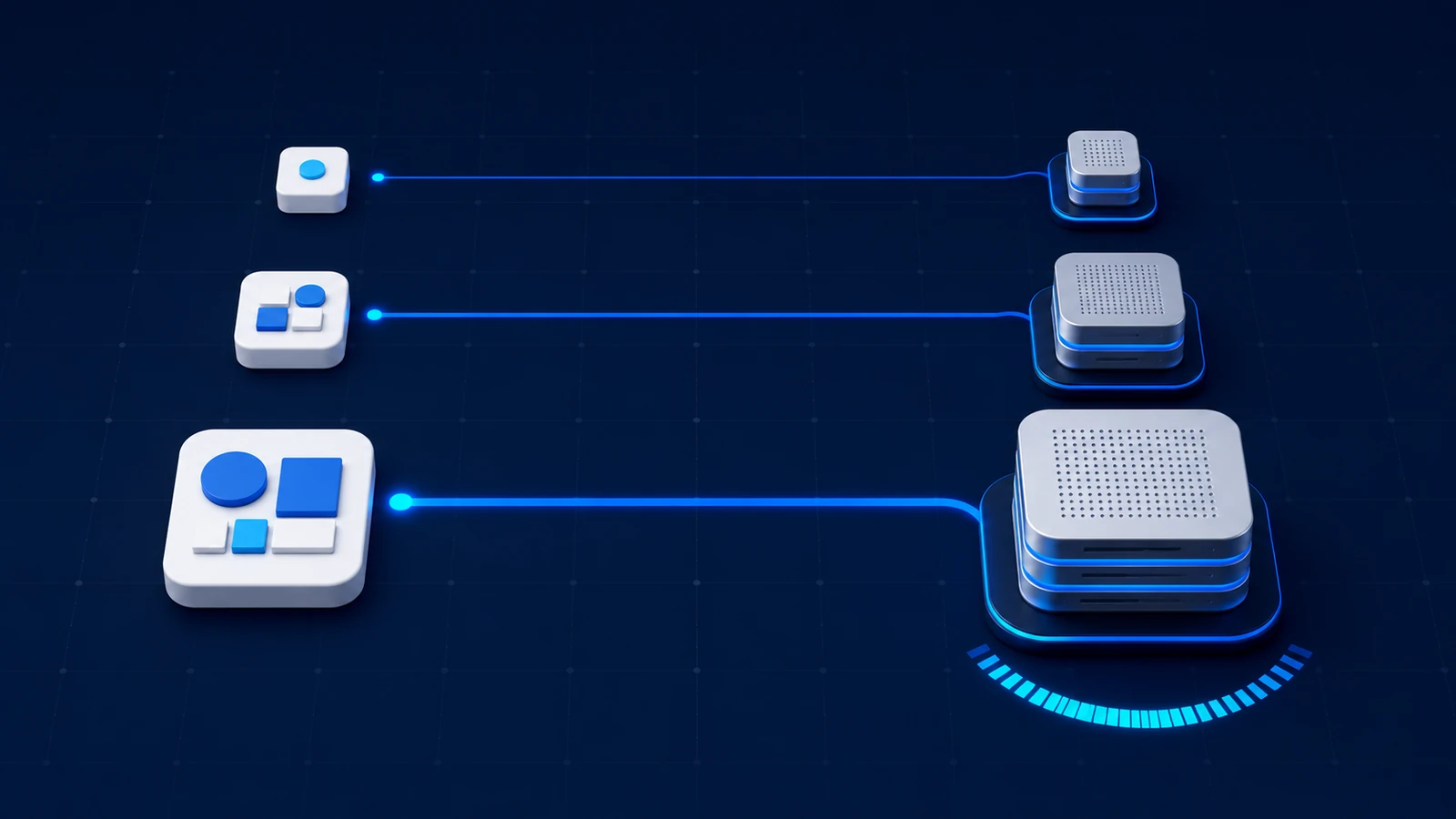
ThinkFreely gives government organizations a controlled layer above the models, so context, memory, and workflows live at a layer the agency controls, not inside any single provider’s defaults.
ChatFreely, the governed AI workspace. Staff get a familiar chat experience. The agency gets control over models, projects, files, access, and usage. Work happens inside an environment you administer, not inside a vendor default.
RouteFreely, the routing and control layer. Route work across approved providers by cost, capability, privacy, and policy. Track usage, set limits, and configure failover so no single provider becomes a single point of dependence.
DriftHold, instruction locking. Approved instructions stay locked and consistent across sessions and staff. The guidance your counsel and records officers approved is the guidance the AI actually follows.
Skills and Projects. Reusable governed workflows and persistent work context that live at the operating layer. When you change models or providers, your institutional knowledge is built to move with you, where supported.
MCP tool governance. Controlled connections between AI and your systems of record, governed by policy rather than by whatever a vendor enables by default.
Why it matters to the business of government
Procurement alignment. Adopt AI in a structure that supports the portability and competition expectations in current federal guidance and emerging state and local frameworks.
Renewal leverage. When context and workflows are portable, you negotiate renewals from a position of choice rather than dependence.
Cost stewardship. Cost-aware routing and usage visibility help match spend to task value, supporting both budget discipline and demand-side responsibility.
Auditability. Usage tracking creates the visibility that public records obligations and oversight bodies increasingly expect from AI use.
Technical proof points
Multi-provider by design. Works across OpenAI, Anthropic, Ollama and the Meta Llama family, Google Gemma, and standards-compatible private models.
Policy-based routing. Direct sensitive work to approved environments based on data classification, not staff discretion.
Usage limits and tracking. Per-user and per-team controls with operational visibility.
Failover support. Configured alternatives when a provider is unavailable, helping preserve continuity of operations.
What deliberate dependence looks like in practice
A county tax collector’s office uses ChatFreely for constituent correspondence and internal drafting. Routine drafting routes to a lower-cost approved model. Complex exemption analysis routes to a stronger reasoning model. Records containing taxpayer information follow a policy that restricts which environments may process them.
The office’s approved instructions, templates, and project context live at the ThinkFreely layer. At renewal time, the office can evaluate providers on price and performance because switching does not mean starting over. The limitation is real and worth stating: portability depends on the workflow, and some provider-specific features do not transfer. The goal is not zero lock-in. The goal is that dependence, where it exists, is a deliberate decision rather than an accident.
Frequently asked questions
Our agency has no AI-specific procurement policy. Does vendor lock-in guidance still apply?
Yes. Competition requirements and vendor lock-in concerns predate AI. Federal oversight bodies have flagged lock-in risk in IT and cloud contracts for over a decade, and most state and local procurement codes carry general competition obligations. An AI tool that accumulates non-portable context creates the same dependence those rules address.
Does avoiding vendor lock-in mean avoiding major AI vendors?
No. AI independence is not anti-vendor. It is anti-dependence. The right answer for your agency may include frontier models, open models, or private deployments. The point is preserving the ability to choose.
Do federal AI procurement memos apply to local government?
OMB memoranda apply to federal executive agencies. But they shape expectations, grant conditions, and the templates that state and local frameworks adopt. Building for portability now aligns you with where public sector AI procurement is heading.
Can all AI context be moved between providers?
No, and you should be skeptical of anyone who says otherwise. ThinkFreely helps improve portability by keeping context, instructions, and workflows at a layer you control. Some elements remain provider-specific depending on the workflow.
The standard your agency should set
Public agencies answer to taxpayers, oversight bodies, and the law. That accountability is exactly why government should lead on AI independence rather than follow.
If your agency is drafting an AI policy or heading into a renewal, talk with us about what a governed pilot looks like.
Adopt AI. Route work deliberately. Keep your context where you can move it. Spend compute the way you spend public money: only as much as the work requires.