
CAPABILITIES
Reusable AI Skills: Turn Repeatable Expertise into Governed Workflows
Your best people have figured out how to get great AI output for the work that repeats. Reusable AI skills capture that expertise once, govern it, and hand it to everyone.

What reusable AI skills are
A reusable AI skill is a packaged, governed workflow: the instructions, structure, and tool connections needed to perform a repeatable task well, captured once and made available to everyone who should have it.
Where a prompt is a personal trick, a skill is an organizational asset. It has an owner, a current version, defined dependencies, and deliberate access. Run it in June or December, from sales or from support, and the work follows the same refined pattern.
Expertise that evaporates versus expertise that compounds
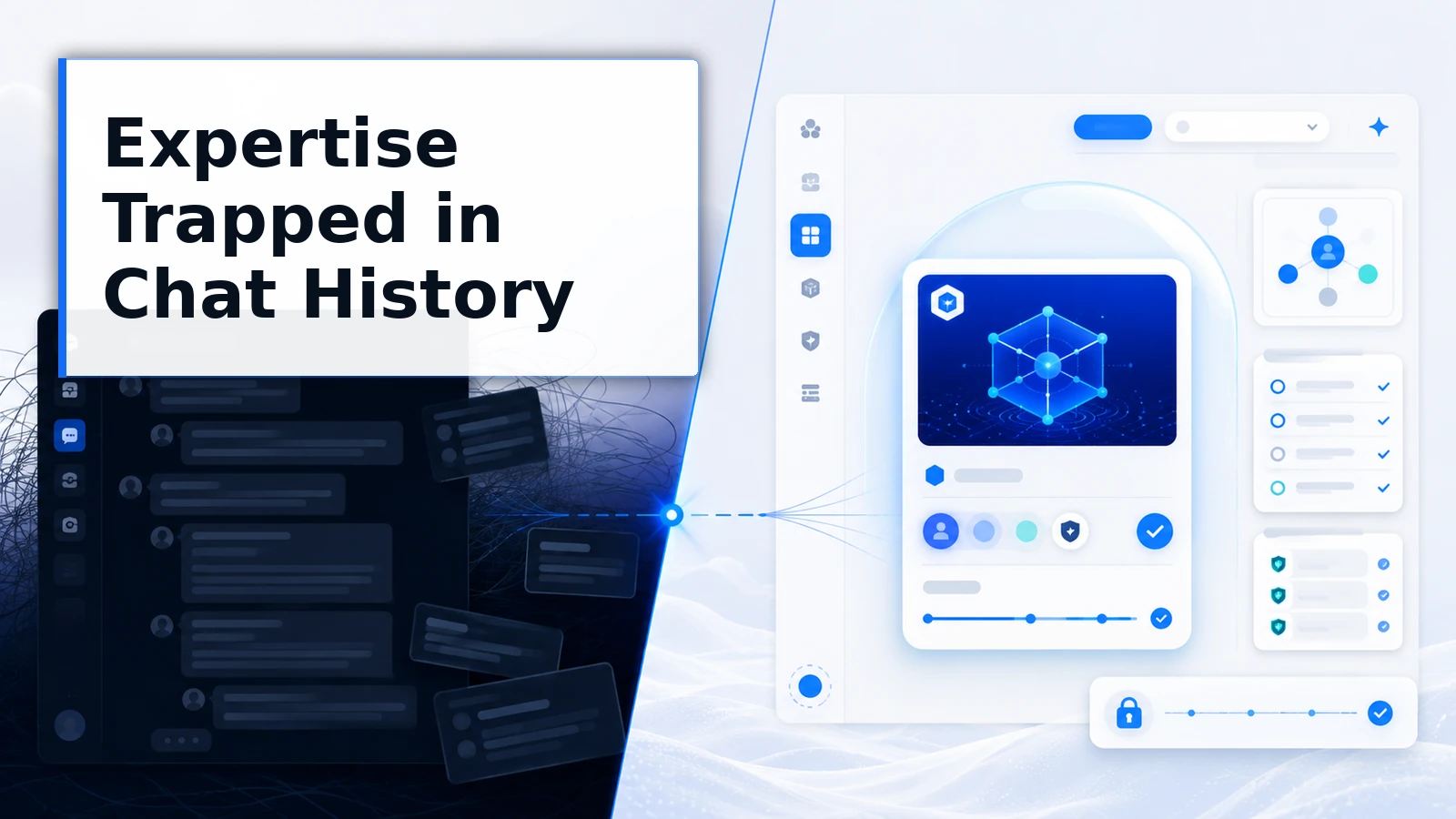
Watch how AI proficiency actually spreads in most organizations. One analyst works out an excellent monthly-report workflow through weeks of iteration.
It lives in her chat history. A colleague asks, gets a pasted copy, modifies it slightly. Multiply by fifty people and a year.
The expertise is real, but it evaporates: forked into private variants, lost at departures, invisible to governance, and impossible to improve centrally. The organization pays for the learning curve repeatedly and owns none of the result.
Governed AI workflows invert that. The refined way to do a repeatable task becomes a shared, versioned asset. Improvements land once and reach everyone. The learning compounds instead of evaporating.
What separates a skill from a saved prompt
The differences are structural, not cosmetic.
| Dimension | Saved prompt | Reusable skill |
|---|---|---|
| Ownership | Personal | Organizational, with an owner |
| Version | Whichever copy you have | One current, governed version |
| Dependencies | Implicit and undocumented | Defined, including tool attachments |
| Access | Whoever got the paste | Granted deliberately by group |
| Improvement | Forks privately | Updates centrally, reaches all users |
| Governance | Invisible | Reviewable and auditable |
A prompt improves one person’s afternoon. A skill improves the operation.
How ThinkFreely implements skills
Skills are a shipped capability of the ThinkFreely platform, created and governed in the operating layer your organization controls.
Teams capture a working workflow as a skill: its instructions, its structure, and its dependencies, including MCP tool attachments where the work needs live systems. Skills are shared deliberately, by user and group, so each one reaches the people whose work it serves. Ownership and versioning are explicit, so improving a skill is an update, not a new fork.
Skills also support import and export, so workflow assets can move where supported rather than existing only inside one environment. Combined with rules and memory held in the same governed layer, skills make the how of your AI operation an asset you keep as models change.
One boundary worth naming: a skill packages the workflow, not the model’s judgment. Skills make good patterns repeatable and governable. They do not make every task automatable, and work that needs human review still needs it.
The mechanisms of governed skills
-
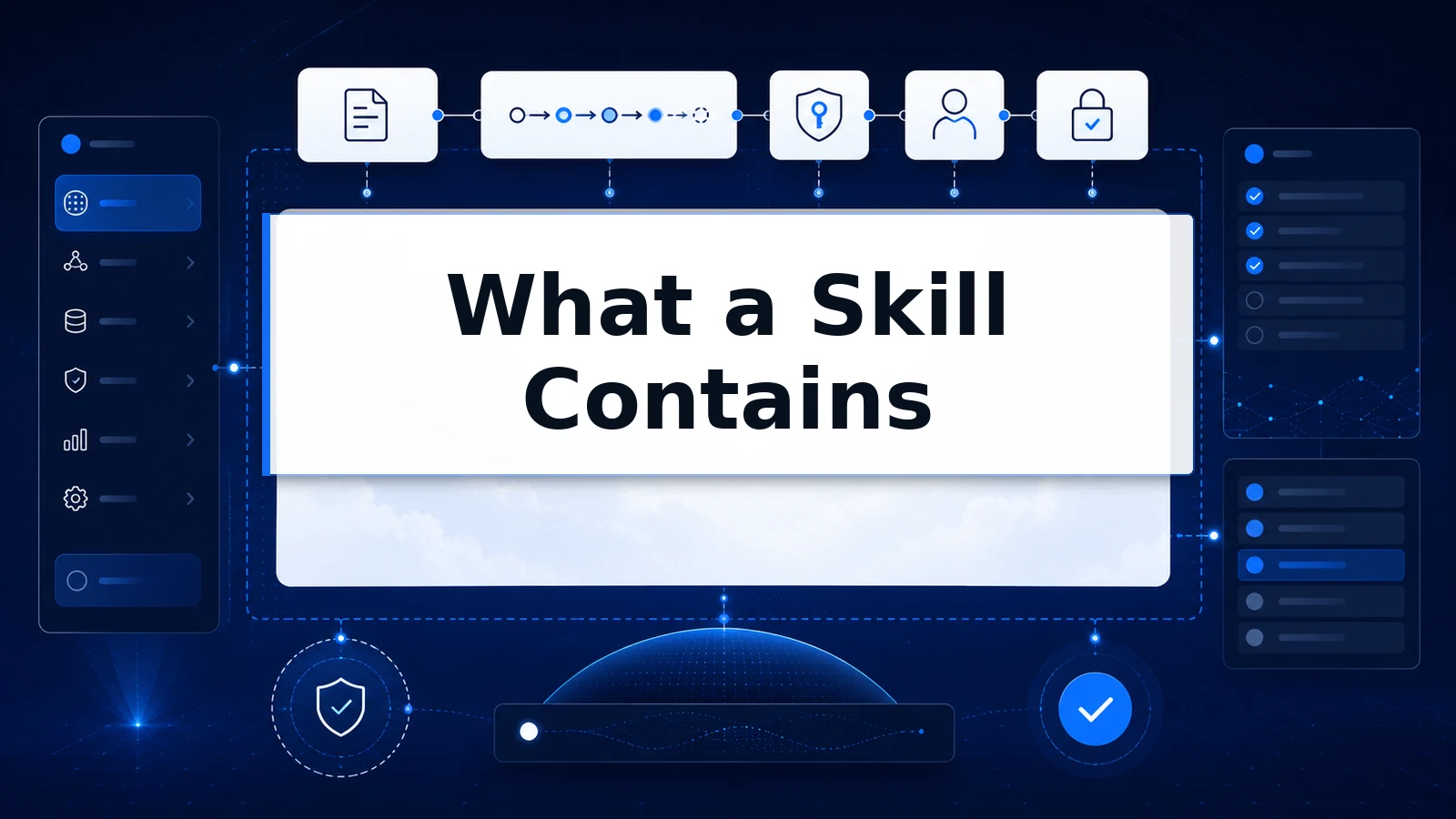
Captured expertise
A refined workflow is packaged once as a skill, with its instructions and structure intact, instead of living as a private prompt that forks with every share.
-
Defined dependencies
Skills declare what they need, including MCP tool attachments, so a workflow’s connections to live systems are explicit and governed rather than improvised.
-
Deliberate sharing
Access is granted by user and group, so each skill reaches the teams whose work it serves without becoming an unmanaged free-for-all.
-
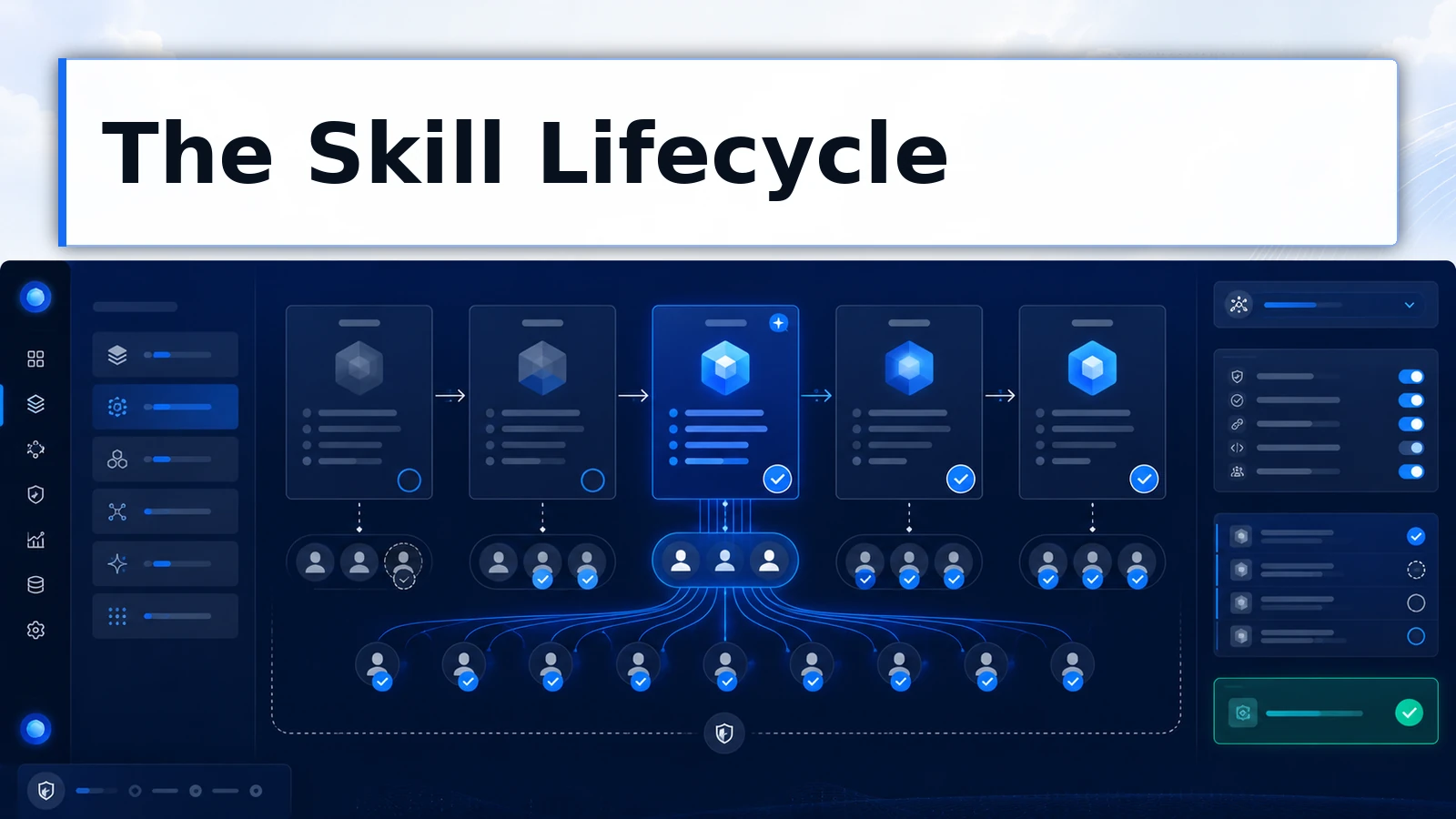
Central improvement
Owners update the canonical skill and every user gets the improvement, replacing fork-and-drift with versioned progress.
-
Import and export
Skills can be imported and exported where supported, keeping workflow assets movable instead of locked to one environment’s internals.
What skills change for the business
-
Best practice by default
The organization’s refined way of doing a task becomes the path of least resistance, so quality stops depending on who happened to write the prompt.
-
Onboarding in days
New team members inherit working skills instead of rebuilding tribal knowledge, shrinking the gap between joining and contributing.
-
Expertise that survives departures
When the person who figured it out moves on, the skill stays: owned, documented, and improvable by whoever inherits it.
-
Governance over the how
Because skills are visible assets with owners and access rules, how AI does recurring work becomes reviewable rather than scattered across private histories.
Deciding what to turn into a skill
Good candidates share a profile. Ask:
- Does the task repeat across people or time, so refinement pays back?
- Has someone already found a pattern that clearly works?
- Does the workflow need tool connections that ought to be governed rather than improvised?
- Would inconsistency in this task cost quality, compliance, or brand?
Two teams, two very different workflows, the same mechanics.
A customer support operation packages its ticket-summary-and-escalation workflow as a skill with the help desk tool attached. Every agent produces summaries in the same structure, and when the escalation criteria change, the owner updates the skill once.
A procurement team turns contract-clause extraction into a skill with defined output structure. Legal refines the extraction rules quarterly, and every user across procurement inherits each refinement the day it ships.
Built and shipping
-
Shipped capability
Skills are live in the ThinkFreely platform today, with creation, governance, and sharing available in current product.
-
Tool-connected workflows
MCP attachments let skills carry their governed tool dependencies, so workflows that touch live systems stay explicit and permissioned.
-
Movable assets
Import and export keep skills portable where supported, aligning workflow assets with the platform’s above-the-model design.
Where skills have limits
Skills systematize judgment that already exists. They do not create it. A task nobody has done well yet is a discovery problem first and a packaging problem second.
Skills also need curation. An unowned skill library fills with near-duplicates and stale versions just like a prompt folder, only more officially. Owners and a review cadence are part of the deal.
And not everything belongs in a skill. One-off analyses, exploratory work, and tasks that hinge on situational judgment resist packaging. The right target is the repeatable middle of your workload, which is usually larger than teams expect, but is not everything.
Frequently asked questions
What is the difference between a skill and a prompt template?
A template standardizes wording. A skill is a governed asset: owned, versioned, permissioned, and able to carry defined dependencies including tool attachments. Templates still rely on people finding, copying, and using the right version. Skills are distributed and updated through the platform, so the current version is simply what runs.
Can skills use our internal tools and data?
Yes, through MCP attachments. A skill can declare the tool connections its workflow needs, and those connections follow your MCP governance: registered servers, deliberate access, and real identities. The workflow and its reach into systems are governed together rather than separately.
Do skills work across different models?
Skills live in the operating layer above the model, so the packaged workflow travels with your operation as routing and models change. As with any instruction asset, model behavior varies, and a skill moved to a new backend may deserve validation. What you keep is the asset itself, which is what a prompt-history approach loses entirely.
How is this different from the /skills product page?
This page explains the capability: what reusable skills are and how governed workflows change an operation. The Skills product page covers the product view, how teams create, govern, and share skills day to day. If you are evaluating adoption, start there.
How many skills should an organization aim for?
Fewer than enthusiasm suggests. A catalog of ten owned, current, well-used skills beats fifty stale ones, because staleness teaches people to route around the catalog entirely. Grow the set at the pace of real demand, retire what usage records show is dead, and treat every addition as a commitment to maintain, not just a moment of capture.
Make expertise a shared asset
Somewhere in your organization, someone has already figured out the best way to do each repeatable task with AI. The only question is whether that knowledge compounds or evaporates.
Capture it once. Govern it. Hand it to everyone.