TRUST AND CONTROL
Govern AI without killing adoption.
Employees need access to AI. Leadership needs control. Most governance efforts pick one and lose the other. Lock everything down and people route around you. Leave it open and exposure grows.
Governance is how AI scales without losing control. The goal is a governed path that is easier to use than the unmanaged one.
Governance that works behind the scenes
The strongest governance is the kind users barely notice. ChatFreely gives employees a familiar workspace while RouteFreely enforces policy behind it: routing, access, privacy direction, usage, and visibility. Users see the capabilities they are allowed to use. The organization keeps control of the traffic.

The mechanisms
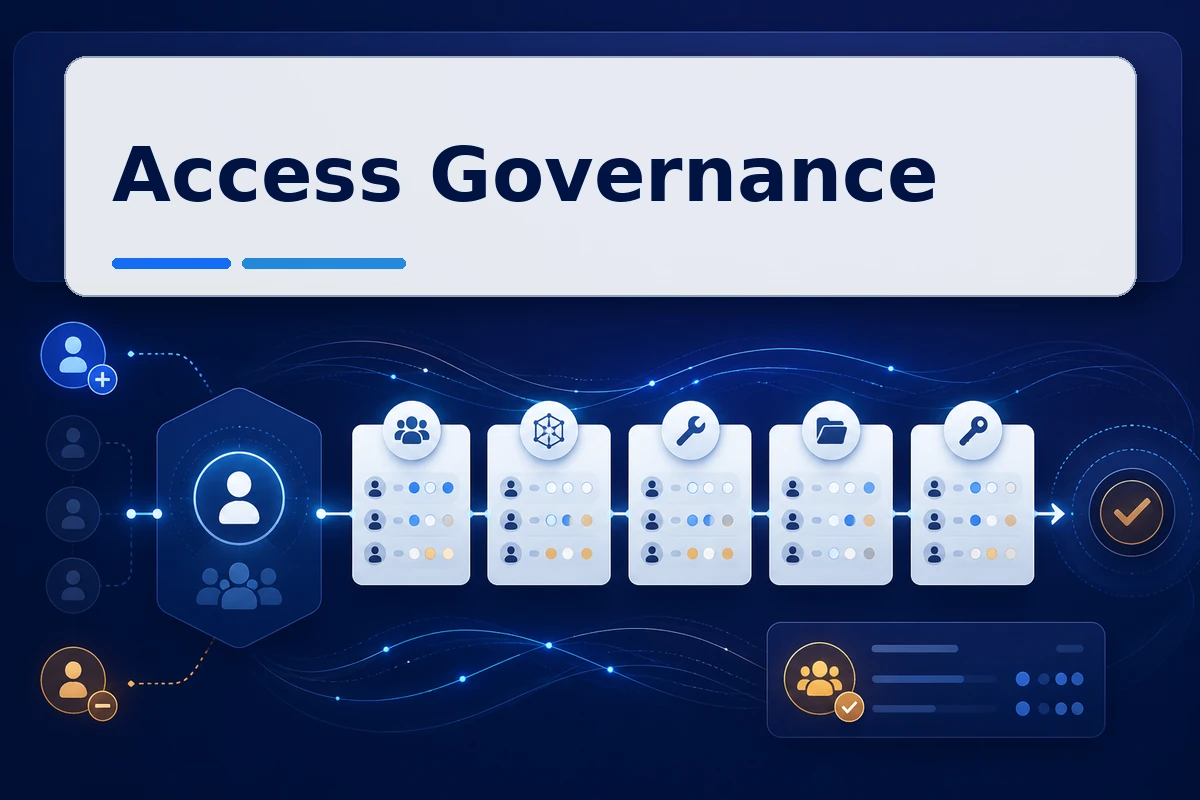
- access policy across users, groups, models, tools, projects, and keys, enforced in the backend
- identity integration, including OIDC and Entra, so access follows real onboarding and offboarding
- MCP governance for whole servers or individual tools, so tool-connected AI stays permissioned
- usage and cost visibility by user, group, model, endpoint, and key
- privacy-aware routing direction for sensitive work
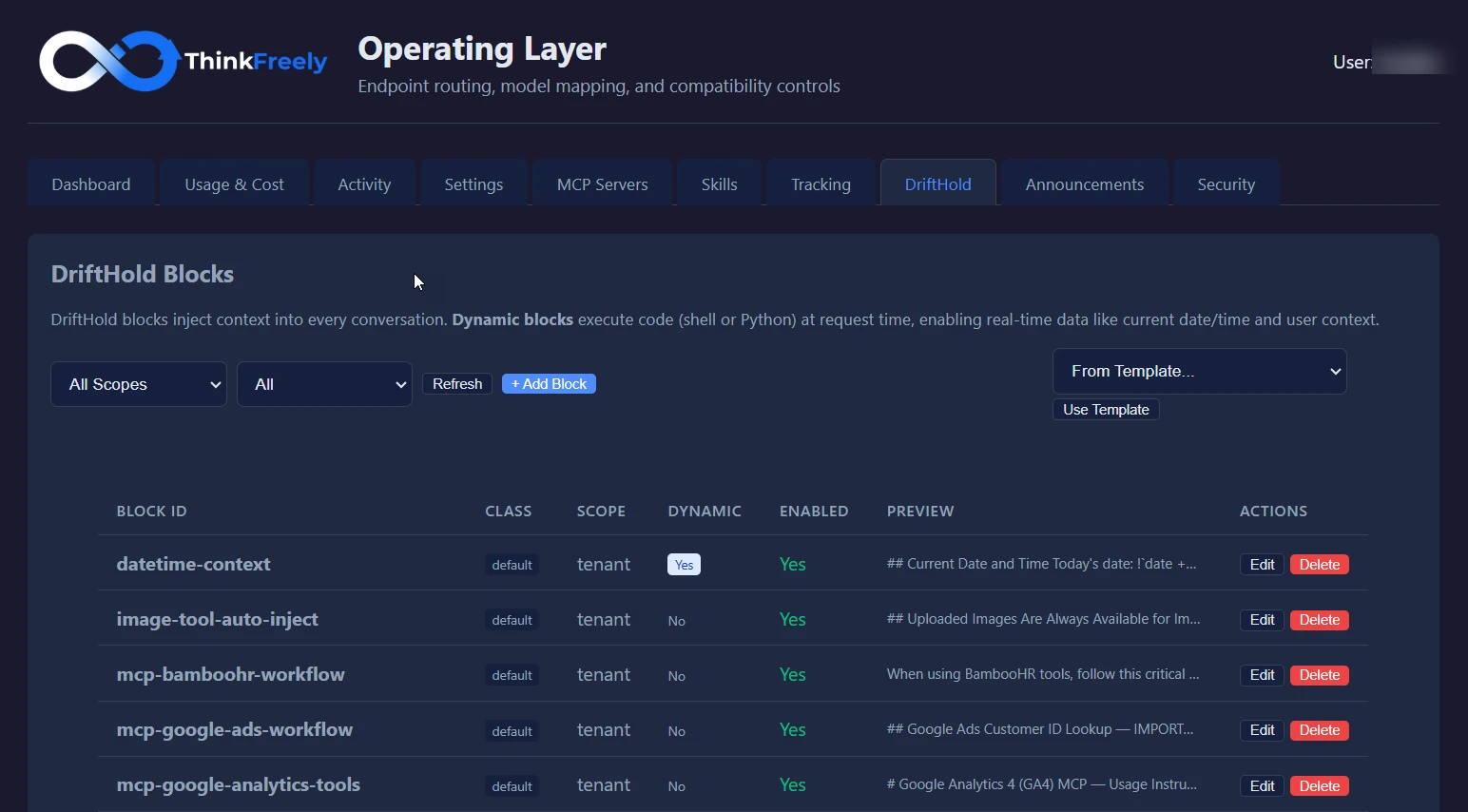
- DriftHold, which manages authoritative instructions as versioned, permissioned blocks to support consistency and audit
Redirect shadow AI instead of banning it
Shadow AI happens when people use unmanaged tools because the approved option is worse. The answer is not a stricter ban. It is a better approved path. Provide a governed workspace people prefer, and usage moves into channels the organization can see and shape.
Approved path first
Make the safe route available before restricting the risky one. People adopt the governed option when it is genuinely easier.
Escalation, not silence
Exceptions should be logged and reviewed, not granted quietly. Governance that hides its exceptions is not governance.
Design governance in the right order
- Start with the controls that reduce the largest unmanaged exposure.
- Define who owns model, tool, and access approval.
- Give users an approved path before you close the unapproved ones.
- Review policy after real pilots, because usage reveals what workshops miss.
What we do not claim
We do not claim complete lock-in prevention, total privacy, or zero risk. We help reduce reliance on one vendor-controlled path and support governance across models and workflows.
Operating checks for governance
Key operating checks:
- which use cases are approved, restricted, or not ready
- who owns the workflow after rollout
- where human review remains required
- what usage signals should trigger review
- how training supports the controlled path
Governance is how AI scales without losing control.