COMPARISON
Single-provider AI versus an AI control layer.
Building your AI operations around one provider is the fastest path to start and the most expensive path to leave. The question is not which vendor is best this month. It is whether your strategy can adapt when the answer changes.
AI independence is not anti-vendor. It is anti-dependence.

What a single-provider approach really commits to
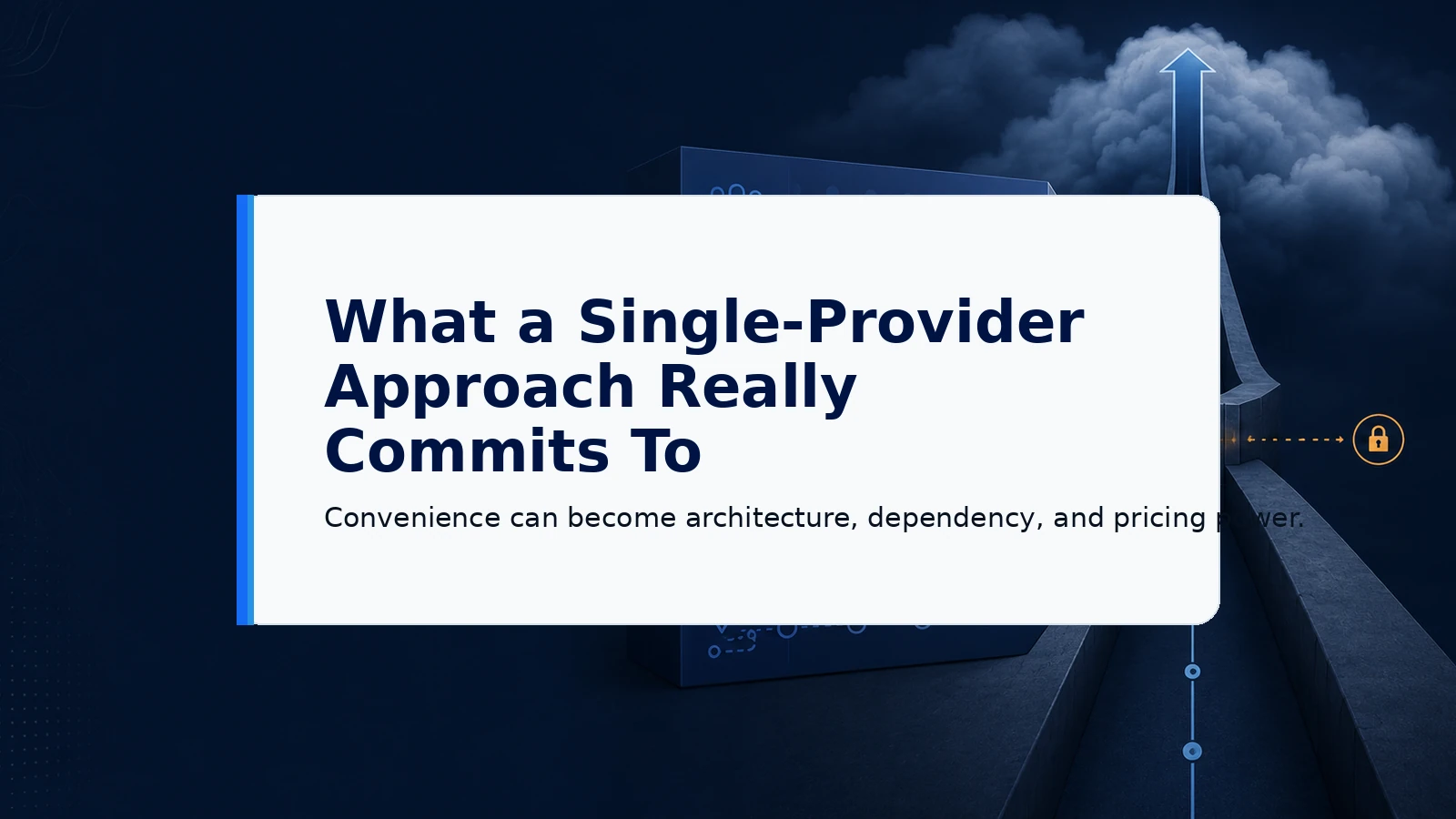
A single-provider strategy usually means one model family, one interface, one pricing model, one API surface, and one roadmap. It works until something changes: a price increase, a policy shift, a model regression, an outage, or a feature removal. Then the cost of that commitment becomes visible all at once.
Convenience becomes architecture. Architecture becomes dependency. Dependency becomes pricing power for someone else.
What a control layer changes
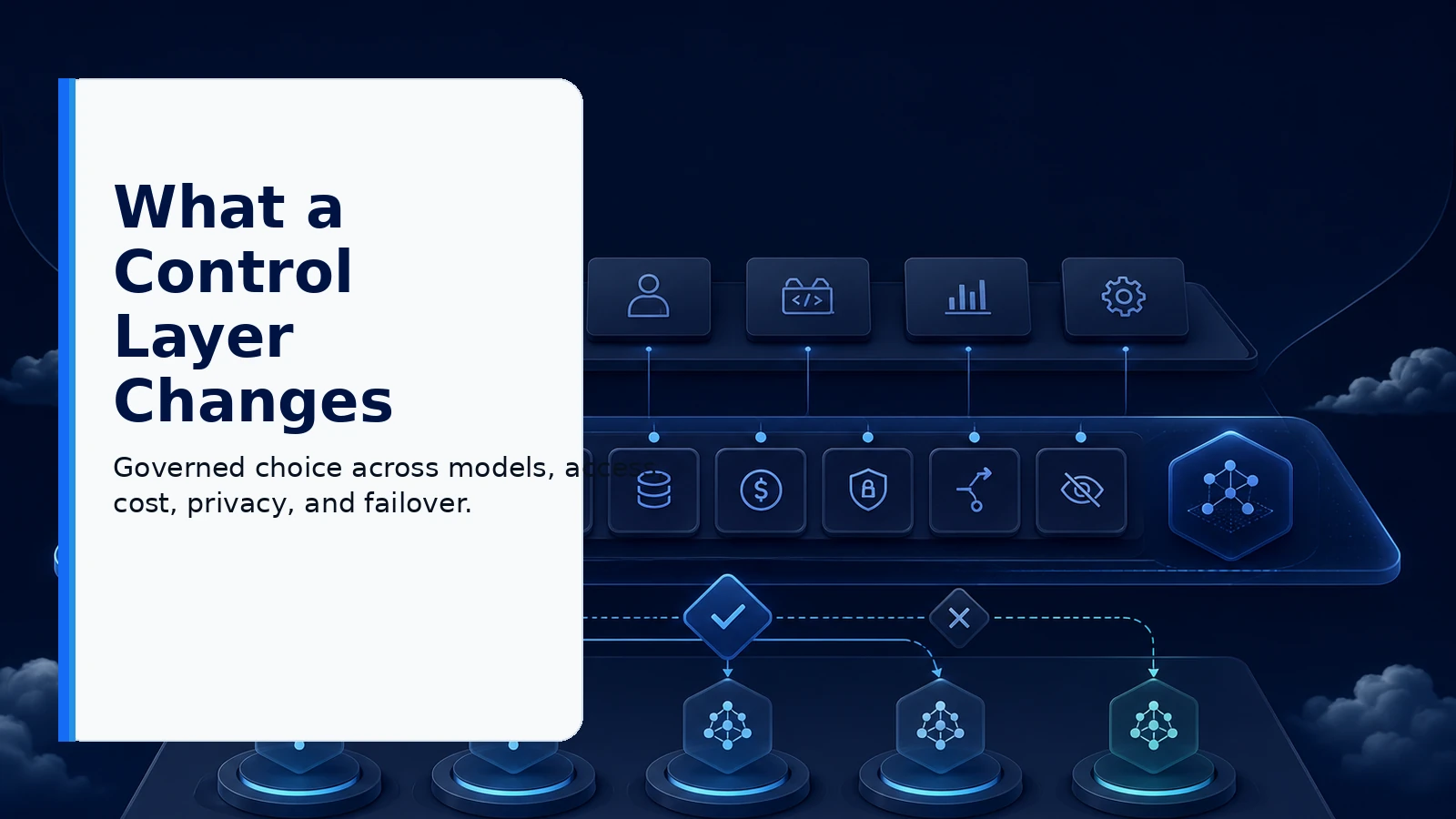
RouteFreely puts a governed layer between your business and the model market. Instead of choosing one vendor, you gain the ability to choose intelligently over time.
- multiple model options under one governed layer
- OpenAI-compatible, Anthropic-compatible, and Ollama-compatible routes, so existing clients keep working across providers
- virtual models that expose a stable name while the backend provider changes underneath
- provider failover, so one outage does not stop AI-dependent work
- one place for access control, usage limits, and cost visibility
- privacy-aware routing direction for sensitive work
The single-provider approach asks, “Which AI vendor should we choose?” The control-layer approach asks, “How do we build an operating layer that lets us choose intelligently over time?”
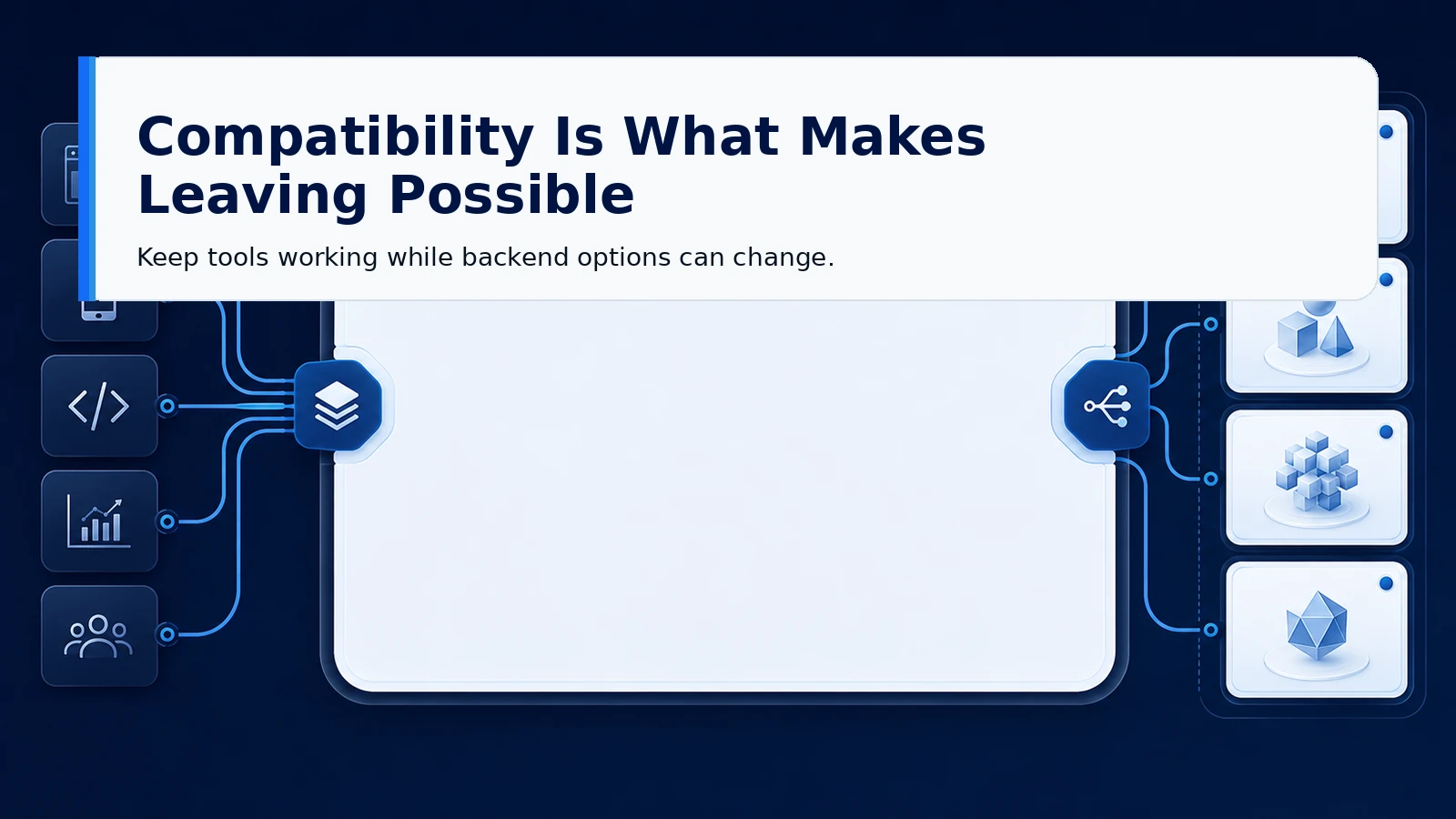
Compatibility is what makes leaving possible
The reason lock-in hurts is rework. When an application is wired directly to one provider’s API, changing providers means rewriting the application. A control layer that speaks common API surfaces lets you point existing tools at it and substitute the backend later, which protects prior development investment.
Existing integration
An internal tool built against an OpenAI-style API can route through RouteFreely and gain visibility, limits, and access control without a rewrite.
Provider change
When pricing or capability shifts, a virtual model lets you move the backend without forcing every user and integration to reconfigure.
What we do not claim
We do not claim zero lock-in, complete portability, or that any workflow can switch to any model without changes. Models differ and edge cases exist. We help reduce reliance on one vendor-controlled path and preserve more room to adapt.
Operating checks for provider strategy
Key operating checks:
- which direct integrations should move behind a control layer
- how virtual models hide backend changes from users
- when failover is acceptable and how it is configured
- how capability, cost, and sensitivity affect dispatch
- how you would change providers if the current one no longer fit
Build where you can move.