
INTEGRATIONS
Identity: Sign In with What You Already Run
Access to your AI operation should start from your identity system, not from another set of accounts nobody governs. ThinkFreely signs in with Microsoft 365 or local login today, with access administered centrally from there.

What is available today
Two sign-in paths are shipped and current.
Microsoft 365. Organizations running Microsoft 365 sign in with the identities they already manage. Access to the AI operation starts from the same system that governs the rest of the workday, which is where security teams want it.
Local login. Organizations that prefer platform-managed credentials, or need them for specific users, run local login with accounts administered inside ThinkFreely.
Both paths land in the same place: a centrally administered access model where users and groups get the models, tools, skills, and features policy assigns them.
What is planned
Google SSO is planned and not yet available. Organizations on Google Workspace can run local login today and adopt Google sign-in when it ships. If Google SSO is a gating requirement for your evaluation, contact us and we will give you a straight answer on timing rather than a vague one here.
We label roadmap as roadmap. A sign-in method you cannot use yet is not a feature, and this page will say shipped only about what is.

Identity is where governance starts
Every control in the operating layer resolves to a question of who. Who can use which models.
Who can run which skills. Who can reach which tool connections. Whose usage is on the record.
That is why identity integration matters more here than in a typical SaaS checklist. The answer to who comes from your identity system, and everything downstream, access controls, data boundaries, usage attribution, inherits its accuracy. Connect identity well and the rest of governance has a foundation. Connect it badly and every control stands on sand.
What identity integration provides
-
Microsoft 365 sign-in
Shipped. Users authenticate with the identities your organization already manages, keeping AI access inside your existing identity governance.
-
Local login
Shipped. Platform-managed credentials for organizations or users that need them, administered centrally alongside everything else.
-
Central access administration
Users and groups receive models, tools, skills, and features by policy, with one place to grant, change, and revoke.
-
Attribution built in
Because access starts from real identities, usage records attribute to real users and groups, which is what makes visibility and audit meaningful.
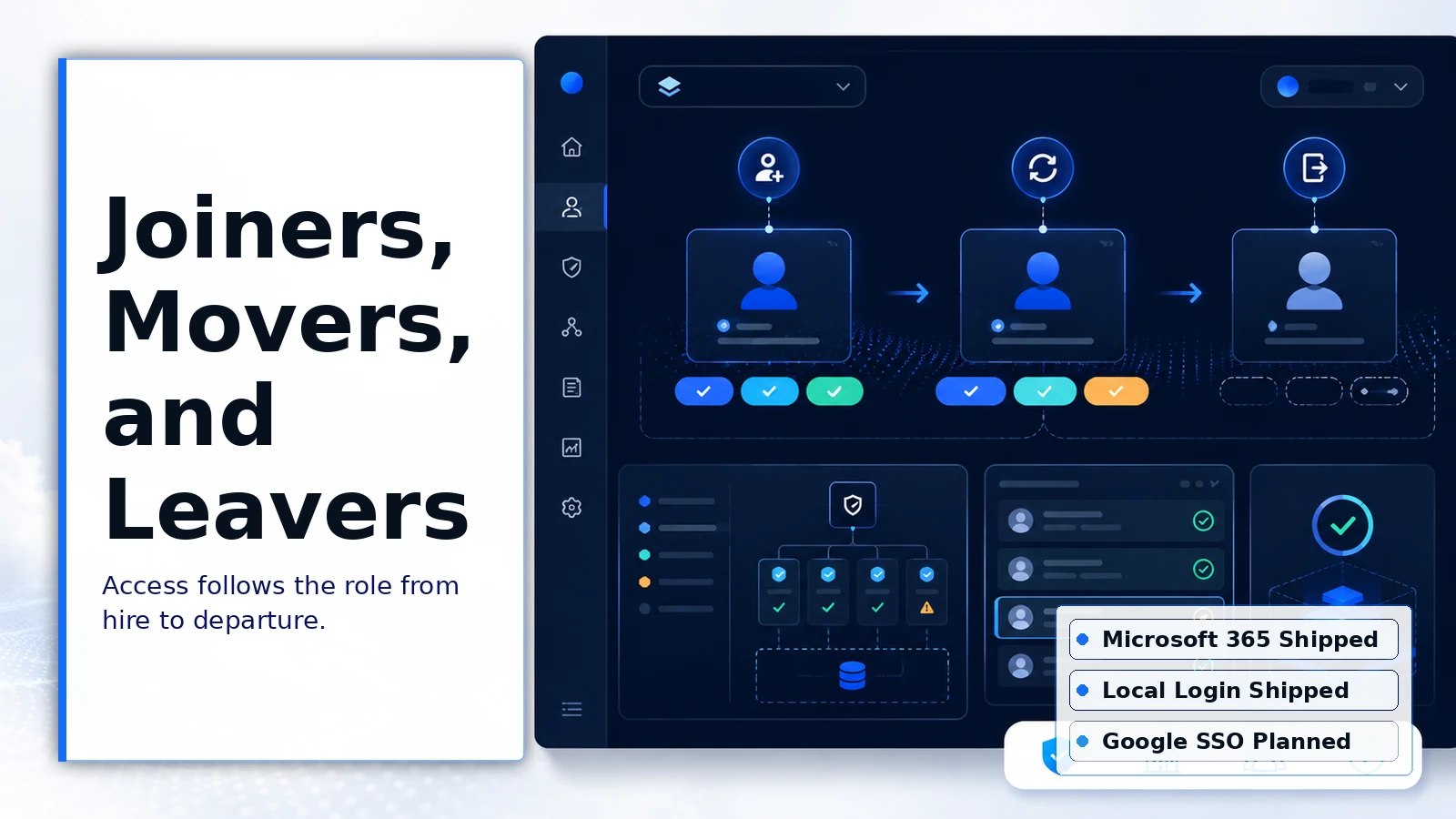
Joiners, movers, and leavers
Identity integration proves itself at the edges of tenure. A new hire should inherit the right AI access with their role, not through a side process someone remembers to run.
A role change should move capability with it. And a departure should end access everywhere at once, including to the tool connections and skills the role carried. Central administration by user and group is what makes all three a policy outcome rather than a checklist.
Practical notes for evaluation
Bring your identity questions to the demo with your actual structure in mind: which groups map to which access levels, who administers, and how joiners and leavers flow. Identity integrations succeed or fail on those specifics, and they are easy to walk through concretely.
And if your organization runs Google Workspace, say so early. We will be direct about what local login covers now and where Google SSO sits on the roadmap.