
CAPABILITIES
MCP Server Registry: Connect AI to Tools Without Losing Control
Tool connections are where AI becomes powerful and where governance usually breaks first. An MCP server registry gives your organization one governed place to register, test, and permission every tool AI can reach.
What an MCP server registry is
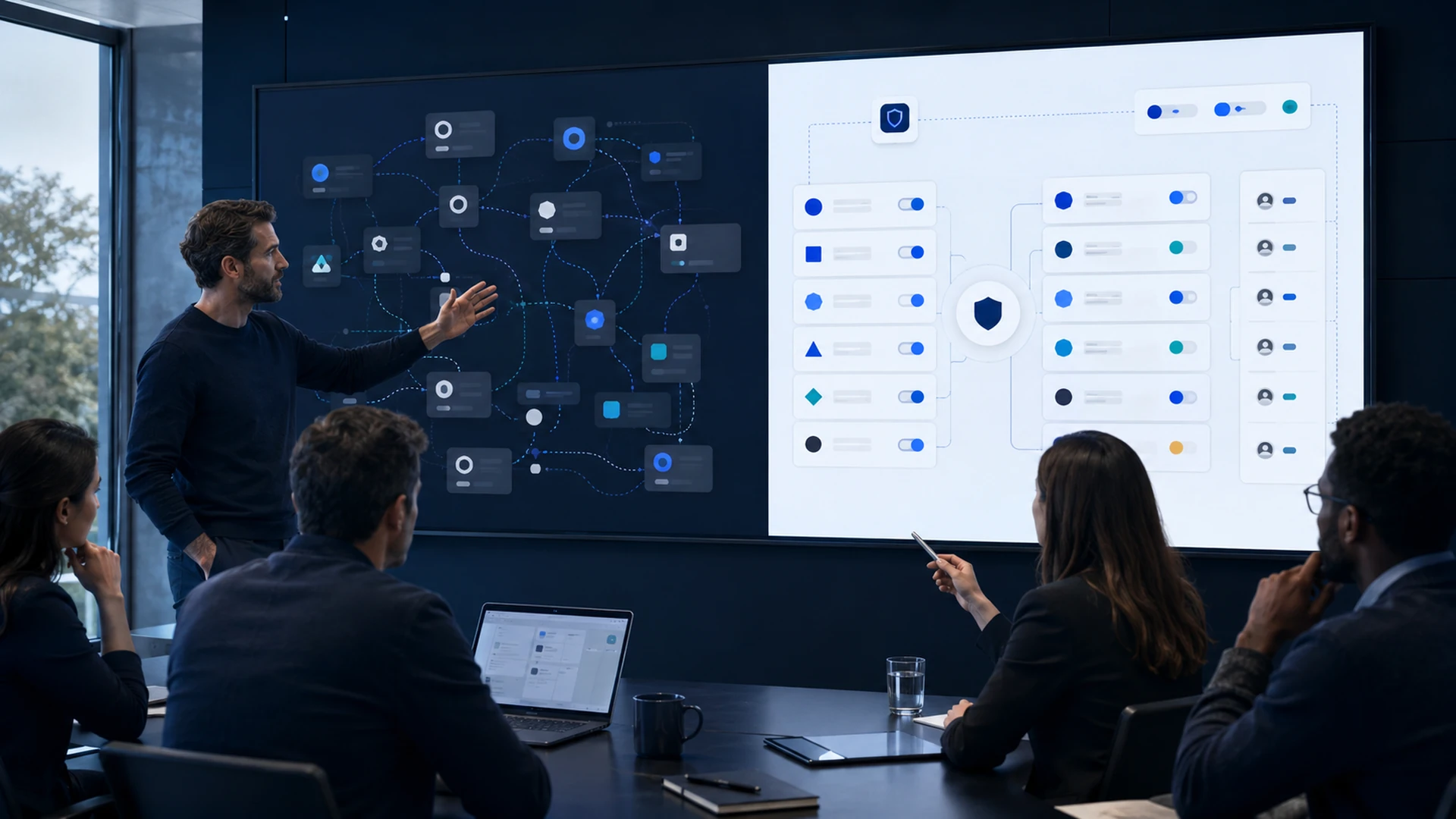
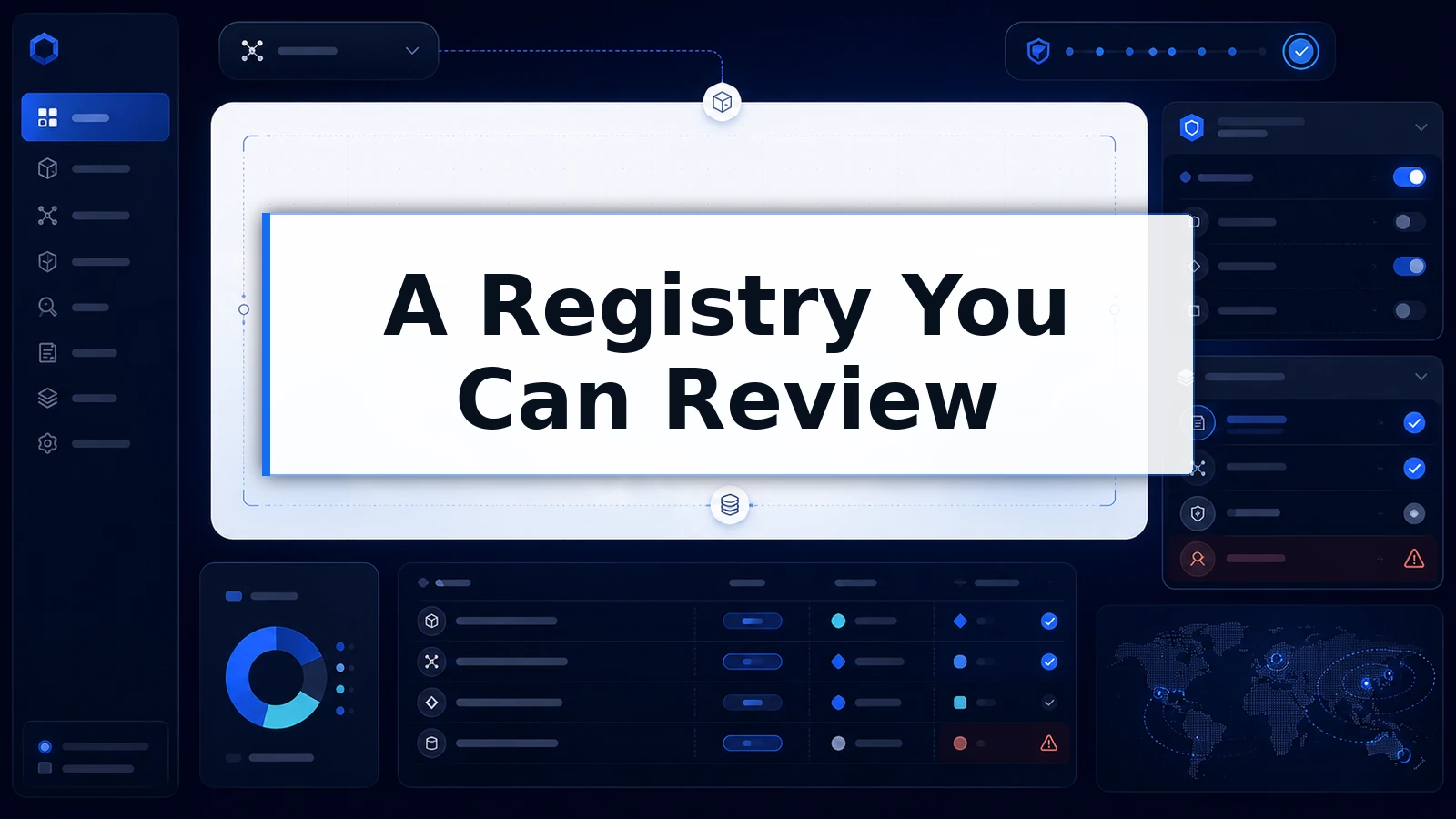
Model Context Protocol, or MCP, is a standardized way for AI systems to connect with tools and data sources. An MCP server registry is the governed inventory of those connections: where each MCP server is created, tested, permissioned, and monitored, so tool access is granted deliberately instead of accumulating by default.
The registry answers four questions that most AI deployments cannot: what tools can our AI reach, who can use each one, under what identity, and how do we know.
Why ungoverned tool access is the quiet risk
Chat access to a model is contained by nature. The model reads what you give it and writes text back.
Tool access changes the physics. Through MCP, AI can query systems, retrieve records, and act on live business data. That is exactly what makes it valuable, and exactly why “everyone can connect anything” is not a policy an organization can live with for long.
Without a registry, tool connections appear wherever an enthusiastic user creates them. Nobody holds the inventory. Credentials get embedded in places nobody reviews. And when security asks which systems AI can touch, the honest answer is a shrug.
MCP tool governance exists to replace the shrug with a list, and the list with a policy.
One registry, deliberate access
The operating principle is simple: connect AI to tools without exposing every tool to every user.
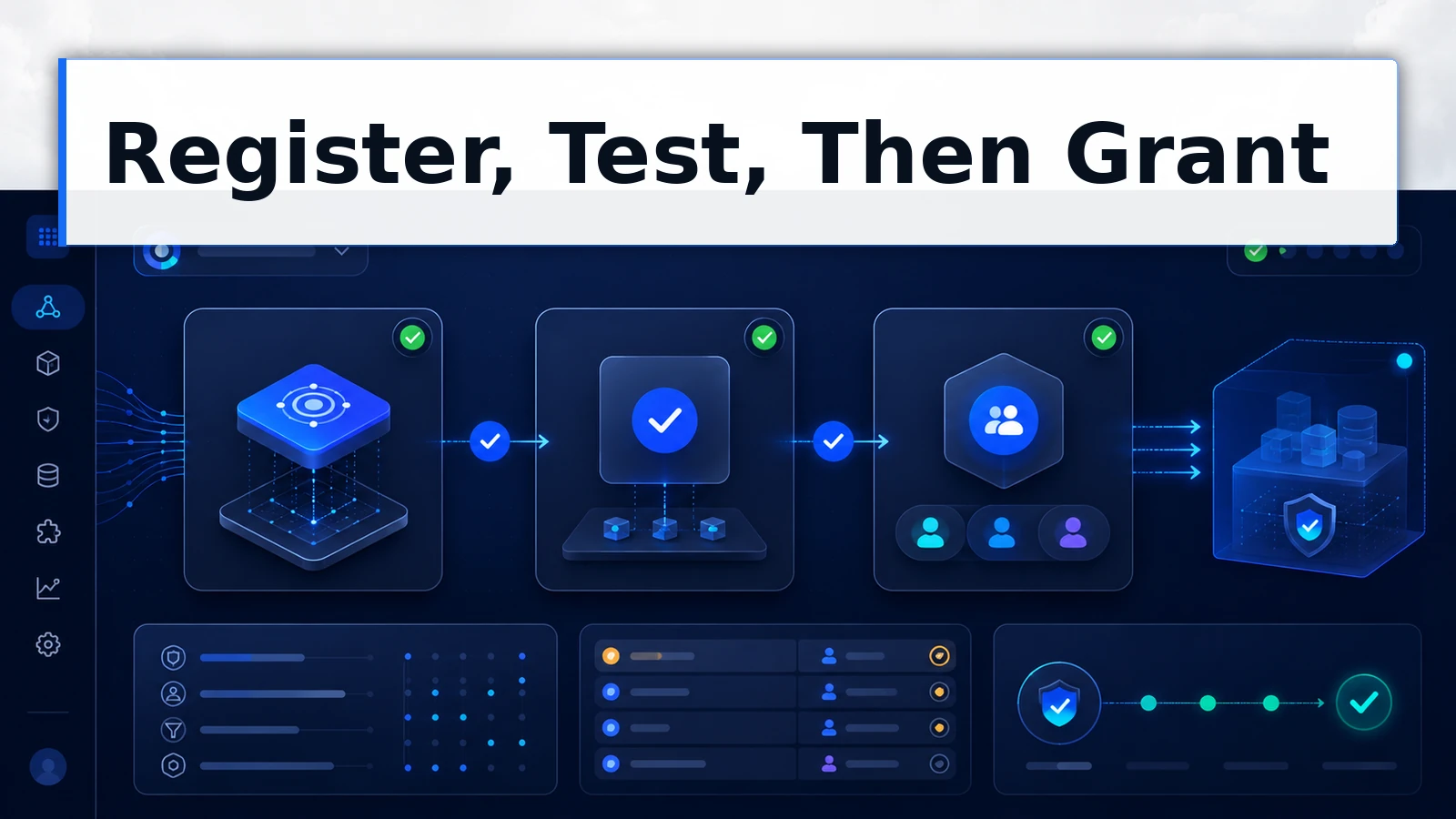
A registry makes tool access a two-step decision. First, an administrator registers and validates the MCP server itself: what it connects to, how it authenticates, and whether it behaves as expected. Second, access is granted deliberately, by user and group, so each connection reaches exactly the people whose work justifies it.
Finance tools for finance. Engineering systems for engineering. Broad utilities for everyone. Nothing for nobody-decided.
How ThinkFreely governs MCP connections
ThinkFreely provides the registry as part of its operating layer, alongside routing and workspace governance.
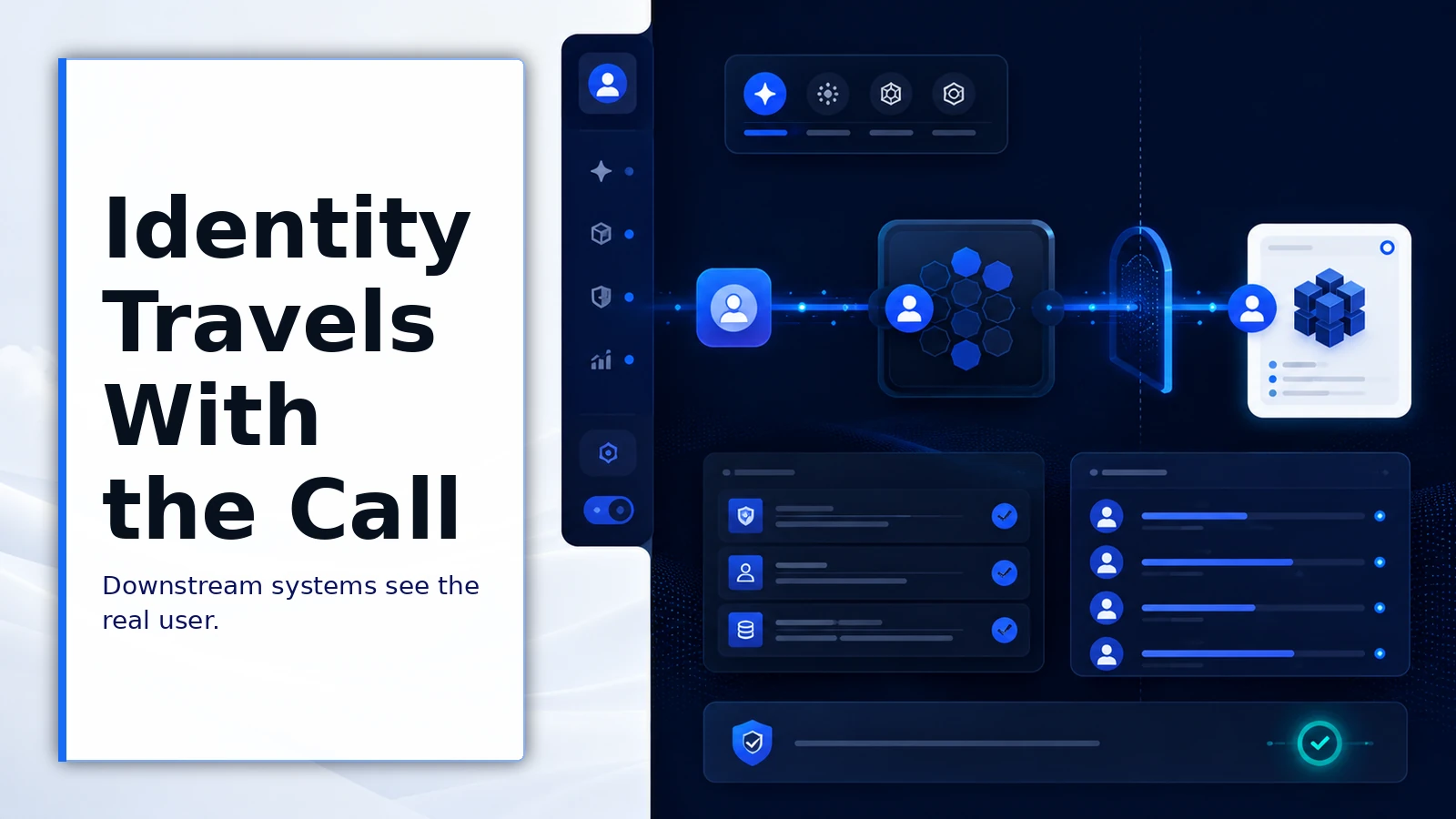
Administrators create and test MCP servers centrally, then control which users and groups can discover and use each one. Connections support custom headers for authentication requirements, and identity propagation carries who is actually making the request through to the tool, so downstream systems see a real identity instead of one shared service account.
One qualification worth stating plainly: MCP tools are not identical across providers and models. A tool that behaves one way in one environment may need adjustment in another, and the protocol does not erase those differences. The registry governs access and identity. Compatibility still deserves testing, which is why testing is part of the registration flow rather than an afterthought.
What the registry provides
-
Central server creation
MCP servers are created and configured in one governed place, giving the organization a single inventory of every tool connection AI can reach.
-
Testing before exposure
Connections are validated at registration, so a misconfigured or misbehaving server is caught before real users and real workflows depend on it.
-
Tool discovery
Users see the tools they are permitted to use, discoverable in their workspace, instead of hunting for connection strings or wiring integrations themselves.
-
Access by user and group
Each server is permissioned to the users and groups whose work justifies it, so tool reach follows organizational roles rather than defaulting to everyone.
-
Custom headers
Connections carry the authentication headers your systems require, keeping credentials handled through configuration rather than pasted into prompts.
-
Identity propagation
The requesting user’s identity travels with the call where supported, so downstream systems can apply their own permissions and audits to a real person.
What governed tool access changes for the business
-
An answer for security
“What can AI reach” becomes a documented inventory with owners and permissions, which is the difference between a security review passing and stalling.
-
Faster safe adoption
Because registration and permissioning are routine, new tool connections ship through a governed path quickly instead of waiting on ad hoc exceptions.
-
Blast radius contained
When a connection misbehaves or a credential must rotate, one registry entry is the point of control instead of an unknown number of private integrations.
Deciding who gets which tools
Questions that make MCP access control concrete:
- Which systems does each team genuinely need AI to reach for its actual work?
- Which connections touch regulated or confidential data, and what extra review do they need?
- Should this tool see the requesting user’s identity, and can downstream permissions rely on it?
- Who approves new server registrations, and how quickly?
- What is the review cadence for connections nobody has used in months?
Two examples from different corners of the business.
A sales operations team registers an MCP server for the CRM. Sales groups get access for pipeline queries and account summaries. The same server is not exposed to contractors or unrelated departments, and identity propagation means the CRM’s own record-level permissions still apply to each request.
A procurement team connects a supplier database for contract lookups. The connection is registered, tested against read-only credentials, and granted to procurement and legal groups. When the supplier system rotates credentials, one registry update covers every user.
Proof points
-
Registration with validation
Server creation and testing are part of one flow, so every connection in the registry has been exercised before users depend on it.
-
Group-level permissioning
Access is granted by user and group at the registry, keeping tool reach aligned with organizational structure as people and teams change.
-
Identity-aware calls
Identity propagation carries the requesting user through to downstream systems where supported, preserving end-to-end accountability.
Where a registry has limits
A registry governs connections. It does not make the connected systems safe by itself. A tool with excessive permissions is still a tool with excessive permissions, and least-privilege credentials remain your responsibility on the system side.
Cross-provider behavior also varies. MCP standardizes the interface, but models differ in how they call tools, and some combinations need testing and adjustment. Do not assume a tool exercised in one environment behaves identically in another.
Finally, governance has a maintenance cost. Registries drift when nobody reviews them. The connections worth having are worth an owner and a review cadence.
Frequently asked questions
What is MCP in plain terms?
Model Context Protocol is an open standard that lets AI systems connect to tools and data sources in a consistent way, instead of every integration being custom. For a business, MCP is what turns AI from a text generator into something that can query your systems and work with live data. That power is exactly why the connections need governance.
Why not let each user connect their own tools?
Because the organization then has no inventory, no consistent permissioning, and no single point of control when something goes wrong. Individual connections also tend to embed credentials in unreviewed places. A registry keeps the convenience, users still discover and use tools easily, while moving creation, testing, and permissioning to a governed path.
Do MCP tools work the same across all AI providers?
No. MCP standardizes how tools are described and called, but models differ in how they use them, and behavior can vary across providers and versions. Treat cross-provider parity as something to test, not assume. Registration-time testing exists precisely because of this.
How does the registry relate to access controls?
The registry is where tool connections live and are permissioned. Broader AI access controls govern models, endpoints, and data sources as well as tools. Together they answer the full question: who can reach which models, tools, and data. See how AI access controls extend the same discipline across the rest of the operation.
How often should the registry be reviewed?
Quarterly works for most operations: confirm every connection still has a purpose and an owner, retire the ones that do not, and check that permissions still match roles. The review is fast precisely because the registry exists. The same exercise without one is a days-long reconstruction, and the difference in effort is this page’s argument in miniature.
Make tool access a decision
AI connected to your tools is the version of AI that changes how work gets done. It should arrive through a governed registry, with deliberate access and real identities, not through whoever wired something up first.