
CAPABILITIES
Portable AI Memory: Platform Memory Is Not Business Memory
Your AI has learned a lot about your business. The question is who that learning belongs to in practice. Portable AI memory keeps it structured, governed, and above any single platform’s account.

What portable AI memory means
Portable AI memory is business knowledge accumulated through AI use that is held in a structured, governed form your organization controls, designed to remain usable as models and platforms change, where supported.
The definition has a deliberate contrast built in. Memory that lives only inside one platform’s account, in that platform’s internal state, is convenient. It is not yours in any operational sense, because you cannot inspect it fully, govern it centrally, or take it with you cleanly.
Platform memory is not the same as business memory
The distinction is worth being precise about, because the two get conflated constantly.
Platform memory is what a provider’s product remembers about your usage: preferences inferred from conversations, facts retained across sessions, personalization accumulated per account. It is genuinely useful, and it is designed for the platform’s continuity, not yours.
Business memory is different in kind. It is the knowledge your organization needs its AI operation to carry: standards, terminology, customer context, decisions, and working practices. It should be inspectable, governed, shared appropriately across the team, and durable beyond any one vendor relationship.
Platform memory happens to you. Business memory is built by you. Organizations get into trouble when years of the second quietly accumulate inside containers designed for the first.
How memory becomes the deepest lock-in
Of all the context an organization builds around AI, memory is the slowest to rebuild.
Instructions can be rewritten in a week. Skills can be recreated from documentation. But memory is accumulated understanding: thousands of small corrections, preferences, and facts absorbed over months of real work. Lose it, and your AI operation starts over as a stranger to your business.
That is why memory is where context lock-in bites hardest. The switching cost is not the license fee. It is the year of institutional learning you cannot take with you.
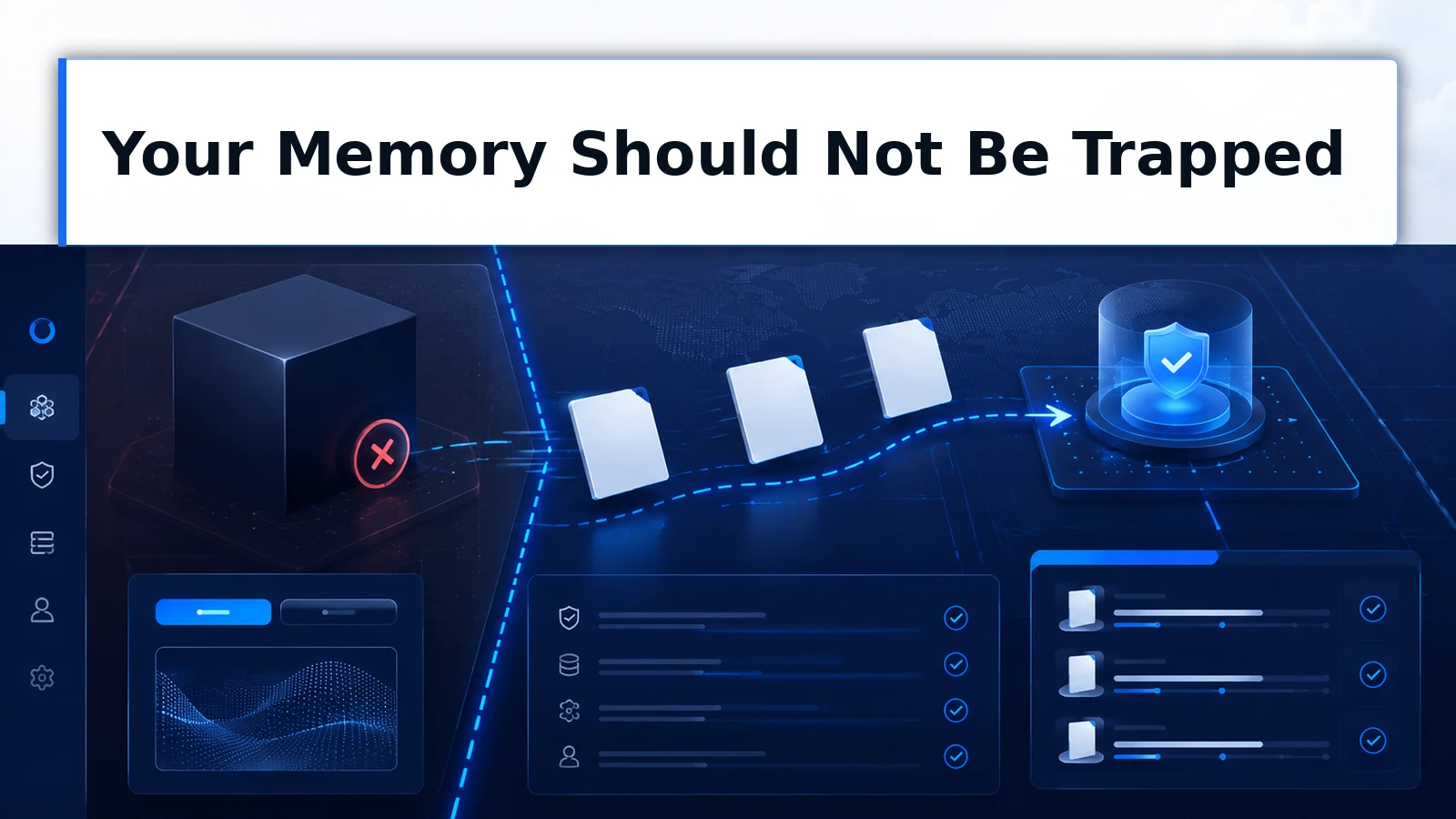
The strategic question follows directly: can you export AI memory in a way another environment can actually use? For most platform-native memory, the honest answer today is no, or only in fragments.

How ThinkFreely structures memory for governance
ThinkFreely treats memory as an organization-owned asset held in its operating layer, above the model.
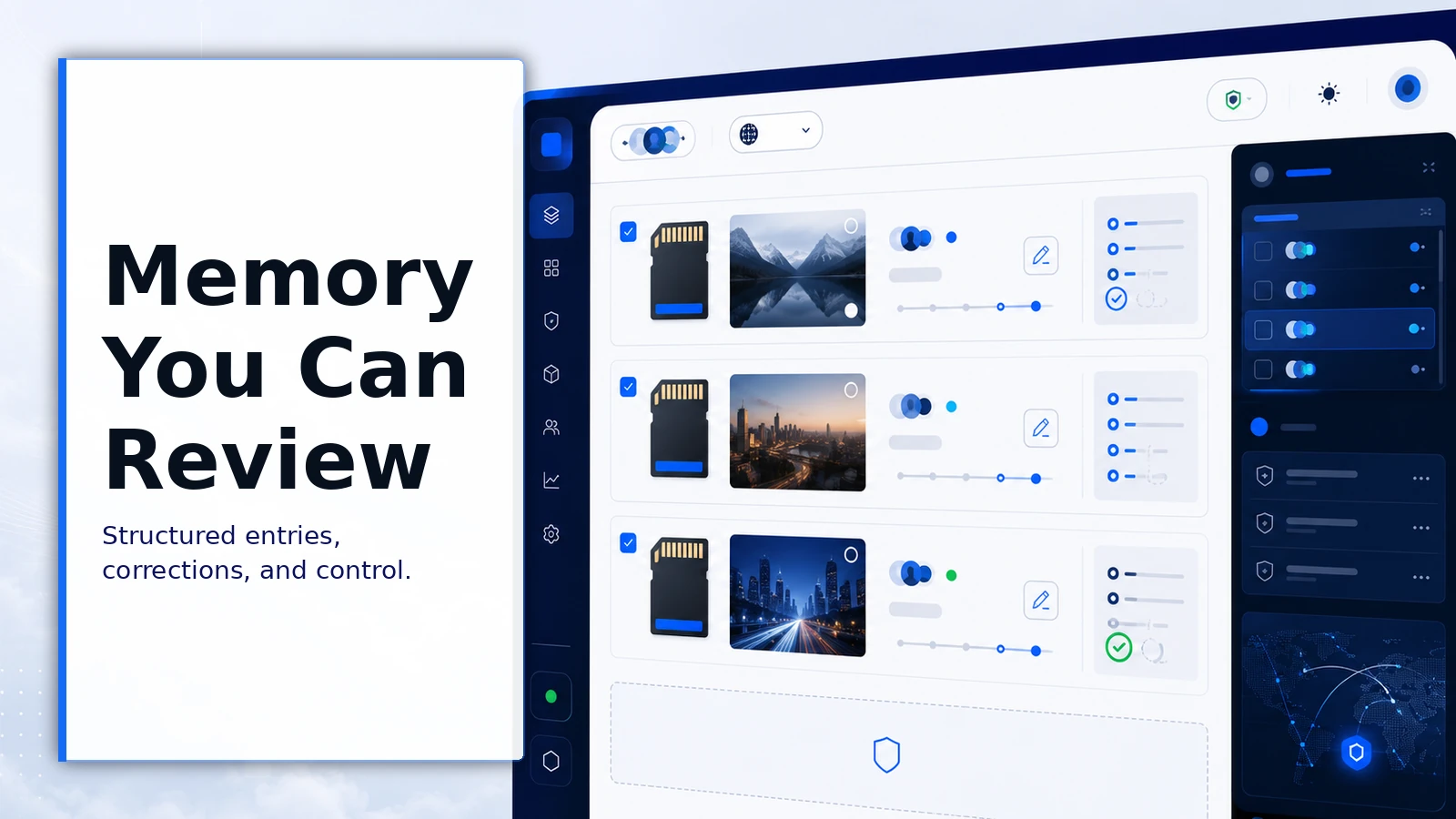
In ChatFreely, business memory is governed at the organization level: what is retained, how it is structured, who can see and use it, and how it is maintained. Memory summaries keep the accumulated knowledge in a structured, reviewable form, so what your AI carries forward is inspectable rather than opaque, and correctable rather than fossilized.
Because memory lives in the governed layer rather than inside one provider’s account state, it travels with your operation across the models RouteFreely dispatches to, and it is structured for export direction where supported.
The qualification matters and we will not bury it. No platform can promise that all AI memory moves perfectly everywhere; formats, features, and destinations differ, and some memory is entangled with specific capabilities. What ThinkFreely provides is the structural precondition: memory held as governed, structured content you control, which is what makes portability achievable at all. Memory held as platform state makes it impossible.
The mechanisms of governed memory
-
Organization-level memory
Institutional memory belongs to the organization, not to one provider’s account or one user’s history, so what the operation learns compounds where you control it.
-
Memory summaries
Accumulated knowledge is maintained as structured summaries your team can read, correct, and approve, keeping memory inspectable instead of opaque.
-
Governed retention
What is remembered, for whom, and for how long follows policy, so memory growth is a governance decision rather than an accident of usage.
-
Cross-model continuity
Because memory lives above the model layer, the same governed knowledge accompanies work across the models your routing policy selects.
-
Export direction
Memory is structured as organization-owned content designed to move outward where supported, rather than existing only as one platform’s internal state.
What governed memory changes for the business
-
Learning that compounds
Corrections and context accumulate in one governed layer instead of fragmenting across individual accounts, so the whole operation gets smarter, not just one login.
-
Memory you can audit
Reviewable summaries mean you can answer what your AI believes about your business, correct what is wrong, and remove what should not be there.
-
Continuity through change
Model changes and provider decisions stop threatening your accumulated learning, because the memory that matters was never theirs to hold.
Deciding what belongs in business memory
Not everything should be remembered. Useful criteria:
- Does this knowledge improve future work across the team, or only one conversation?
- Would you be comfortable seeing it in a memory review? If not, it may not belong in memory at all.
- Is it durable knowledge, standards, terminology, recurring context, or a passing detail?
- Does it carry sensitivity that retention policy should govern?
Consider how this plays out in two corners of a business.
A sales organization keeps account context, positioning standards, and pricing-discussion boundaries in governed memory. New reps inherit the operation’s accumulated understanding on day one, and a correction made once, centrally, stops a recurring mistake everywhere.
An engineering team retains architecture decisions and naming conventions in memory summaries, but keeps incident specifics out, routing those to documentation instead. Memory carries how the team works, not a second copy of every artifact.
What makes this real
-
Structured, reviewable form
Memory summaries hold accumulated knowledge as structured content teams can inspect and correct, which is the precondition for both governance and portability.
-
Above the account layer
Memory is governed at the organization level in ChatFreely rather than accumulating inside provider account state.
-
Exercised across models
Governed memory accompanies work across backends dispatched by RouteFreely, so continuity is demonstrated in normal operation, not promised for a hypothetical migration.
Where memory portability has limits
Being honest about the edges builds the right expectations.
Not all memory transfers cleanly anywhere. Knowledge entangled with a specific platform capability may not have a meaningful equivalent elsewhere, and export fidelity depends on formats and destinations. “Helps preserve more” is the truthful claim. “Moves everything perfectly” is not, from anyone.
Governed memory also requires curation. Summaries need review, corrections need owners, and retention policy needs enforcement. Ungoverned memory is cheaper right up until you need to trust it.
And memory is not a knowledge base. Durable reference material belongs in documents and retrieval sources. Memory is for the working understanding around them.
Frequently asked questions
What is the difference between business memory and platform memory?
Platform memory is what a provider’s product retains about your usage inside its own account state: inferred preferences, per-user personalization, session continuity. Business memory is organizational knowledge your operation depends on: standards, context, and accumulated corrections, held in a form you can inspect, govern, and keep. The first serves the platform’s continuity. The second is an asset, and it should be treated like one.
Can AI memory really be exported?
Partially, and honesty matters here. Memory held as structured, organization-owned content can move outward where supported, which is materially better than memory living only as opaque platform state. But formats and destinations differ, and no vendor can truthfully promise perfect universal export. The strategic move is structural: keep memory in a governed layer where portability is possible, rather than in containers where it is not.
How do memory summaries work in practice?
Accumulated knowledge is maintained as structured summaries rather than an unreadable internal state. Your team can review what the AI carries forward, correct errors, remove what should not persist, and approve what should. The practical effect is memory you can trust, because you can see it.
Who should govern memory?
Treat it like any shared asset: an owner accountable for review cadence, retention policy set with compliance input where relevant, and correction rights broad enough that errors get fixed quickly. Governance here is light but real. The teams that skip it end up with memory they can neither trust nor delete confidently.
Keep what your operation has learned
Your AI’s understanding of your business took real work to build. It should belong to your organization in practice, not just in principle.
Platform memory is not the same as business memory. Build the second, govern it, and keep it above any single platform.