
CAPABILITIES
Cost-Aware AI Routing: Spend Where the Work Justifies It
AI cost problems are rarely about price. They are about defaults. Cost-aware AI routing matches model spend to task value, so premium capability goes to premium work and routine work stops traveling first class.

What cost-aware AI routing means
Cost-aware AI routing is the practice of directing each AI request to a model tier whose cost matches the value and difficulty of the task, enforced through routing policy rather than user discretion.
It is not a race to the cheapest model. Some work genuinely deserves a frontier model’s price. Cost-aware routing exists so that decision gets made deliberately, per task, instead of one expensive default quietly applying to everything.
Why AI budgets outgrow AI value
The pattern is consistent across organizations. AI adoption starts small, proves useful, and scales. Spend scales with it, but faster.
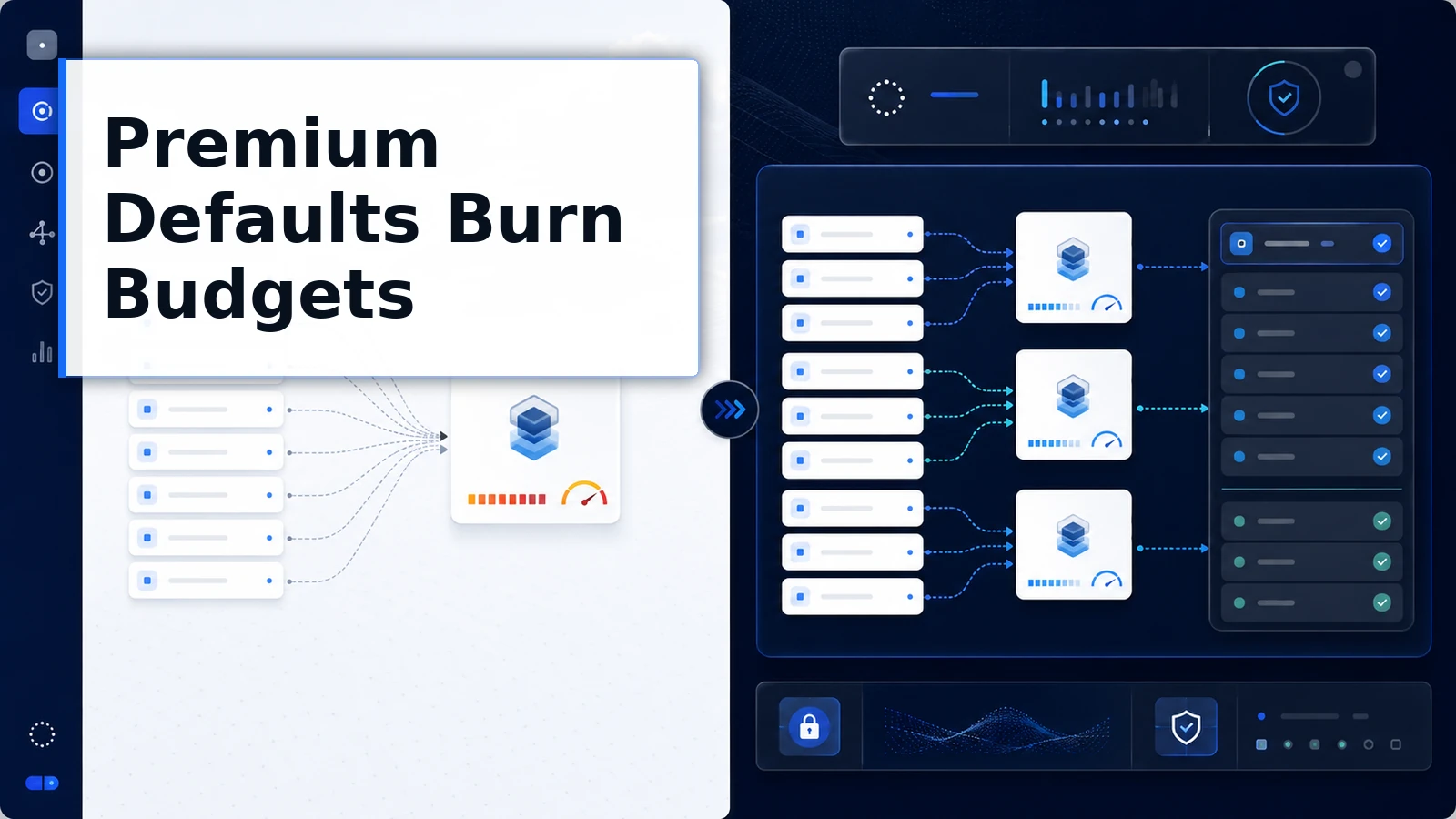
The cause is usually structural, not wasteful individuals. When one premium model is the default path, every request pays premium rates: the two-line summary, the routine classification, the internal draft nobody will read twice. Nobody decided to spend that way. The default decided.
Meanwhile finance sees an aggregate invoice with no map from cost to value. The question “what are we getting for this” has no answer, because usage was never structured to produce one.
AI cost control starts by replacing that default with a decision.
Cost discipline is not cheapness
A model-tier strategy has one principle: use the appropriate model for the work.
That cuts in both directions. Routing high-volume routine work to efficient models can reduce unnecessary premium-model usage. And routing a hard reasoning problem to a strong model is money well spent, because the cost of a wrong answer usually exceeds the cost of a better model.
The judgment weighs task value, complexity, reasoning requirements, volume, latency, risk, and acceptable cost. Cost-aware routing turns that judgment into policy so it applies at request time, every time.
How RouteFreely enforces cost policy
RouteFreely, ThinkFreely’s routing and control layer, treats cost as a first-class routing criterion alongside capability, privacy, and policy.
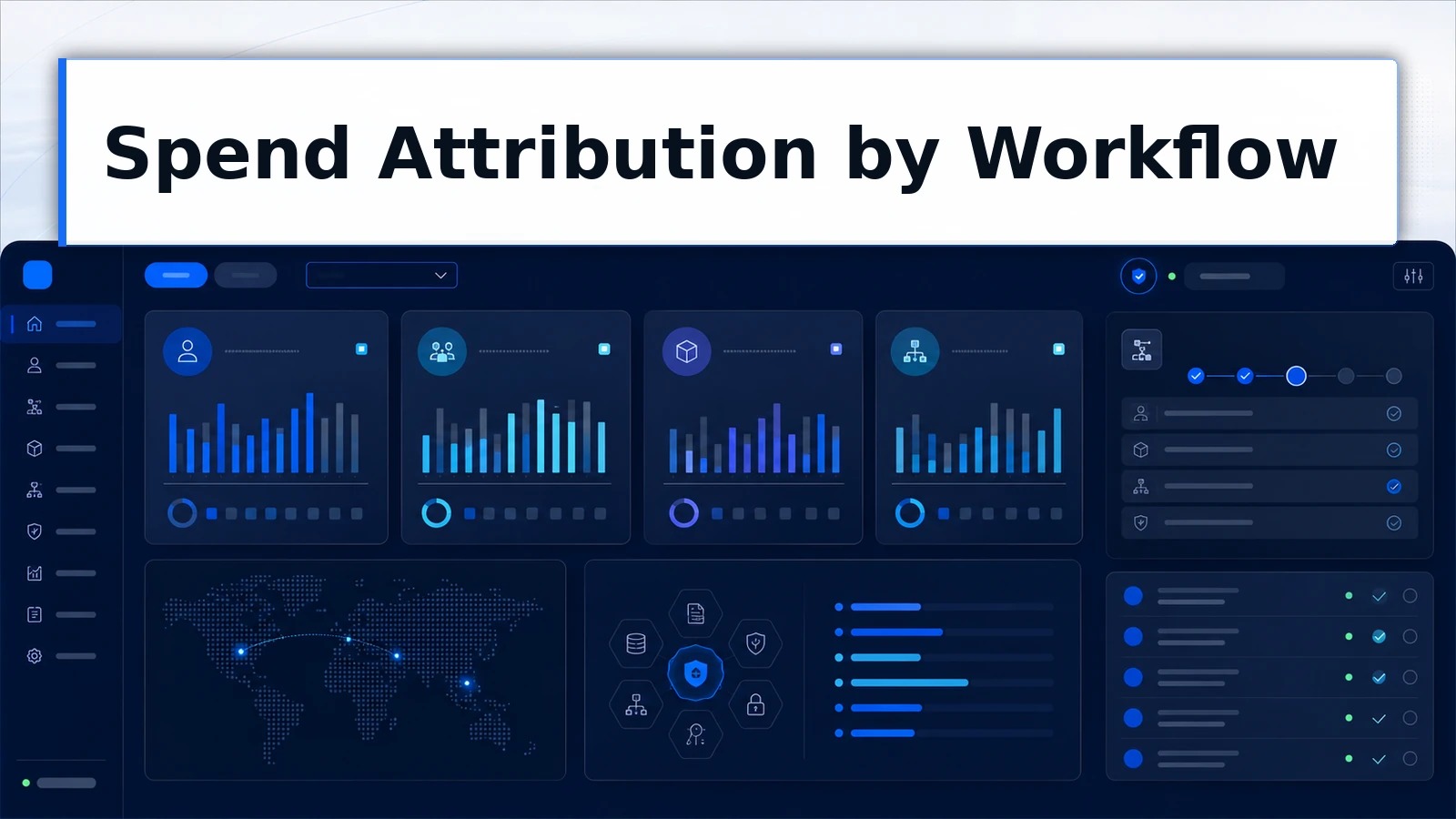
Your team defines the model-tier strategy: which tiers exist, which work belongs on each, and what limits apply. RouteFreely applies it on every request, tracks the tokens consumed, and gives administrators visibility into spend by user, group, model, and workflow.
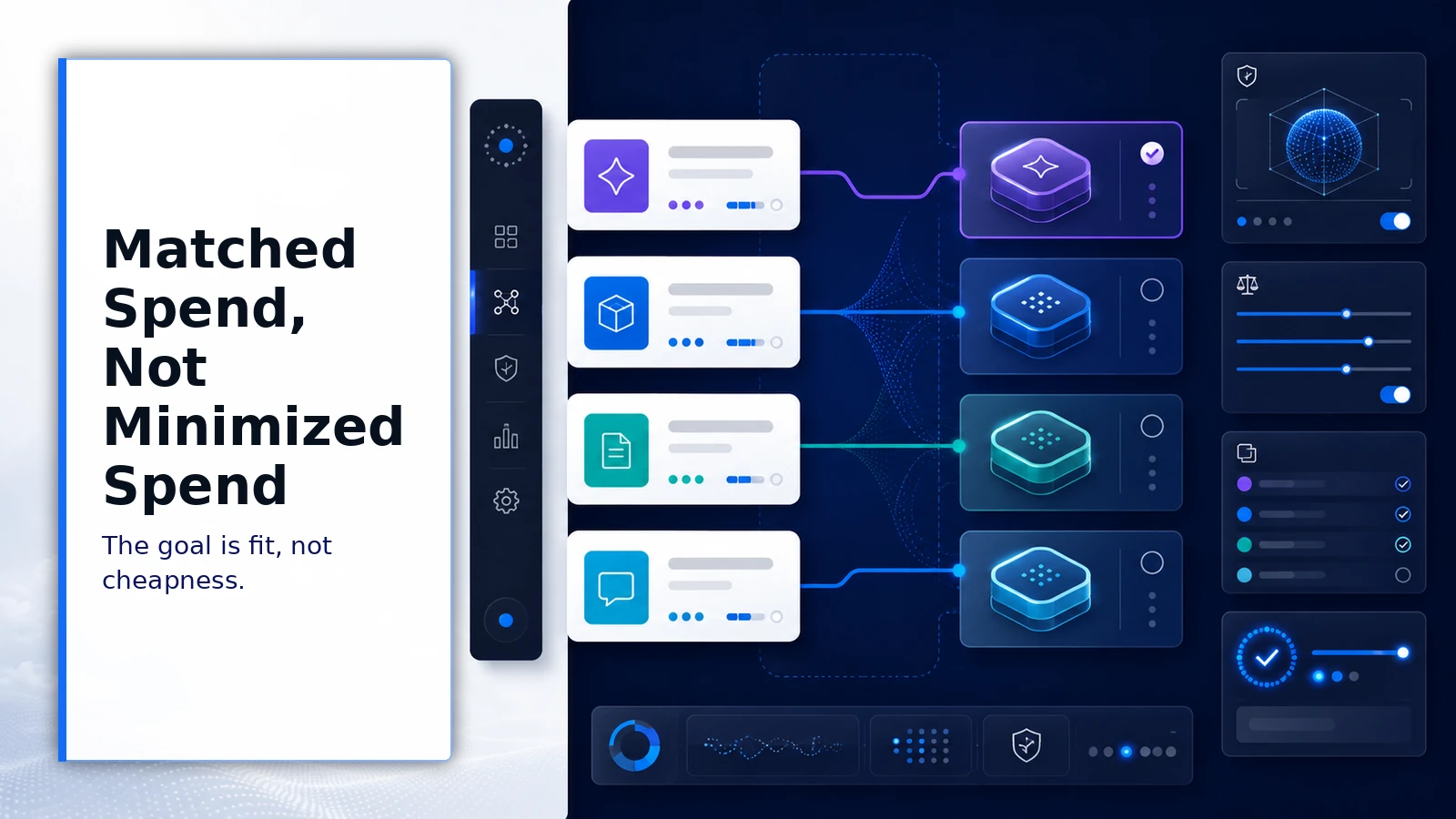
Two honest qualifications. First, outcomes depend on your policies and your usage patterns; we do not promise guaranteed savings, and you should distrust anyone who does. Second, cost policy involves tradeoffs, and a policy tuned only for cheapness will eventually route hard work to a model that cannot do it. The goal is matched spend, not minimized spend.
What we can say plainly: when premium usage requires a reason instead of being the default, unnecessary premium usage tends to surface quickly, and it becomes an operating decision you control.
The mechanisms of cost-aware routing
-
Model-tier policy
Work is classified and routed to defined model tiers, so routine, standard, and premium tasks each travel a path whose cost fits the job instead of sharing one expensive default.
-
Token tracking
Token consumption is tracked across routed traffic, turning the aggregate AI invoice into spend you can attribute to users, groups, models, and workflows.
-
Usage limits
Limits by user, group, or workflow keep consumption inside planned boundaries and surface unusual patterns before they become invoice surprises.
-
Premium-model controls
Access to premium tiers can be restricted to the users and workflows whose work justifies the cost, making expensive capacity a deliberate grant rather than a default path.
-
Cost thresholds in policy
Routing rules can weigh expected cost against task type, so high-volume work is dispatched to efficient models automatically instead of relying on user restraint.
What cost-aware routing changes for the business
-
Spend you can explain
When cost maps to users, workflows, and model tiers, finance conversations move from “why is the bill this big” to “which work is worth more capability.”
-
Premium capacity protected
Strong models stay available for the reasoning work that justifies them, because routine volume no longer competes for the same expensive path.
-
Discipline without gatekeeping
Policy does the enforcement, so teams keep moving at full speed while the organization keeps spend matched to value. Nobody files a ticket to run a task.
Deciding which work belongs on which tier
Useful questions for building a model-tier strategy:
- What does a wrong or mediocre answer cost for this task? High-stakes work justifies stronger tiers.
- How much volume flows through this workflow? Small per-request savings compound at scale.
- Does the task need deep reasoning, or reliable pattern work a mid-tier model handles well?
- How latency-sensitive is the work? Sometimes the faster model is the right spend.
- Is there a data-sensitivity constraint that already narrows the environment options?
Two examples show the strategy in practice.
An operations team processes thousands of shipment exception notes daily. Classification and summary route to an efficient tier. The rare escalation that requires reconstructing a multi-party failure routes to a premium reasoning model. Volume work is cheap, judgment work is strong, and the split is policy, not preference.
A marketing organization drafts routine variants on an efficient tier, but sends brand-critical launch copy through a stronger model with human review. The tier decision follows the stakes of the artifact, not the seniority of the requester.
Proof in the product
-
Cost as a routing criterion
RouteFreely evaluates cost alongside capability, privacy, and policy on each request, so tier decisions execute at dispatch time rather than in retrospect.
-
Attributable usage records
Token and usage tracking by user, group, model, and workflow gives administrators an auditable view of where AI spend actually goes.
-
Enforced limits and controls
Usage limits and premium-model access controls are applied by the routing layer, so cost policy holds without depending on individual restraint.
Where cost-aware routing has limits
Cost-aware routing manages spend. It does not conjure savings.
If your workload genuinely needs premium capability across the board, routing will confirm that rather than change it. The benefit in that case is confidence and attribution, not a smaller invoice.
Tier policies also require maintenance. Model prices and capabilities shift, and a tier map built last year may misroute work today. Treat the model-tier strategy as living policy with an owner, reviewed as the market moves.
Finally, aggressive cost policy has a failure mode: routing hard work to a model that cannot do it. The rework and risk that follow usually cost more than the premium tier would have. Matched spend beats minimized spend.
Frequently asked questions
Does cost-aware routing guarantee savings?
No, and no honest vendor should promise that. Outcomes depend on your current defaults, usage patterns, and the policies you set.
What cost-aware routing reliably provides is the structure: spend attributed to work, premium usage made deliberate, and limits enforced by policy. Organizations whose current default sends routine work to premium models typically find unnecessary usage quickly. What that is worth is specific to you, which is what an AI Control Assessment is for.
Is the cheapest model ever the wrong choice?
Often. A model that produces weak output on hard work creates rework, delays, and risk that exceed the price difference. Cost-aware routing is a matching discipline: efficient tiers for routine volume, stronger tiers where reasoning quality carries real value. The point is that the choice is made per task, on purpose.
How does this relate to AI usage visibility?
Visibility is the measurement layer and routing is the enforcement layer. Usage tracking shows where spend goes by user, model, and workflow. Cost-aware routing acts on that picture, steering work to appropriate tiers and holding limits. Together they turn AI cost from an aggregate surprise into an operating metric.
Who should own the model-tier strategy?
Ideally a pairing: someone accountable for AI operations and someone accountable for budget, often IT or an AI program owner working with finance operations. The strategy needs both views, what work requires, and what spend is acceptable, and it needs scheduled review because model prices and capabilities keep moving.
Make spend a decision again
Every organization already has an AI cost policy. For most, the policy is “the default model, at the default price, for everything.”
Cost-aware AI routing replaces that accident with a decision. Match the spend to the work, and know exactly where the money goes.
Request a demo or start with an AI Control Assessment.
Related pages
-
Cost Control
The broader AI cost control approach.
-
Control AI Costs
How teams control AI costs in practice.
-
Finance Operations
AI cost discipline for finance operations.
-
RouteFreely
RouteFreely’s routing approach.
-
Usage Visibility
Usage tracking by user, model, and workflow.