
PRODUCT
DriftHold: Your Instructions, Locked Across Models and Sessions
You wrote the rules. DriftHold makes sure they are still the rules an hour later, a model later, a session later. Canonical instruction locking across models and sessions, shipped and in production.

The product in one paragraph
DriftHold is the ThinkFreely product for AI instruction drift control. It holds your organization’s canonical instructions, the brand rules, compliance constraints, and working standards you defined, in locked form, and applies them consistently across models and sessions. The instructions you approved are the instructions that run, wherever the work runs.
The drift problem DriftHold solves
Instructions decay in two directions at once.
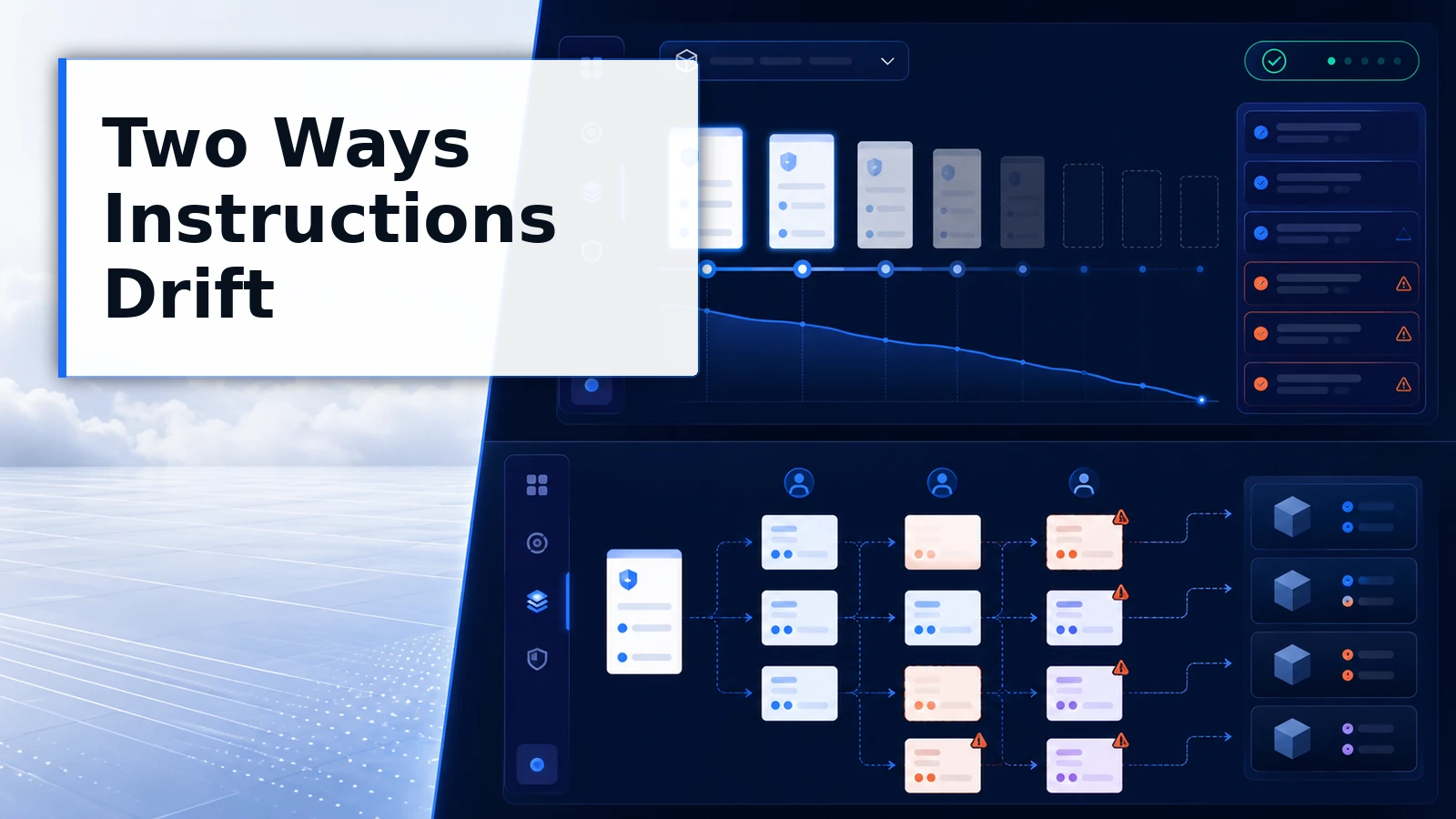
Within a session, long conversations erode the rules. The instructions given at the start compete with everything said since, and by turn forty the tone guide is a memory, the prohibited claim is back, and the format wanders. Nobody countermanded the rules. They just drifted.
Across the operation, instructions fragment. The same brand rules exist in slightly different versions across users, sessions, and models, each copy edited independently, none of them canonical. When the compliance constraint changes, some copies get the update and some do not, and nobody can say which version any given output was following.
Both failures share one root: the instructions have no locked, single source of truth. This product gives them one.
Canonical, locked, everywhere
The product works on three commitments.
Canonical. Your organization’s instructions exist as one authoritative definition, not a population of drifting copies. There is a version, it has an owner, and it is the version.
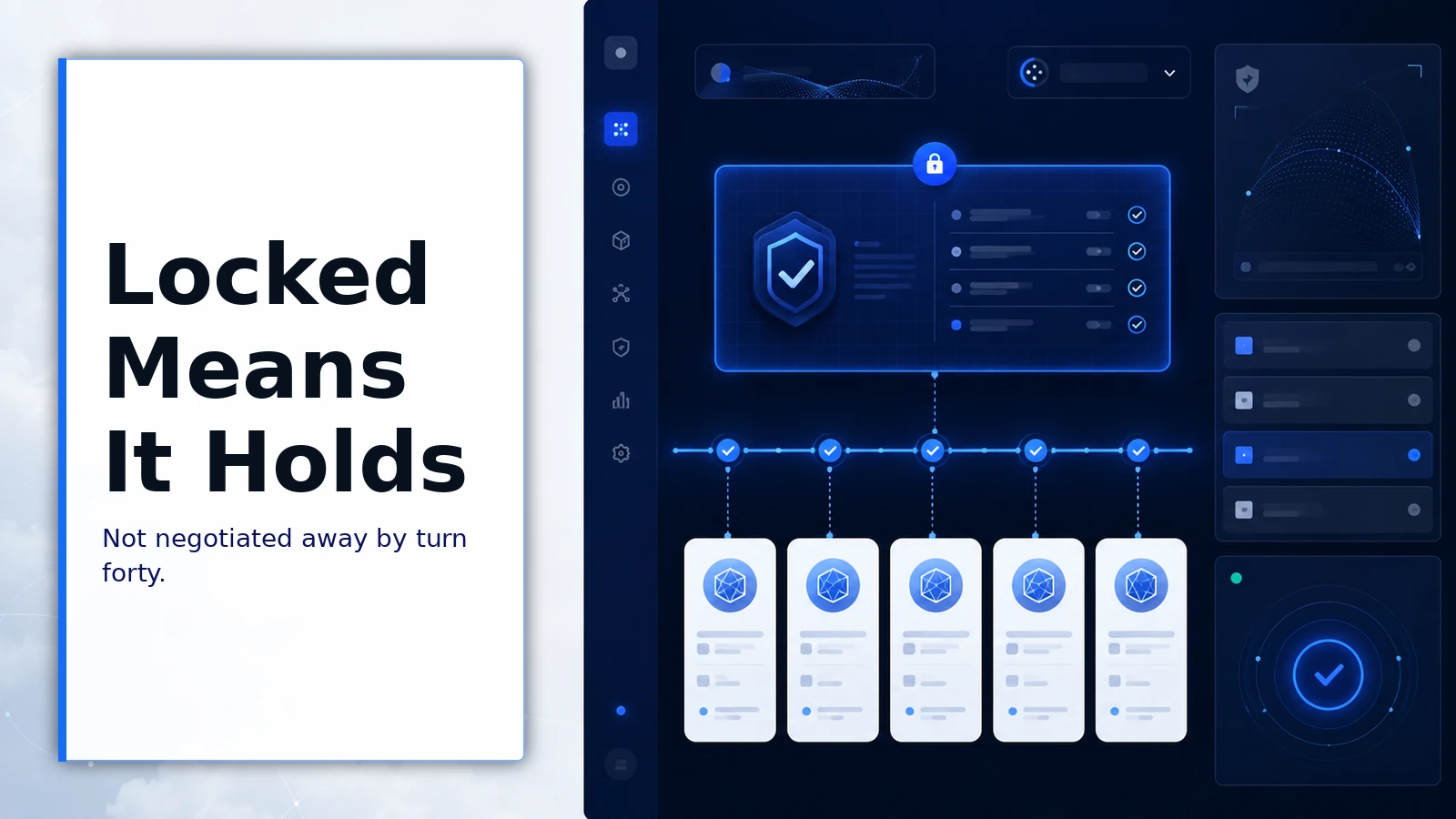
Locked. The canonical instructions hold their shape. They are not gradually negotiated away by conversation length or paraphrased into something adjacent. Locked means the rules resist erosion instead of depending on everyone’s vigilance.
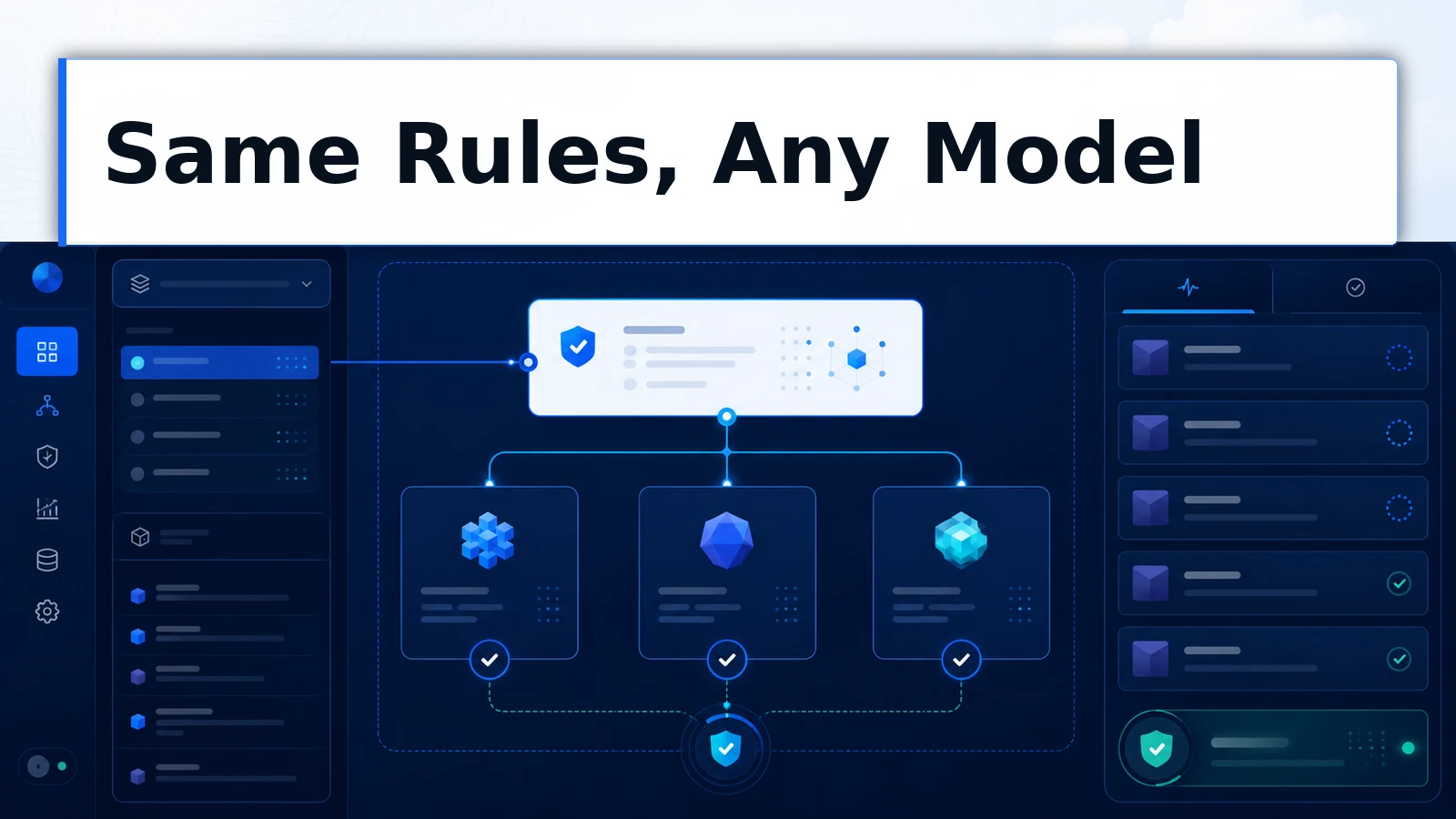
Everywhere. The same locked instructions apply across models and across sessions. Switch models under your routing policy and the rules travel. Start a new session tomorrow and the rules are already there. Consistency stops being a per-conversation achievement and becomes a property of the operation.
DriftHold is shipped and running in production today. This is not a roadmap page.
What DriftHold provides
-
Canonical instruction source
One authoritative, owned definition of your organization’s rules, replacing the drifting copies that accumulate across users and sessions.
-
Instruction locking
Canonical instructions hold their shape through long sessions, resisting the gradual erosion that turns rules into suggestions.
-
Cross-model consistency
The same locked instructions apply across the models your routing policy uses, so changing backends does not mean re-teaching the rules.
-
Cross-session persistence
Rules persist across sessions, so every conversation starts governed instead of starting from whatever someone remembered to paste.
-
Centralized updates
Change the canonical instructions once and the change is what runs, ending the version hunt across fragmented instruction copies.
What locked instructions change for the business
-
Compliance that holds
Constraints written for regulatory or legal reasons keep operating at turn fifty and in next week’s sessions, which is the only way they count.
-
Brand at scale
Voice and claims rules produce consistent output across every user and model, so brand quality stops depending on individual diligence.
-
Auditable rule state
With one canonical version, “which instructions was this output following” has an answer, which fragmented copies can never give you.
Where locking matters most
DriftHold matters most where instruction failure is expensive:
- Regulated communication, where a prohibited claim resurfacing is an incident, not a typo
- Brand-critical content, where voice consistency is the product
- Long working sessions, where erosion is strongest exactly when the work is deepest
- Multi-model operations, where routing flexibility must not mean rule fragmentation
Two operations, one locking discipline.
A financial services marketing team locks its compliance language rules canonically. Long drafting sessions no longer end with the disclaimer drifting out of the copy, and when legal updates a constraint, the update is canonically everywhere at once.
An agency running client work across multiple models locks each client’s voice rules canonically. The routing layer picks the backend by cost and capability; DriftHold ensures the client sounds like the client regardless of which model answered.
DriftHold and the drift-control practice
This page describes the DriftHold product. The capability page covers instruction drift as an operating problem: why erosion happens, how fragmentation compounds, and where locking fits in a governance architecture. This page is the product; that one is the discipline.
Honest limits
Locking instructions does not write good ones. Ambiguous or contradictory rules get consistently applied ambiguity, and the craft of clear instruction remains yours.
Locked rules also deserve stewardship. A canonical version with no owner becomes canonical staleness, so treat instruction ownership and review as part of the operation.
And models remain probabilistic systems. Locking makes your rules hold their shape and presence across models and sessions; it does not transform language models into deterministic rule engines. It removes drift as the failure mode, which in practice is where most of the failures were.
Frequently asked questions
Is DriftHold available now?
Yes. DriftHold is shipped and in production. Canonical instruction locking across models and sessions is a current capability you can see in a demo today, not a roadmap item.
What is instruction drift, concretely?
Two things. Within a session: rules eroding as conversations get long, until early instructions stop shaping output. Across an operation: instruction copies fragmenting into unmanaged versions across users, sessions, and models. One canonical, locked source applied everywhere addresses both.
How does DriftHold interact with model switching?
Cleanly, and that is much of the point. Your routing layer chooses backends by cost, privacy, and capability; DriftHold applies the same locked instructions to whichever model serves the work. Model flexibility and rule consistency stop being a trade-off.
How is this different from putting rules in a system prompt?
A pasted prompt is a copy, and copies drift: they erode within sessions and fragment across them. DriftHold makes the instructions canonical, one owned version, locked in shape, applied across models and sessions from the operating layer. It is the difference between telling everyone the rules and having the rules hold.
Who should own the canonical instructions?
The function that owns the rules in the rest of the business. Brand voice belongs to marketing, compliance constraints to legal or compliance, working standards to the teams that set them, each with a named owner and a review cadence. Canonical locking makes ownership meaningful: because there is one version, the owner’s decisions actually govern output instead of competing with a population of drifted copies.
Rules that hold are the only rules that count
An instruction that erodes by turn forty was never really an instruction. Lock the canon. Let the work run anywhere your policy allows, under rules that stay yours.