CAPABILITIES
Match AI spend to business value.
AI cost control is not about choosing the cheapest model. It is about matching the cost of each AI request to the value, risk, and capability requirement of the work.
AI pilots can tolerate inefficient usage. AI operations cannot.
Early AI usage often hides waste because the volume is low. As usage scales across teams, agents, applications, and automations, small inefficiencies become budget exposure. Cost control starts when the organization can see usage and classify workloads.
Cost-aware routing
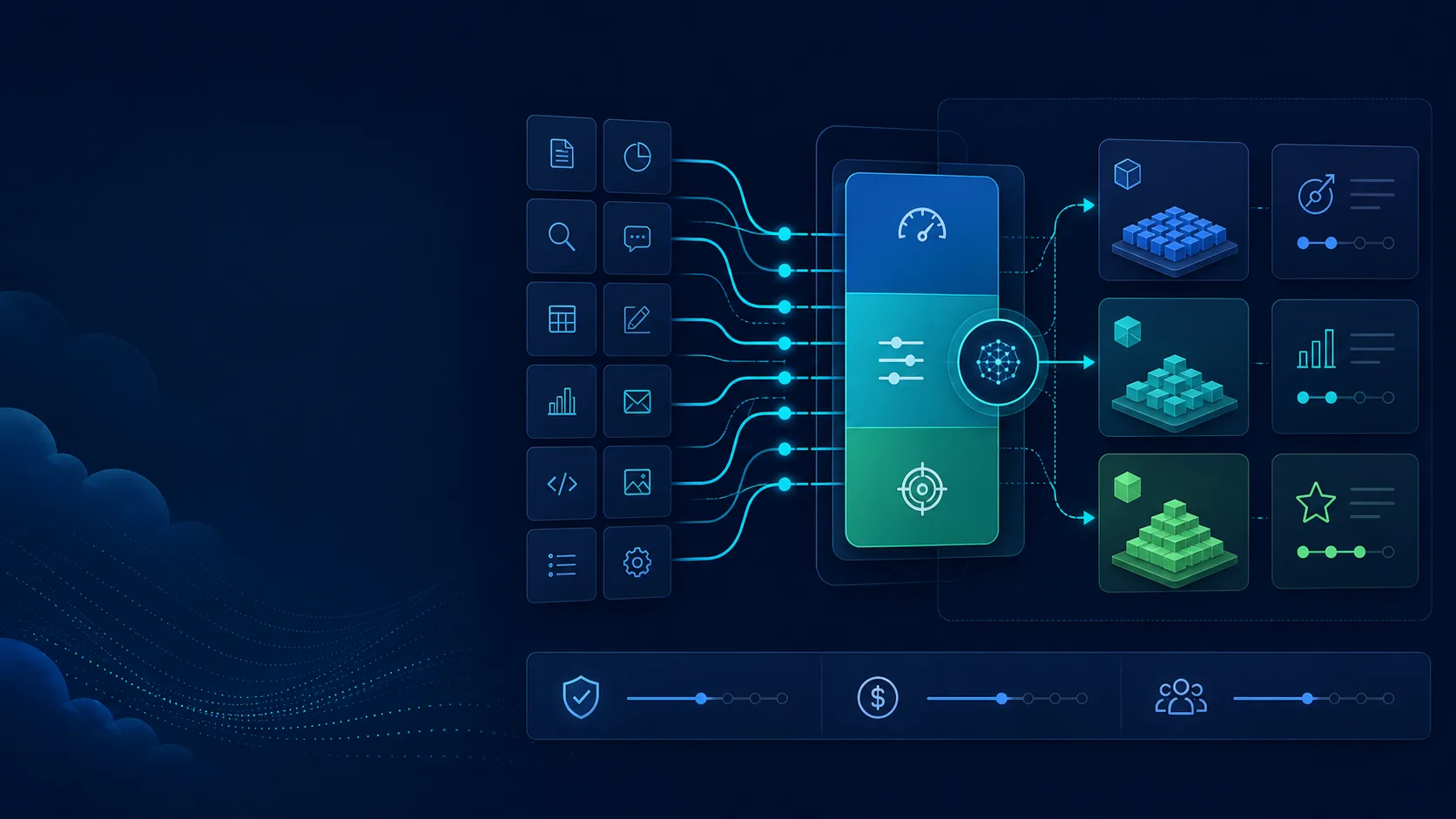
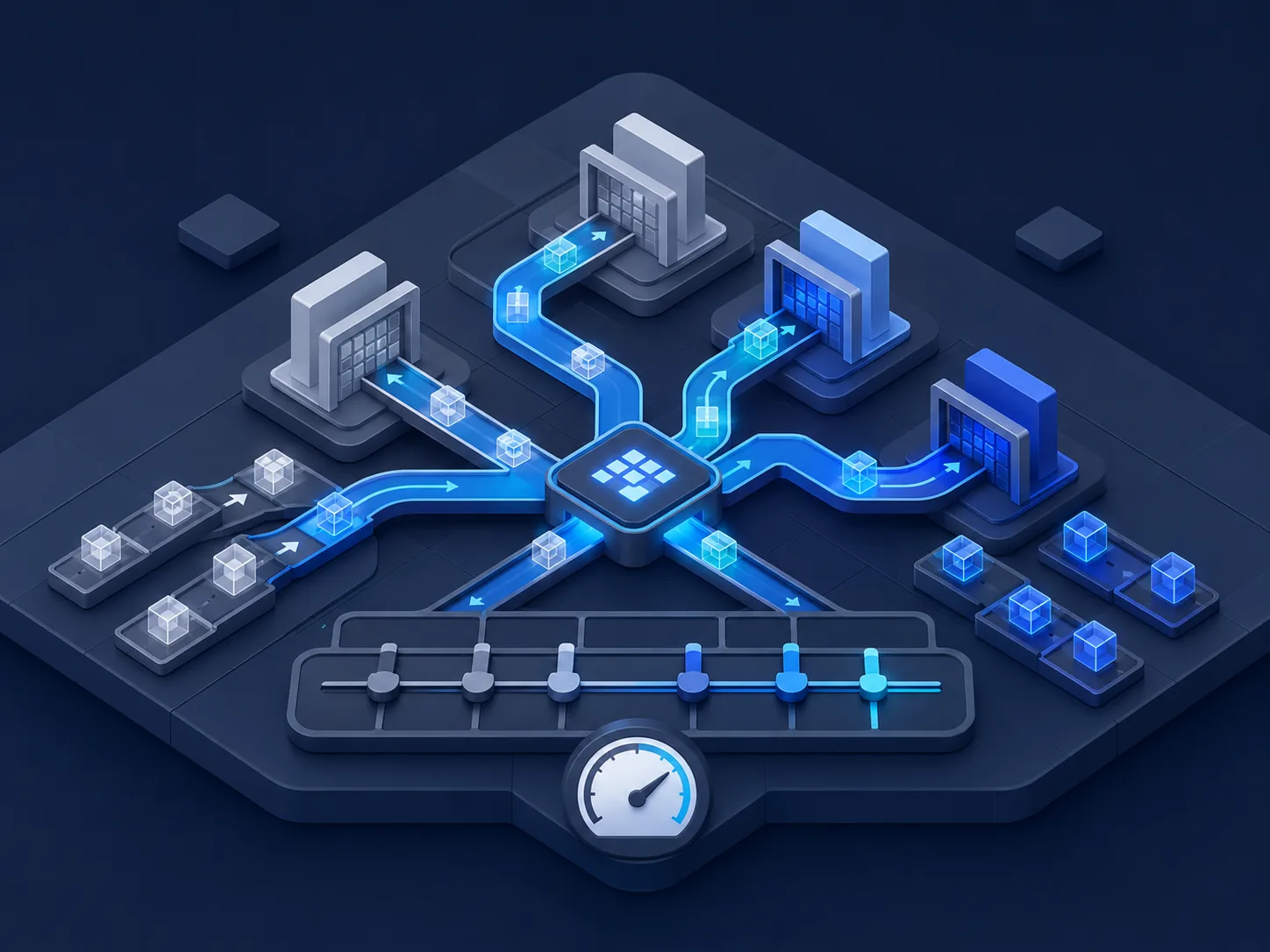
Cost-aware routing directs work based on what the task actually needs. Simple rewriting, classification, extraction, and summarization may not require the same model as strategic planning, complex reasoning, code review, or sensitive analysis.
This works alongside capability-aware routing, which sends each request to a model that can actually perform the task. Together they keep image work off text-only models and keep routine work off premium reasoning.
- reserve premium models for work that justifies the cost
- define lower-cost routes for repeatable low-risk work
- separate experimentation budgets from production usage
- review high-cost workflows before scaling them

Usage visibility
Cost control requires usage data by model, user, endpoint, key, workflow, or department. Without visibility, leaders cannot tell whether AI spend is creating value or simply following defaults.
- track token and request volume
- identify expensive workflows
- compare usage by department
- review API key activity
- spot automation loops or misuse
Limits and guardrails
Limits help prevent runaway usage without shutting down adoption. Hard limits can block overspend. Soft limits can warn leaders while allowing important workflows to continue.
- user and group limits
- API key limits
- monthly budget thresholds
- rate controls for high-volume workflows
Cost-control examples
Support summaries
A support team may summarize thousands of tickets. Lower-cost routing can handle routine summaries while escalations route to stronger models.
Executive analysis
A board-level strategic analysis may justify a premium model because quality and reasoning depth matter more than unit cost.
Cost-control operating questions
- What percentage of usage is going to premium models?
- Which workflows create recurring token volume?
- Can finance see spend by department or application?
- Are budget exceptions logged with business context?
Recommended cost-control next step
Review your AI cost profile with us and see where value-based routing could reduce waste.
Operating checks for spend control
Key operating checks:
- which workflows are driving spend
- which requests justify premium reasoning
- where lower-cost approved routes are sufficient
- how budgets, caps, and exceptions should be reviewed
- whether spend is connected to business value rather than model habit